

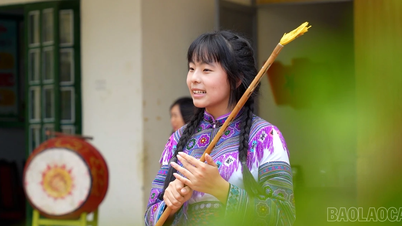
On the small boat that takes tourists to explore the lake, Thao is not only a tour guide but also a young "artist" persistently preserving a part of the cultural soul of her people. The story continues through young people like Thao, who have chosen to stay in their homeland, choosing to accompany the then folk singing tradition in the new era.
Born in the lake region, Thảo's childhood was filled with evenings spent listening to her grandmother and mother sing then folk songs during festivals and holidays, in the warm atmosphere of their stilt houses. The rhythmic sound of the zither became an inseparable memory. As she grew up, joining the village's performing arts group and later becoming a tour guide, Thảo realized that tourists visiting Ba Bể not only want to admire the scenery but also want to experience the local culture in the most authentic way. Therefore, she brings her zither on every boat, seeing the inclusion of then folk songs in tourist itineraries as a responsibility to the land that nurtured her.
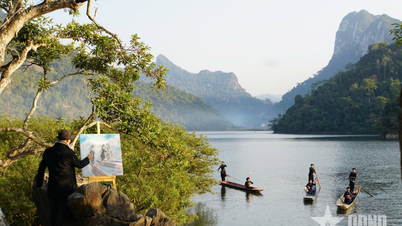
Singing Then songs on the lake is completely different from singing on a stage. There are no lights, no structured program, only the wind carrying the voices and the water reflecting the pristine echoes. "When the boat drifts between the cliffs, I feel like I'm talking to my homeland," Thao once confided. It is this authenticity that often leaves visitors speechless when they hear the sound of the Tinh instrument resonating in the vast space. Some tour groups have recorded this moment as a rare once-in-a-lifetime experience.
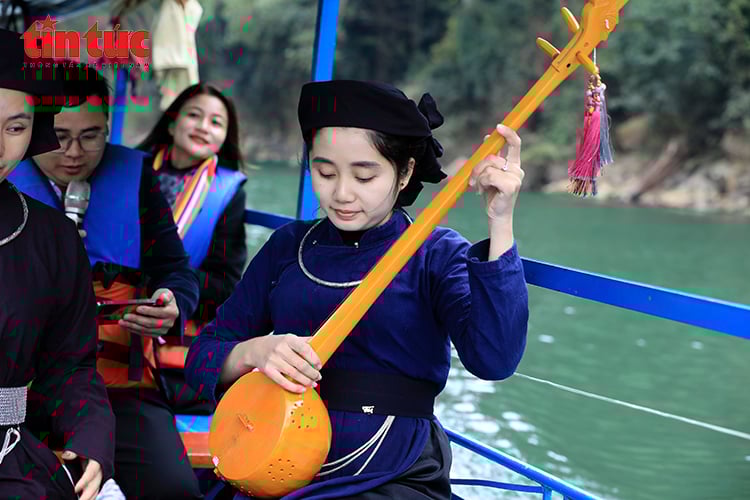
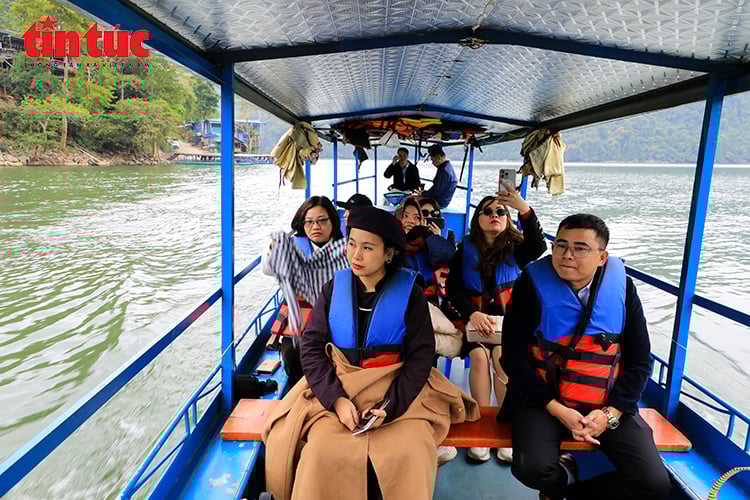
But keeping then music alive in modern life is not easy. Thao affirms that the most difficult challenge is maintaining its continuity. Young people have many new entertainment options, and not everyone is willing to patiently learn then, a form of performance that requires time, meticulousness, and a love for culture. Therefore, she proactively performs more, shares her knowledge with local students, invites tourists to try playing the zither, and teaches them a few songs. Each time someone enthusiastically learns, Thao gains more motivation to continue her journey of preserving this heritage.
One afternoon, on a boat trip, a group of young Europeans asked Thảo to teach them how to play the đàn tính (a traditional Vietnamese stringed instrument). Even though they couldn't quite hit the right rhythm, they listened attentively, then burst into laughter, feeling they were "touching the local culture in the most authentic way." When the boat docked, they said they would return to Ba Bể just to hear the then music again. For Thảo, such moments are both simple and reveal the captivating power of ethnic culture when conveyed with passion.
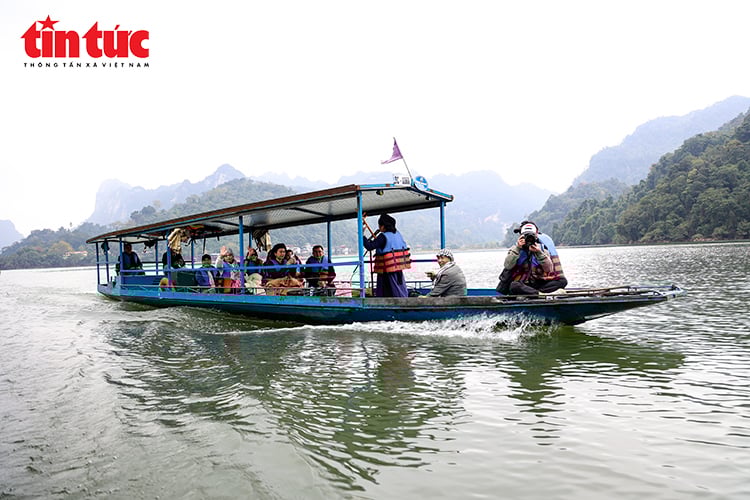
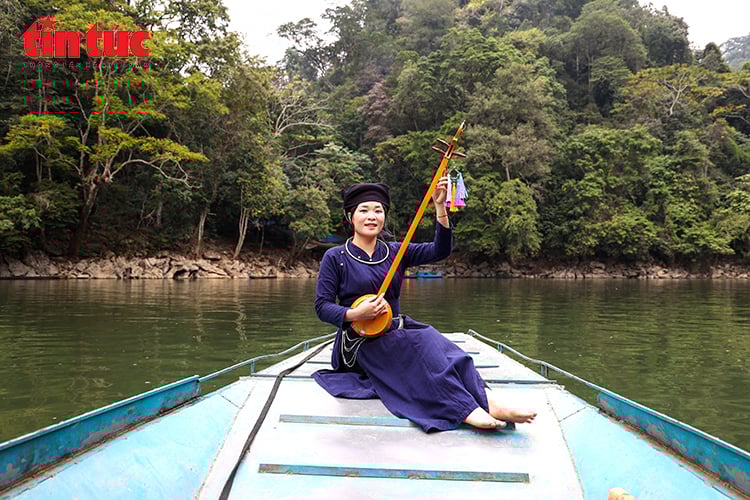
In the life of the Tay people, then singing is present from harvest prayers, housewarming ceremonies, and New Year greetings to community gatherings. The elderly sing then to tell stories, young people sing then to express their feelings, and children grow up with the sound of the zither as a wordless cultural language. Then is not just music , but a stream of tradition connecting generations, a "cultural map" that lets the Tay people know who they are amidst the mountains and forests. Thao understands this and always says that she is only fortunate to have learned then from a young age, to have lived in a place where every mountain and stream holds ancient stories. This connection helps her become a bridge for tourists to understand Ba Be more deeply, not just visually, but emotionally.
Not only Thao, but many young people in Ba Be also contribute to preserving the heritage. Among them is Ly Kieu Anh, a zither artist and tour guide, who has participated in many training courses organized by the Department of Culture, Sports and Tourism. Kieu Anh shared that she grew up with ethnic music and sees passing on the heritage as a responsibility of the Tay people today. Performances on boats, conversations with tourists about the zither, about the meaning of the then melodies… have made many tourists feel that the cultural value of Ba Be lies not only in the landscape but also in the depth of its tradition.
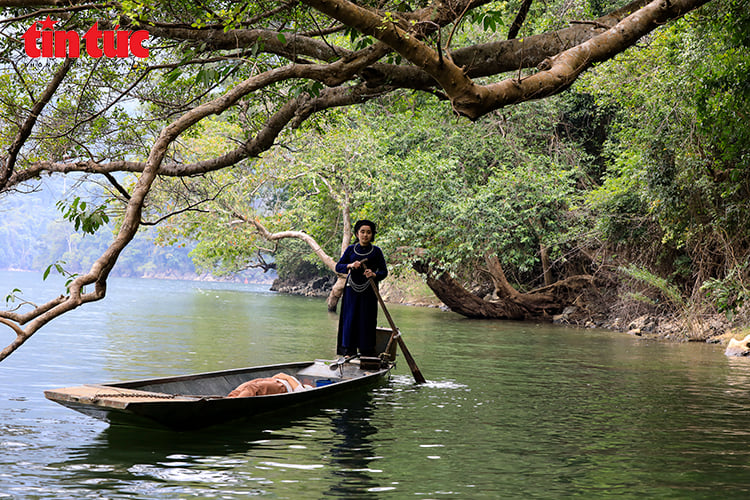
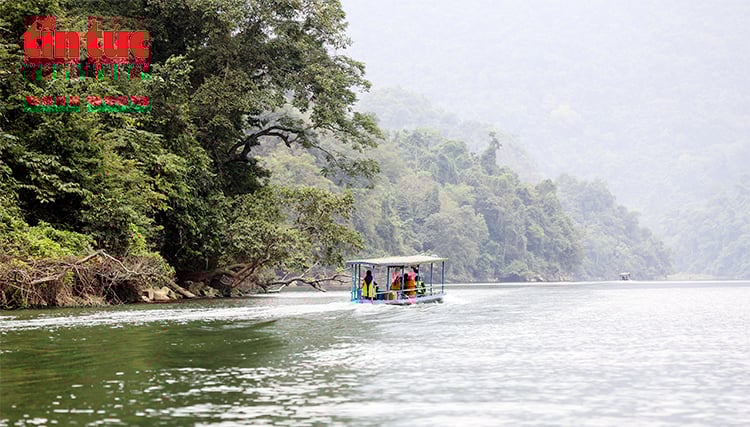
Tourists are increasingly drawn to authentic experiences such as listening to Then singing, learning to play the Tinh lute, or exploring folk festivals. As a result, the livelihoods of those involved in community tourism are more stable, creating a link between cultural preservation and sustainable economic development – a goal the locality is striving for. Ba Be is beautiful not only because of its vast lake and green mountains, but also because of the people quietly preserving the cultural essence amidst the flow of modernity.
As evening fell on the lake, the water shimmered with golden light, and the boat carried us closer to the dock. Thao's singing still echoed on the water, blending with the wind from the rolling hills. Seeing the young people still persistently preserving the then folk singing tradition, one could clearly see a future where ethnic culture is not only preserved in books but also vividly present in daily life and in the experiences of tourists. For Thao and Kieu Anh, then folk singing is not only a legacy of their ancestors but also a reminder of their roots, a source of pride for the Tay people today.
Amidst the vastness of Ba Be Lake, the folk songs of these young people are giving local tourism a new appeal, an appeal stemming from deep-rooted cultural values, preserved with love and perseverance. And perhaps, that is what makes tourists remember this trip forever: beautiful not only because of the scenery, but also because of the culture and the people.
This article was commissioned by the Legal Department, Ministry of Culture, Sports and Tourism.
Source: https://baotintuc.vn/van-hoa/giu-hon-then-giua-long-ho-ba-be-20251212111046734.htm
![[Photo] Admire the coral "masterpiece" amidst the million-year-old heritage of Dak Lak province.](https://vphoto.vietnam.vn/thumb/1200x675/vietnam/resource/IMAGE/2026/05/31/1780221235105_anh-man-hinh-2026-05-31-luc-16-53-27.png)


![[Image] Hanoi Police officially crowned champions of V-League 2025/2026](https://vphoto.vietnam.vn/thumb/1200x675/vietnam/resource/IMAGE/2026/05/31/1780244769054_ndo_br_039d561b692be875b13a-jpg.webp)
![[Photo] The General Secretary, President and his wife begin their state visit to the Philippines.](https://vphoto.vietnam.vn/thumb/1200x675/vietnam/resource/IMAGE/2026/05/31/1780230559452_anh-man-hinh-2026-05-31-luc-19-28-11.png)
![[Photo] Solemn bathing ceremony and Buddha procession in Hue](https://vphoto.vietnam.vn/thumb/1200x675/vietnam/resource/IMAGE/2026/05/31/1780228263543_1-jpg.webp)













![[Video] Sunset at Lap An Lagoon – Where the sun sets over the fishing nets](https://vphoto.vietnam.vn/thumb/340x192/vietnam/resource/IMAGE/2026/05/31/1780192137701_beach-landscape-sea-water-nature-grass-745871-pxhere-com.jpeg)



























































Comment (0)