

Enhance experiential activities
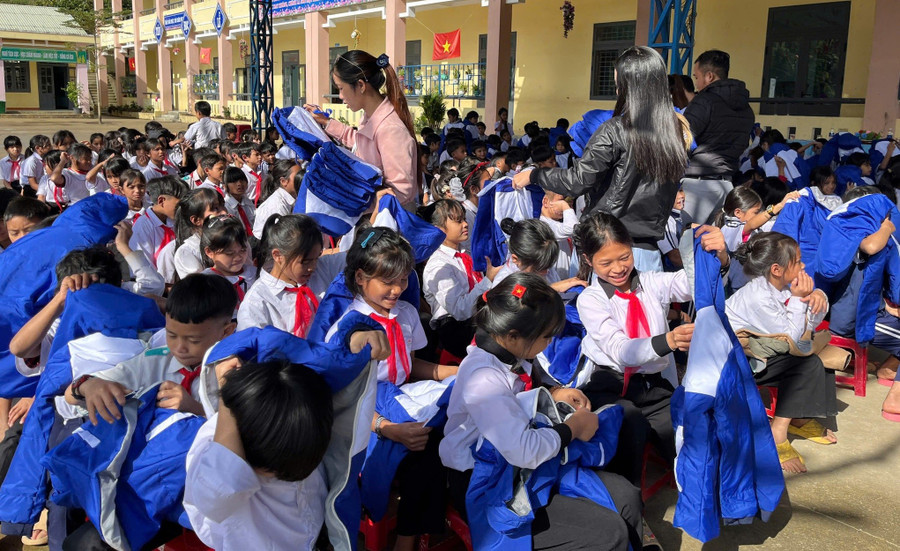
At Tra Van Ethnic Boarding Primary and Secondary School (Tra Van commune, Da Nang city), the schoolyard was more vibrant than usual with activities such as painting, STEM education , classroom decoration, erecting the ceremonial pole, gong and drum performances, cultural shows, and folk games.
According to Mr. Nguyen Khac Diep, the school principal, this series of activities was designed to create a cheerful atmosphere, close to the local culture, thereby helping students become more enthusiastic about coming to school during the cold weather and when they are prone to "taking an early Tet holiday break".
According to Mr. Diep, for students in disadvantaged areas, simply requiring them to attend class through administrative orders will not be effective in the long run. The important thing is to create a sense of novelty and excitement for them every day at school. Once they experience joy, maintaining attendance becomes easier.
Given the nature of boarding schools, keeping students at school during the days leading up to Tet (Lunar New Year) is closely linked to daily life. The supervising teachers work closely with homeroom teachers to understand the students' feelings and promptly encourage those who are homesick or intend to leave early. Meals are adjusted to suit the weather, with more hot dishes added to ensure students' health.
Along with experiential learning activities, Tra Van Ethnic Boarding Primary and Secondary School applies flexible teaching methods. Teachers increase encouragement and motivation, awarding points for progress; they limit pressure through excessive homework or tests. For weaker students, teachers dedicate time to tutoring and providing direct support to prevent discouragement during this period.
Besides focusing on academics, the school also cares for the well-being of its boarding students. This year, the school plans to prepare approximately 200-250 sticky rice cakes (bánh tét) for students to take home and celebrate the Lunar New Year. In addition, many gifts from universities and benefactors will be given to disadvantaged students, providing them with further motivation to stay committed to their studies.
At Ho Nghinh Secondary School (Hai Chau Ward, Da Nang City), the Natural Science Department recently organized a "Quiz to Learn" program for 6th grade students, featuring short, engaging questions revolving around subject knowledge and general understanding.
Thanks to the friendly and approachable format, students no longer feel like they are "taking an exam" but actively participate in groups, exchanging ideas and providing answers. The classroom atmosphere becomes more lively, allowing students to review previously learned material while simultaneously developing teamwork, communication, and confidence in front of a group. The encouraging applause and small gifts further motivate students to participate actively.

Refresh the lesson
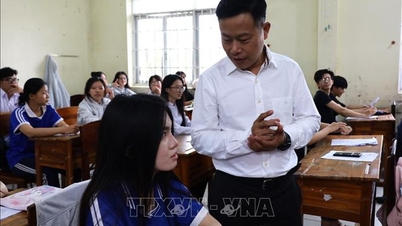
In urban areas, the challenge of maintaining academic discipline takes a different approach. While there is no shortage of learning resources, students are easily drawn into the festive atmosphere, end-of-year shopping, and extracurricular activities. Therefore, Nguyen Hue Secondary School (Hai Chau Ward, Da Nang City) clearly defines the role of homeroom teachers and subject teachers in maintaining classroom discipline.
According to Mr. Vo Thanh Phuoc, the school principal, instead of tightening discipline through rigid methods, the school chooses a flexible yet consistent approach. Homework checks are enhanced in a way that encourages students: prioritizing regular grades; low-scoring assignments are noted and monitored by teachers before being officially updated. Students are given opportunities to contribute to class discussions to "improve" their grades, thereby maintaining motivation without excessive pressure.
At the subject group level, teacher teams proactively reviewed the curriculum progress and agreed on key content to be completed before Tet to avoid rushing after the holiday. Some subjects had their teaching plans adjusted to increase in-class practice time, helping students consolidate their knowledge during class time.
Mr. Phuoc believes that maintaining the learning pace is not only the individual responsibility of teachers but also requires coordinated efforts between subject departments, homeroom teachers, and the school administration. When the plan is agreed upon, students also clearly perceive the seriousness of their teachers in teaching, testing, and evaluation, thereby fostering a sense of self-discipline.
At the same time, coordination with parents is being strengthened to avoid prolonging the holiday mentality. Homeroom teachers regularly communicate with families to remind their children to pay attention to their studies, maintain routines, and not let the holiday affect their accumulated knowledge.

“Right after the Lunar New Year holiday, students will be taking their midterm exams; in particular, 9th graders must accelerate their curriculum to ensure they complete the junior high school program before April 30th. Therefore, the school emphasizes the importance of not being complacent among all teaching staff and requires maintaining discipline from the very first days of returning to class,” Mr. Phuoc stressed.
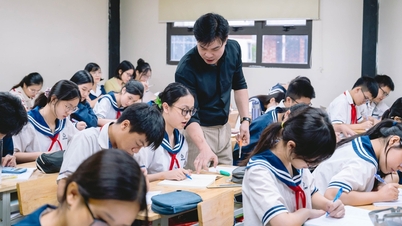
Based on her teaching experience, Ms. Tran Thi Thuong, a math teacher at Tay Son Secondary School (Hoa Cuong Ward, Da Nang City), shared that maintaining students' focus during this period requires patience and subtlety. Students who actively participate in class discussions and complete assignments well receive bonus points as encouragement in their learning process.
For students whose test scores are below par, teachers should create opportunities for improvement if they demonstrate a willingness to learn. Good grades at the beginning of the second semester will motivate students to maintain their interest and self-discipline.
As the homeroom teacher for 9th grade, Ms. Thuong proactively "separated" the topic of Tet (Vietnamese New Year) from the regular class time, reserving the space for sharing during class time or experiential activities to ensure that the math lesson was conducted seriously.
According to her, the math curriculum has a large amount of knowledge, while students are preparing for the entrance exam to grade 10. There are important tests right after Tet (Lunar New Year). If students relax a few weeks before Tet, they are likely to fall behind and struggle to get back into the rhythm of studying. "Maintaining study discipline before Tet will help them avoid 'losing their rhythm' when they return to school," Ms. Thuong shared.
Accelerate early for graduating students.
At Ly Son High School (Quang Ngai), a serious learning atmosphere is maintained even in the days leading up to Tet (Lunar New Year). According to Mr. Huynh Van Long, the school's principal, the practice of students leaving school early has almost disappeared, thanks to timely support policies and strong cooperation from parents.
Extracurricular activities are organized efficiently to avoid disrupting teaching and learning. For 12th-grade students, the school proactively increases class time early, focusing on reviewing the two compulsory subjects, Mathematics and Literature, during off-hours, averaging two lessons per week for each subject. The remaining subjects are scheduled flexibly according to available facilities.
Implementing review sessions before the holiday helps students maintain a continuous learning rhythm, avoid a "lag" after Tet (Lunar New Year), and create a proactive mindset for the final push. Teachers closely monitor the progress of each class, promptly adjusting review plans for groups of students with different abilities. According to Mr. Long, when the school, family, and students all agree on the goal, maintaining discipline is no longer just pressure but becomes a self-discipline from each student.
Cam Le High School (Cam Le Ward, Da Nang City) proactively developed a review plan early on, prioritizing students at risk of failing the graduation exam. According to Principal Nguyen Thi Minh Hue, starting February 2nd, review classes in Mathematics and Literature were implemented for students at risk of failing. Following that, from February 9th, the school expanded the review to eight elective subjects, organizing flexible in-person and online sessions until the exam day. This approach allows students to manage their study time effectively while still ensuring regular monitoring by teachers.
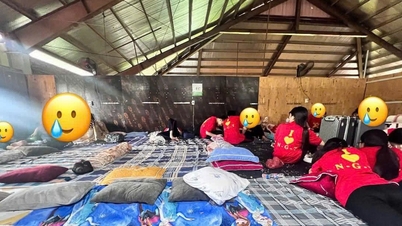
Alongside reinforcing knowledge, Cam Le High School also places special emphasis on psychological well-being. Immediately after the end of the first semester, the school integrated folk culture activities and plans to organize a camping trip in early March to create a healthy recreational space for students. When stress is relieved in the right way, students will easily return to a state of focus for their studies.
Cam Le High School implements a differentiated approach to student support. In addition to the group at risk of failing the graduation exam, the school maintains a team of gifted students, provides additional learning materials, and organizes online assignment review sessions. Remedial classes for 10th and 11th graders in Mathematics, Physics, and Chemistry are also maintained to prevent early knowledge gaps.
Cam Le High School leverages the "bridging" role of class officers, including the Youth Union Secretary, class president, and academic vice-president, who are invited to regular meetings to promptly report on the academic performance and discipline of each class, as well as the thoughts and aspirations of the students.
Through this channel, students showing signs of neglect are identified early, allowing homeroom teachers to coordinate with families to make adjustments and provide support. With a synchronized approach ranging from organizing review sessions and providing psychological support to managing discipline, the school hopes students will maintain their performance during the final stages and confidently enter the important exams of the school year.
Tra Van Ethnic Boarding Primary and Secondary School proactively worked with the People's Committee of Tra Van commune and village heads to agree on a plan to encourage students to return to school after Tet. A list of students at risk of dropping out was compiled before the holiday and assigned to specific teachers for monitoring. Thanks to this early preparation, in recent years, the rate of students returning to school after Tet has consistently exceeded 98%, creating a stable foundation for teaching and learning.
Source: https://giaoducthoidai.vn/giu-nhip-hoc-ngay-giap-tet-post766504.html































![[Photo] Reception to welcome General Secretary and President To Lam and his wife on their State visit to the Philippines](https://vphoto.vietnam.vn/thumb/1200x675/vietnam/resource/IMAGE/2026/06/01/1780295488620_vna-potal-chieu-dai-chao-mung-tong-bi-thu-chu-tich-nuoc-to-lam-va-phu-nhan-tham-cap-nha-nuoc-toi-philippines-8798060-7855-jpg.webp)




































































Comment (0)