

 |
| Take your time carefully preparing each cup of fragrant water. |
A pot of tea is poured, the water is green, the aroma is like roasted rice, the taste is mildly astringent then sweet aftertaste. But who knows: how old is the tea plant from which that cup of tea came? Perhaps, it's time to ask a very simple question: Does a cup of tea... have an age?
If a bottle of wine carries the passage of time through the grape harvest, and a piece of cheese embodies the aging process, then why is it that a cup of tea, cherished in East Asian culture for hundreds of years, is simply called by one name: tea?
In Thai Nguyen , tea is more than just a crop. Tea is a memory, a way of life. Tea is how people start their day, and also how they slow down, savoring each conversation and sitting together as evening falls. There are tea-growing regions where tea has been passed down through generations. Some tea plants have lived for 20, 30, or even longer.
There are tea gardens where each row, each vine, is associated with a family story. But when the tea is processed, packaged, and brought to market… all those stories seem to vanish in the steam.
"Aging tea plants" sounds simple, but it's more than just a number. It's about restoring something we've long forgotten to the tea plant: time. A young tea plant yields a fresh taste, a bright color, and a delicate aroma. An older tea plant, on the other hand, provides a richer flavor, a deeper, sweeter aftertaste, and a more enduring aroma – like an experienced person, time doesn't make the tea plant grow old.
 |
| People in La Bang are harvesting tea. |
Time plays a deeper role in the making of tea. In many parts of the world , people have learned to incorporate time into their products. Old vineyards are given respectful names, and bottles of olive oil from century-old trees are elevated to symbolic status.
Agricultural products are no longer just things to consume, but things to be felt and told stories about. Tea, inherently a product of tranquility, deserves even more to have its story told.
If one day, on a package of Thai Nguyen tea, one could see not only the name of the region, but also: 20-year-old tea; 30-year-old tea; tea from a family garden passed down through 3 generations, and a small QR code leading to the story of the tea plant, the tea growers, and the land… then perhaps, the cup of tea would be different from before.
People won't just drink tea. They'll listen to tea. But let's be honest: If you just attach a number without verification, then "tea age" will become a story nobody believes. Without standards, buyers won't understand why 30-year-old tea is different from 10-year-old tea. If you just follow the trend, what you lose isn't the product, but trust.
 |
| The joy of harvest for the people of Song Cau tea region. |
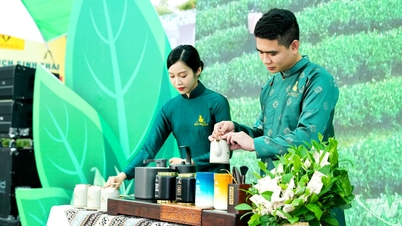
Therefore, perhaps we should start a little slower. A few tea gardens are selected, a few tea plants are documented, a few tea growers are named. Not many, just enough. Then, from there, we can open up bigger possibilities. “Heritage tea gardens,” tours among ancient tea plants. Tea ceremonies right at the base of the plant, where people not only enjoy tea but also hear stories about the journey of a leaf.
And tea makers… are not just producers, but also guardians of the land's memory. Interestingly, people often say that tea teaches people to slow down. But perhaps it is the tea plant itself, with its age, that teaches us to understand the meaning of time.
No rush, no fuss, just quietly accumulating... through each season. And if one day, someone holds a packet of Thai Nguyen tea, sees the words "25 years old," pours a cup of tea, takes a small sip... and suddenly pauses in silence for a little longer, then perhaps, we have done something very different. Not selling a product. But preserving a part of the memory of time in a cup of hot tea.
Source: https://baothainguyen.vn/van-hoa/202604/giu-thoi-gian-trong-nhung-chen-tra-9dd1c20/


![[Photo] General Secretary and President To Lam presides over a meeting on assessing national development resources.](https://vphoto.vietnam.vn/thumb/1200x675/vietnam/resource/IMAGE/2026/05/20/1779253785852_a1-bnd-2943-8519-jpg.webp)






























































Comment (0)