

 |
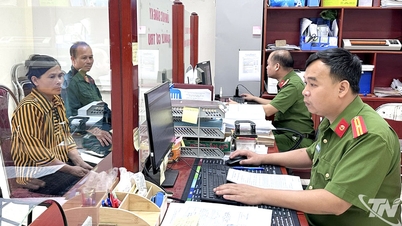
| Citizens come to complete administrative procedures at the Public Administrative Service Center of Thai Nguyen province. (Photo: Provided) |
Evaluating officials is always a difficult task. The effectiveness of officials and civil servants' work is not always easy to quantify. In some places, there is still a tendency towards biased, subjective, and unsubstantiated evaluations, leading to results that do not accurately reflect the level of contribution and performance of each individual.
If both high-performing and low-performing employees are rated equally, it will be difficult to create motivation for improvement and tighten discipline in public service.
Thai Nguyen's implementation of KPI-based evaluation for officials and civil servants reflects a new approach to public service management. Each task is clearly defined by the person responsible, the completion time, the output, and the level of completion.
Employees are evaluated based on their work progress, product quality, and actual effectiveness, in line with the principle of "clear person, clear task, clear responsibility, clear product".
Notably, the entire process of assigning tasks, updating progress, scoring, and compiling results is done using digital software. With regularly updated work data, the responsibilities of each individual become clearer. Heads of agencies and units have a basis for monitoring task completion, allowing them to promptly remind or adjust tasks when they fall behind schedule.
This policy contributes to concretizing the Central Committee's requirements for building a team of capable, responsible cadres who dare to think, dare to act, and dare to take responsibility for the common good.
To encourage innovation, we must first have a fair and transparent evaluation mechanism that accurately reflects competence and work efficiency. When task performance results are clearly quantified, those who perform well will receive deserved recognition; those who are sluggish or irresponsible will also find it difficult to remain inactive within the team.
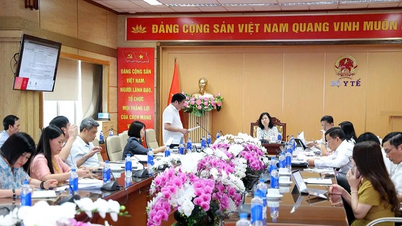
The Provincial Party Committee's Organization Department was the first unit to pilot the evaluation of cadres and civil servants using KPIs. As the agency directly advising on personnel organization, its early implementation demonstrates a spirit of setting an example and proactively innovating from within the personnel management agency itself.
Through the pilot phase, the criteria, procedures, and evaluation software will continue to be reviewed and refined before being widely implemented.
KPIs cannot immediately address all shortcomings in employee evaluation if the criteria and implementation methods lack realism. If the focus is solely on the quantity of tasks and reporting format while neglecting the quality and effectiveness of service to citizens and businesses, KPIs can easily become a new administrative burden.
Therefore, evaluation criteria need to be tailored to each job position, ensuring they are easy to track, measurable, and accurately reflect the level of task completion. Implementing KPI-based evaluation affirms the requirement for data-driven management and results-based performance, thereby contributing to improved public service discipline, the quality of the workforce, and the effectiveness of public service.
Source: https://baothainguyen.vn/xa-hoi/202605/danh-gia-nang-luc-bang-hieu-qua-cong-viec-f1d4791/




























![[Image] Hanoi's urban life under the challenge of a "scorching hot" environment](https://vphoto.vietnam.vn/thumb/1200x675/vietnam/resource/IMAGE/2026/05/25/1779706979265_nang-nong-t5-2026-minh-duy-7-4636-jpg.webp)

































































Comment (0)