

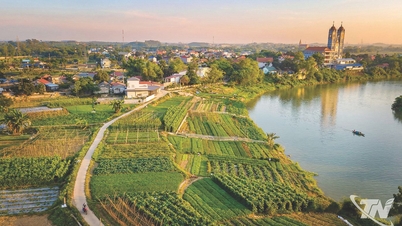
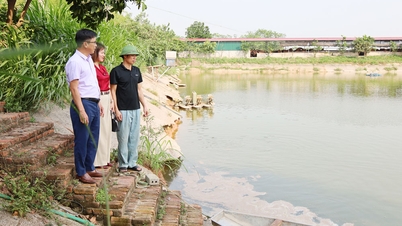
Along the Tien Phong - Da Mai area, the green stretches all the way to the water's edge. When spring arrives, children rush out to the fields, skipping and jumping on the newly exposed mounds of earth after the flood season. Adults leisurely plant sweet potato seedlings and rows of cucumbers and melons. The entire alluvial plain opens up to endless growth. While some areas are being built up, others are sometimes eroded due to changing water currents. But it is precisely this transformation that makes these lands seem to be rejuvenated.
 |
Boat racing festival on the Cau River. Photo: Viet Hung. |
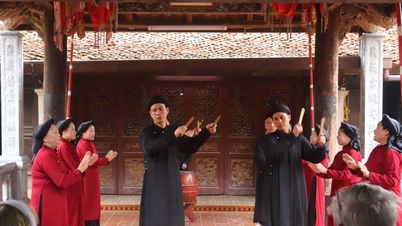
Traveling to the areas around Cam Ly - Phuong Son, spring is full of vibrant energy. The water flows swiftly, so clear that you can see the pebbles at the bottom. The alluvial plains here are not wide, but they are full of life. Clusters of soybeans sprout, and rows of purple onions gleam with vibrant colors. The locals say, "This land thrives in the sun," meaning anything planted in spring will grow well. Therefore, just a few weeks after Tet (Lunar New Year), even tiny seedlings can be seen promising a bountiful harvest. In the alluvial plains along the Cau River, spring feels more like a more ancient way of life. It's where Quan Ho folk songs once echoed from the riverbanks, blending with the sound of oars splashing in the water. Cultural sediment lies beneath the brown alluvial soil. In Van Ha plain this season, cucumbers and sticky corn are grown; while Tien Son plain bustles with the sounds of plowing, the laughter and chatter of groups of workers. The land, built up year after year, carries with it layers of past silt, stories, festivals, and customs… making each spring here feel like a homecoming.
Down in Hiep Hoa, the alluvial plains along the Cau River stretch out as if embracing the sky. In spring, flocks of white egrets land, leaving tiny footprints on the soil. Locals sow mustard greens, paddling small boats to level the land, the water reflecting the clear spring sky. This year, the Mai Dinh and Hoang Van alluvial plains have added new, smooth, and loose soil, like a pristine sheet of paper for those who continue to write the story of this riverside land.
We kept listening to the old man's stories about his childhood memories. Every time the river water receded, the village children would run to the riverbank to collect pieces of pottery and shards mixed in with the silt. Some fragments bore ancient patterns; my grandfather said they were traces of the people who once lived along this river. The riverbank soil not only nourished plants but also held untold stories. He said that just by looking at the color of the silt, you could tell whether the heavens were kind that year or not. In the old days, my mother and sisters also grew mulberry trees and raised silkworms, each thread shimmering as if pulled from the heart of the earth. Now, that old profession is gone, but every spring, he goes to the riverbank to watch the water change color, remembering the sound of the spinning wheel. After a couple of leisurely days, he would listen to stories about the sandbar on the riverbank that grew larger each year. The locals recounted that before, that sandbar was just a small pebble beach with a strong current all year round. Then, layers of silt were carried by the water, accumulating and forming. Now, there is a whole orchard of early-ripening lychees on it. When spring arrives, the young leaves are a vibrant green, bees flock to build their nests, and the fragrance of lychee blossoms wafts to the ferry landing. The villagers say they see the strip of land growing like their own child, transforming from a barren wasteland into a fertile place. The land repays the people's kindness, and the people cherish the land as if it were a part of their very being. The blacksmiths say that the waters of the Thuong River helped temper the metal, while the alluvial soil on the bank provided sustenance for the villagers during the most difficult times. The people still believe that every knife and hoe that takes shape carries the essence of the land and water of their homeland.
The alluvial plains are where people always find a reason to start anew, in a persistent, quiet, yet vibrant way. Perhaps that's why, no matter how the river changes course, whether one bank erodes or builds up, people never leave the land. They live slowly but surely, enduring and gentle, considering each spring a promise; as long as the land continues to build, people will continue to believe. Spring arrives in the color of young leaves, the melodious chirping of birds, and in the way the river and the land remain intertwined for millennia. The erosion and deposition are the laws of life. Where one place is lost, another is built up. Where the water washes away, the silt gathers and returns. Like the people of this land, gentle and resilient, they sow and cultivate through season after season, believing in rebirth. Standing on the embankment and looking down at the alluvial plains brimming with life, one suddenly understands that spring is not just the fragrance of nature, but also the cultural sediment of generations. The rivers flow ceaselessly, the alluvial plains expand endlessly, like a New Year's blessing; this season will be a good one again; this season, the land and its people will continue to thrive.
Source: https://baobacninhtv.vn/boi-them-nhung-dong-xuan-postid438892.bbg
![[Photo] General Secretary and President To Lam presides over a working session with the Central Policy and Strategy Committee on the development of the materials industry.](https://vphoto.vietnam.vn/thumb/1200x675/vietnam/resource/IMAGE/2026/05/21/1779359935432_a3-bnd-3129-1412-jpg.webp)

![[Photo] National Assembly Chairman Tran Thanh Man working with the Standing Committee of the Law and Justice Committee](https://vphoto.vietnam.vn/thumb/1200x675/vietnam/resource/IMAGE/2026/05/21/1779378929214_ndo_br_1-4610-jpg.webp)




































































Comment (0)