

>>
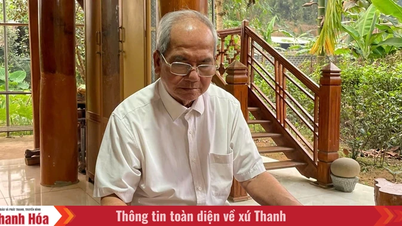
As a respected figure in the community, dedicated his entire life to the cause of "nurturing future generations," Mr. Hoa always instilled in his students a sense of pride in their ethnic identity. Upon retirement, he expected to enjoy a peaceful old age, but a chance conversation with some children in the village left him deeply troubled to learn that these children, despite being Tay ethnic, could not speak their mother tongue. "I feel so sorry for them!" he shared in a somber voice, filled with sorrow: "Ethnic people who don't know their own language are like trees without roots."
This concern wasn't limited to a few isolated cases. Deeply aware of the importance of preserving their ancestral language, he decided to conduct a survey of the situation in Goc Bang village, with support from schools and local authorities. The survey results further troubled him: nearly 70% of primary school students and over 40% of secondary school students in the village could neither speak nor read the Tay language.
One of the main reasons is the mindset of many parents who want their children to become proficient in the common language early on to facilitate their studies. From this reality, Mr. Hoa realized he needed to act. He boldly proposed that the village Party branch issue a thematic resolution on the responsibility of Party members in preserving and teaching the Tay language to the younger generation. With the strong agreement of the Party branch and the consensus of the villagers, a free Tay language class taught by him was established and held regularly every Saturday.
Not only did he teach based on his own knowledge, but he also constantly educated himself, expanding his vocabulary and delving deeper into the Tay language from knowledgeable people to enrich and refine his lessons. Lacking a standard curriculum, Mr. Hoa diligently "compiled" his lessons from his own rich life experiences – childhood memories, sweet sli luon songs, and Tay folk tales passed down from his grandparents. He was both a dedicated teacher and a great friend, patiently guiding students of all ages, from toddlers just learning to speak the language, to parents wanting to relearn their mother tongue.
Beyond teaching the language, Mr. Hoa also revived and incorporated unique traditional cultural activities into the classroom, such as folk games, Then singing, and Luon singing – cultural traditions that are gradually fading away. From the initial dedication of a teacher, the small classroom has gradually become a meaningful cultural meeting place, where the entire community connects, shares, and preserves the "soul" of their ethnic group.
However, this meaningful "keeping the flame alive" journey could only last a mere three months. Difficulties such as minimal operating funds, a lack of official teaching materials, and insufficient professional support became major obstacles. Furthermore, maintaining class sizes was not easy, as students and their parents were preoccupied with their regular schoolwork and the daily burdens of earning a living. The personal strength and resources of a retired teacher, no matter how dedicated, were insufficient to shoulder a task requiring continuous investment and support from many sources.
For that reason, Mr. Sa Cong Hoa's Tay language class had to temporarily suspend operations. The class no longer lights up every Saturday, but Mr. Hoa's concern never faded. Those three short months may not have created a breakthrough in the community's ability to use the Tay language, but they strongly awakened awareness of the importance of preserving their mother tongue. This also proves that the need to learn the Tay language in the community is real, it just needs more appropriate and sustainable methods, materials, and support resources.
Looking to the future, Mr. Sa Cong Hoa remains hopeful for a more long-term and sustainable solution for the Tay language. He continues to express his earnest desire for all levels of government to pay more attention to the preservation of ethnic minority languages. He proposes specific solutions: investing in the systematic and specialized training of ethnic language teachers; researching the inclusion of ethnic language content in the main curriculum or at least extracurricular activities in schools in ethnic minority areas; and regularly organizing cultural events, singing competitions, storytelling, and poetry readings in ethnic languages in schools and communities to create an environment for practice and to awaken the love and pride of the language in the younger generation.
The dedication and initiative of retired teacher Sa Cong Hoa is a vivid testament to the commitment and responsibility of respected figures in ethnic minority communities in the face of the threat of cultural erosion. His story is not just about a class that has ceased operations, but a profound reminder of the fragility of traditional cultural values in the face of modernity. It is also an urgent call for the continuous collaboration and contribution of the entire community, and especially of all levels of management, so that passionate individuals like Mr. Hoa can continue to burn brightly, spreading their influence and contributing to the preservation of ethnic culture for generations to come.
Van Thong
Source: https://baoyenbai.com.vn/16/349566/Giu-tieng-Tay-giua-dong-chay-hoi-nhap.aspx






















![[Photo] “Red Journey” 2026: Vietnamese Youth Continue Building the Bridge of Friendship Between Vietnam and China](https://vphoto.vietnam.vn/thumb/1200x675/vietnam/resource/IMAGE/2026/04/20/1776629730866_4055880775670638308-9618-4200-jpg.webp)























































Comment (0)