

Perhaps the most remarkable aspect of the two books, "Liberal Education : Philosophy - Architecture - Operation" and "Thin Slices of Liberal Education," lies not in the concept of "liberation," but in the fact that they were written from a very real journey in education.
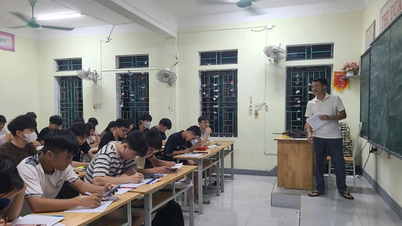
Not from a university lecture hall, not from an educational research institute, but from a high school in the Central Highlands – where every day one has to deal with the everyday stories of students, parents, and the classroom.
A thin slice of liberal education
After more than 10 years of building Hoang Viet School, Mr. Le Dinh Hien – the founder and chairman of the school board – chose to write about education not in the manner of a theorist, but rather as someone who has experienced many real-life situations and wants to record what he truly thinks.
The book "Liberal Education: Philosophy – Architecture – Operation" is like an attempt to systematize the path that author Hoang Viet has taken.
Why did the school choose liberal education? Why is self-learning emphasized? Why are flipped classrooms and self-managed classrooms implemented? Why is AI applied while still placing people at the center? And why are moral education, responsibility, and school culture given such importance?
It's noteworthy that the book doesn't adopt an assertive tone. The author is quite cautious when discussing liberal education – a concept that is still sometimes debated or easily misinterpreted.
Instead of attempting to create a formulaic model, the book focuses on opening up new perspectives and exploring how education should help people grow in a rapidly changing world . Meanwhile, the nuanced perspectives on liberal education offer a distinctly different perspective.
The book reflects the small rhythms of life within a school. It could be a student doubting themselves, a teacher learning to listen, a moment of feedback instead of judgment, a quiet classroom that is actually deep in thought, or the very real anxieties of educators facing the changes of the AI age.
There are no grand concepts, no lecturing. Just small, gentle, slow, and often very ordinary snippets of life, but it is precisely this ordinariness that makes it easy for readers to see themselves in it—someone who has been to school, become a parent, a teacher, or experienced the feeling of not being listened to in education.
Perhaps this is also what makes these two books feel much more relatable than many other educational materials.
Education as life
The author doesn't try to portray education as a distant system, but rather views it as life itself. In this context, technology plays its role, AI plays its role, but ultimately, the most important thing remains the human element.
In the context of rapidly changing education, where many talk about innovation, technology, or AI, these two books maintain a rather calm perspective: a willingness to embrace new things, but always questioning whether it truly helps people learn more deeply and grow.
What remains are the old but ever-important questions: What is the purpose of learning, what is the role of the teacher, and after so many years of schooling, do people truly become more mature?
Although they are about education, the two books still have a light and approachable feel, not heavy on theory, but rather like gentle suggestions to encourage readers to think more about learning and personal growth in today's life.
Source: https://giaoducthoidai.vn/goc-nhin-an-tuong-ve-giao-duc-khai-phong-post780156.html
![[Photo] Secretary of the National Assembly Party Committee, Chairman of the National Assembly presides over the meeting of the Standing Committee and Executive Committee of the National Assembly Party Committee.](https://vphoto.vietnam.vn/thumb/1200x675/vietnam/resource/IMAGE/2026/06/03/1780480353201_ndo_br_bnd-2585-jpg.webp)
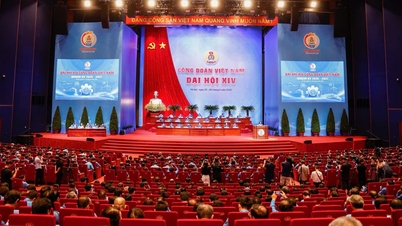
![[Photo] First session of the 14th Congress of the Vietnam Trade Union](https://vphoto.vietnam.vn/thumb/1200x675/vietnam/resource/IMAGE/2026/06/03/1780465947883_ndo_br_img-3852-jpg.webp)
![[Photo] General Secretary and President To Lam presides over a meeting with the Central Organizing Committee.](https://vphoto.vietnam.vn/thumb/1200x675/vietnam/resource/IMAGE/2026/06/03/1780482764658_a1-bnd-4741-3342-jpg.webp)







































![[Video] Sunset at Lap An Lagoon – Where the sun sets over the fishing nets](https://vphoto.vietnam.vn/thumb/1200x675/vietnam/resource/IMAGE/2026/05/31/1780192137701_beach-landscape-sea-water-nature-grass-745871-pxhere-com.jpeg)





























Comment (0)