

The "antisocial" figure of Hanoi's fine arts.
Tran Nguyen Dung belongs to a generation of artists who matured during a rather unique period of Vietnamese art, a time when painting was still considered a "low-paying" profession, and the Indochinese artists whose paintings later fetched millions of dollars were all just elderly teachers struggling to make ends meet.
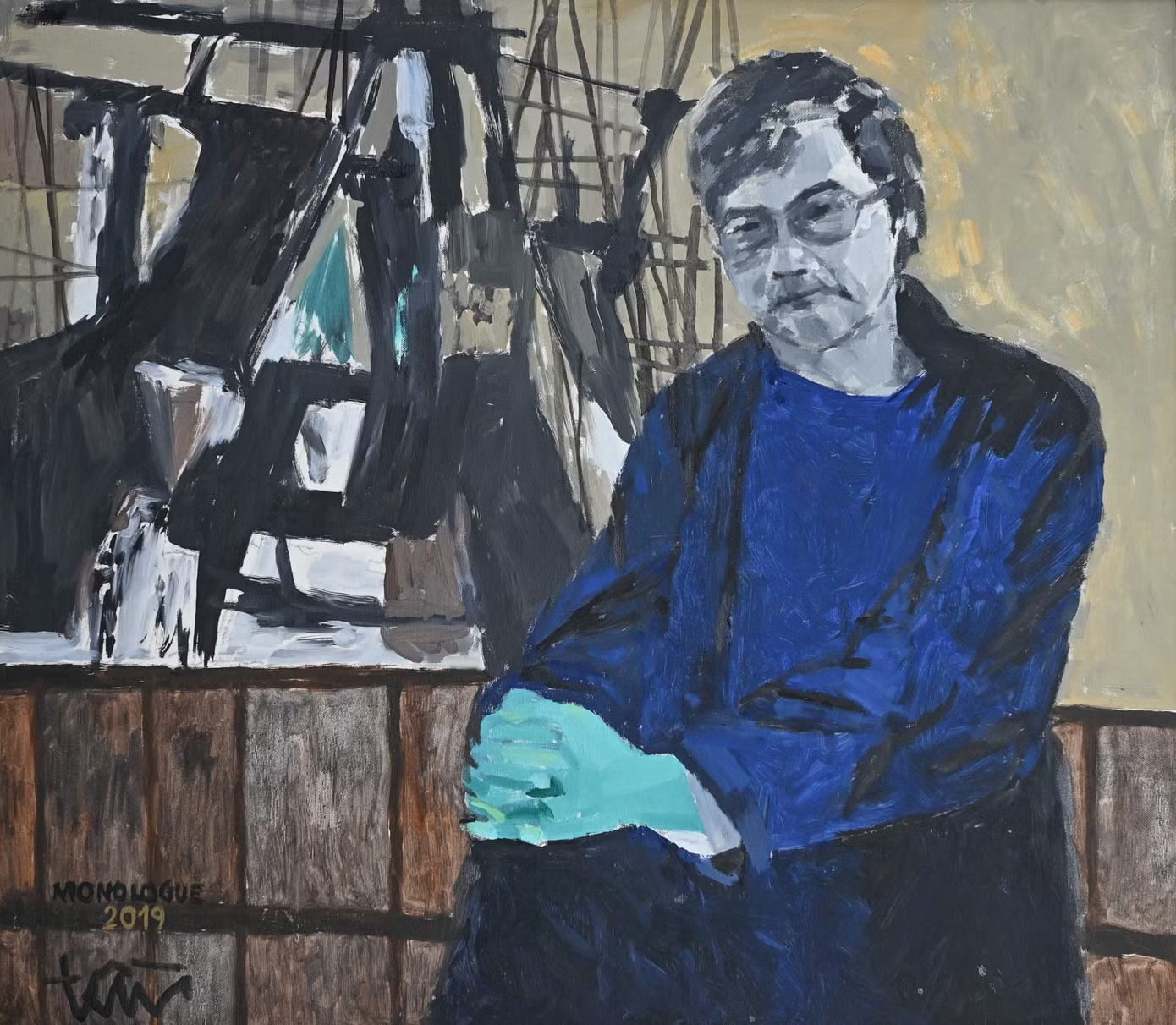
In Hanoi's art circles, Dung "the Black" is valued for his sincerity and somewhat carefree personality. Once, when a director asked him about the secret to his youthful appearance, he laughed and said, "My highest position is head of the professional department." In reality, Tran Nguyen Dung has more than once resolutely refused opportunities for promotion, choosing instead to focus solely on his passion.
Dung "the Black" started learning to draw at a young age, around 12 years old, at the Tri Tri studio of artist Luong Xuan Nhi, and then continued at the Sang Tao studio of Pham Viet Song. This was a period when art was still widely taught through hands-on instruction. Tran Nguyen Dung was greatly influenced by his two teachers.
At that time, Luong Xuan Nhi was already a major figure in Vietnamese painting. He was the top graduate of the 1932-1937 class at the Indochina College of Fine Arts and was famous for winning numerous painting awards.
It is said that Luong Xuan Nhi's most striking "identifying" qualities were his talent, his charisma, and his particular fondness for painting young women. He painted so many women from Hanoi that the artists passed down the saying, "Phai's streets, Nhi's women." Coincidentally, Tran Nguyen Dung was later considered a close friend of Bui Xuan Phai, and he was influenced by both of them in his creative practices. "Women" occupied a large portion of Tran Nguyen Dung's paintings; in fact, on several occasions, he and Bui Xuan Phai even painted the same nude model together.
Another teacher of Tran Nguyen Dung was the painter Pham Viet Song. During his lifetime, Pham Viet Song used the phrase "asocial" to describe his student. While many of his contemporaries were interested in management, professional activities, or social relationships, Dung "the Black" lived a secluded life in the world of painting, dedicating almost all his time and energy to his easel.
Perhaps it was this "very artistic" choice that earned Tran Nguyen Dung the respect of many great painters. He had close relationships with Bui Xuan Phai, Hoang Lap Ngon, Tran Trung Tin, and others.
“When we first moved to Dong Thai Alley (Hanoi), painter Tran Trung Tin came from the South to visit and wanted to see our house, so Mr. Bui Xuan Phai took him to where my husband and I lived. But the two gentlemen didn't know our exact house number, so they walked from one end of the alley to the other, shouting: 'Dung, are you home?' I was on the third floor at the time, and only realized the two painters were looking for my husband when I heard them calling, so I went down to open the door,” recounted Mrs. Truong Thanh Tra, wife of painter Tran Nguyen Dung.
Most of Tran Nguyen Dung's youth was spent working at the Hanoi Department of Culture and Information. He joined the department at the age of 17, primarily serving in exhibition, propaganda, and art-related tasks. During the war, the workload was immense. There were periods when he practically ate and slept at his workplace to complete exhibitions serving political objectives. However, as time went on, the administrative pressure and repetitive nature of the work wore him down. In 1993, this man from the Old Quarter decided to retire early to dedicate all his time to painting.
After his early retirement, Tran Nguyen Dung began a period of truly independent artistic creation. Thanks to the encouragement of Mrs. Don Thu, the owner of a famous foreign language bookstore in Hanoi, he began selling his paintings. Initially, he only produced small sketches on traditional Vietnamese dó paper, then gradually moved on to oil paintings, silk paintings, pigments, lacquer, and other materials. His paintings were particularly popular with foreign customers, especially the French and Swedes. Some tourists passing through Hanoi, who greatly admired his paintings but lacked the money to buy them, insisted on paying a deposit and sending the rest back home. The artist generously gave them away as a gift to a kindred spirit. Others, due to the artist's sincere advice—"These materials are very difficult to preserve in your country"—remained regretful for a long time.
According to Ms. Truong Thanh Tra, many of his "very beautiful" paintings have already been sold, so even though he worked diligently like a conscientious civil servant for thirty years, the number of his paintings that the family still possesses is less than 100.
An artist has many faces.
It is difficult to place Tran Nguyen Dung into a single, stable artistic "school." He freely alternates between lacquer, oil paint, pigments, silk, and even mixed media. Even his brushwork lacks consistency, except for the overall spirit. He brings the scholarly character of Northern Vietnam to his canvas, not overly concerned with proving which artistic system he belongs to or which trend he is engaging with. This gives his paintings a rare degree of freedom in contemporary Vietnamese art.
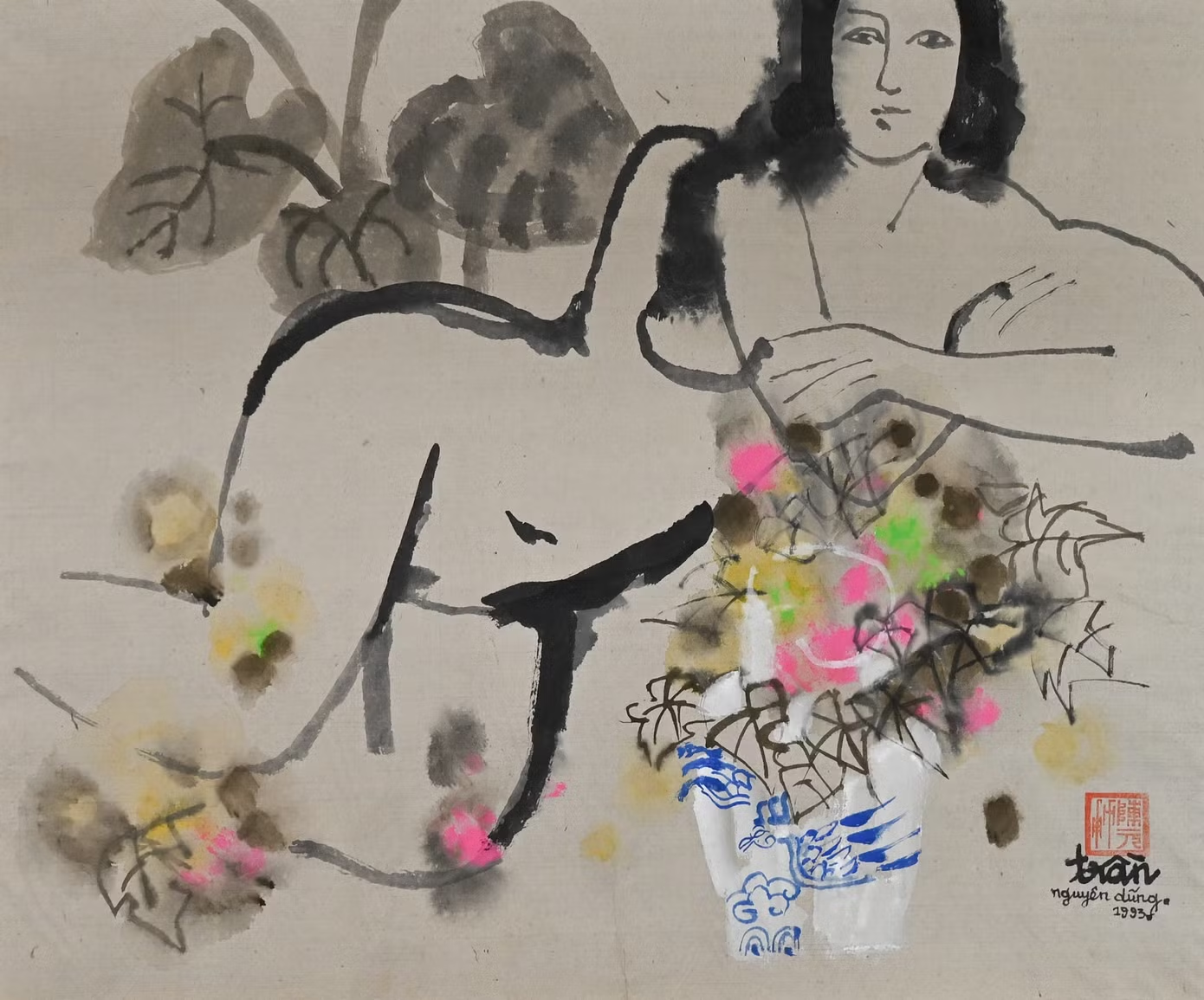
Art critic Hai Yen expressed particular delight with the nude painting "Girl Beside a Vase ," painted with pigments by Tran Nguyen Dung in 1993. "The artist minimized the details on the woman's face, even the body was simplified to the point of almost being just visual symbols. The use of white space and black lines evokes the spirit of East Asian ink painting, but he incorporated very modern fluorescent colors, making the ink structure more vibrant and pulling the painting away from a classical feel," she commented.
Not only contemporary artists, but also many younger generations of artists appreciate Tran Nguyen Dung's ability to work with a variety of materials without losing his personal rhythm.
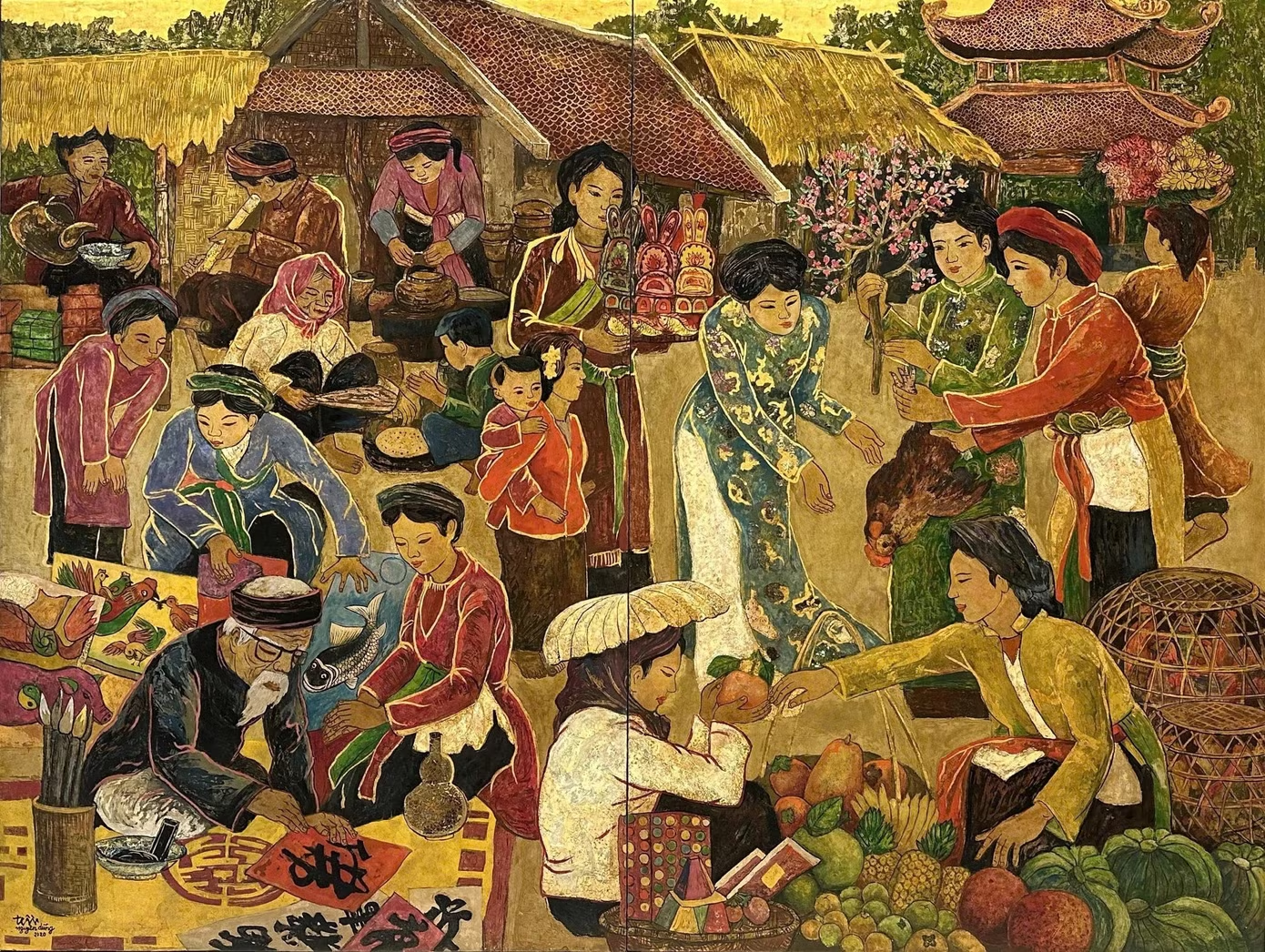
Artist Tri Minh commented that the old Tet market painting, "Buoi Market," was a lacquer painting with a dense composition, many characters, and numerous details of folk life.
“At first glance, viewers might easily think this is a familiar form of traditional nostalgic painting. But upon closer inspection, one will see that Tran Nguyen Dung does not idealize life. His characters are crowded together in a dense space. The entire painting appears to be in motion, but without any sense of theatrical festival atmosphere. It resembles a slice of memory of old Hanoi residents more than a cultural manifesto.”
"Days of leisure"
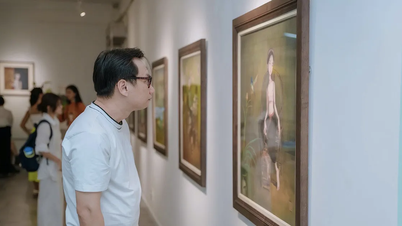
The exhibition "Leisure Days," the first solo exhibition by artist Tran Nguyen Dung since his death in 2023, will take place from June 2-10 at the Vietnam Fine Arts Museum. The event will showcase more than 60 works with many themes close to everyday life such as young women, flowers, festivals, and living spaces in Hanoi.
From 1959 to 1992, Mr. Dung worked at the Hanoi Department of Culture and Information as a painter. Since 1993, he has been a freelance artist. His works are currently held by collectors in the United States, France, Germany, Italy, Japan, South Korea, Singapore, Vietnam, and other countries.
In a different style, Hanoi's sidewalk cafes are commented on as being very close to the naive, even somewhat "childish" spirit of painting when viewed by academic standards. But it is precisely this deliberate awkwardness that creates the very authentic atmosphere of Hanoi's streets. The man in blue sits still like a shadow, the woman in yellow stands in front of the small cafe, the brightly colored plastic chairs… all create a very contemporary urban feel.
According to critic Hai Yen, what is interesting about Tran Nguyen Dung is that he is not loyal to a single aesthetic. At times he leans towards folk art, at other times towards expressionism, and at still other times he inclines towards minimalist ink painting.
It is this instability that makes him unique. Many self-taught artists are often limited to a familiar visual formula, while he constantly changes the rhythm of his painting.
Source: https://tienphong.vn/ha-noi-co-mot-hoa-si-goi-la-dung-den-cho-gao-post1847434.tpo



















![[Photo] Reception to welcome General Secretary and President To Lam and his wife on their State visit to the Philippines](https://vphoto.vietnam.vn/thumb/1200x675/vietnam/resource/IMAGE/2026/06/01/1780295488620_vna-potal-chieu-dai-chao-mung-tong-bi-thu-chu-tich-nuoc-to-lam-va-phu-nhan-tham-cap-nha-nuoc-toi-philippines-8798060-7855-jpg.webp)










































Comment (0)