

3 economic growth scenarios for Hanoi
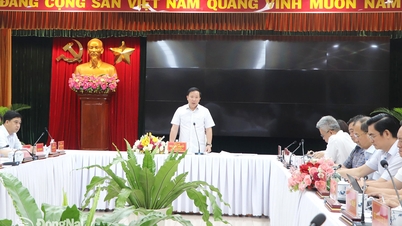
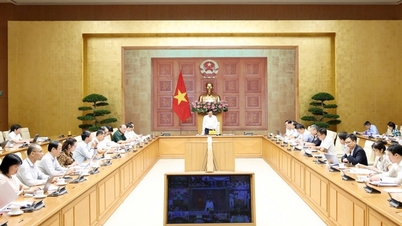
At the consultation workshop on the Hanoi Capital City planning for the period 2021-2030, with a vision to 2050, held on the morning of January 9th, Minister of Planning and Investment Nguyen Chi Dung assessed: The content of the Hanoi Capital City planning reflects new thinking and vision, consistent with the development orientation of the national socio-economic development strategy for the period 2021-2030; promoting its role as a growth pole and driving force for development for localities in the Capital region and the Red River Delta region.
According to the Minister, despite the tight deadline and the actual implementation time of approximately 12 months compared to the stipulated 24 months, the Hanoi planning project was still carried out meticulously, systematically, and seriously, in compliance with all legal regulations on planning.
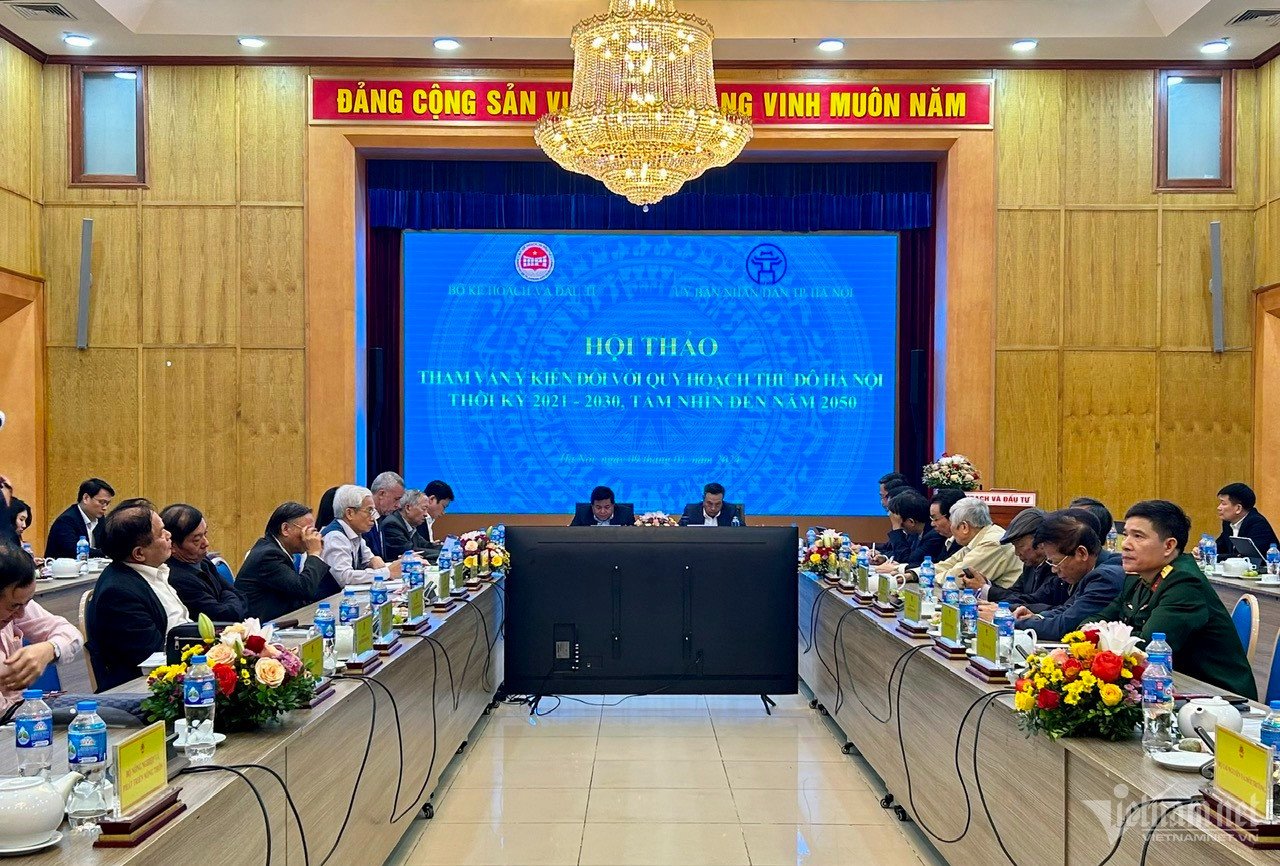
According to Mr. Tran Sy Thanh, Chairman of the Hanoi People's Committee, the Hanoi planning dossier is currently undergoing a review process with members of the appraisal council. The dossier comprises nearly 1,200 pages of reports integrating 39 proposals from various sectors and fields.
Along with that are 30 proposals from districts, counties, and towns, as well as Strategic Environmental Assessment (SEA) reports, summary reports, appendices, diagrams, and maps built on the basis of applying Geographic Information Systems (GIS).
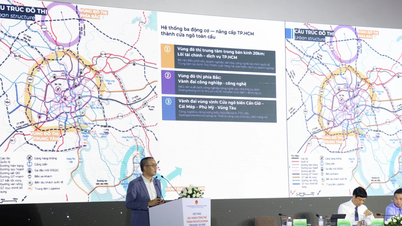
Speaking on behalf of the consulting unit, Professor Hoang Van Cuong, Vice Rector of the National Economics University in Hanoi, presented a summary of the Hanoi planning project. He stated that the plan proposes five general development perspectives and three perspectives on spatial organization.
This emphasizes the view that Hanoi, as the capital city, should develop rapidly, sustainably, and innovatively, becoming a growth pole with a leading and influential role in promoting the Red River Delta region and the northern dynamic region, serving as a model for national development.
At the same time, we must promote the human factor, placing people at the center, as the subject, resource, driving force, and goal of development based on science, technology, and innovation; and developing the economy and society in conjunction with environmental protection...
In terms of spatial organization, the Hanoi Capital City planning focuses on developing industries and sectors along five economic corridors and belts, linked to five development axes. Emphasis is placed on developing five types of space: built space; underground space; digital space; cultural space; and public space (especially green space).
By 2050, Hanoi aims to become a representative of Vietnam's image and position as a strong, prosperous nation with a leading level of development in the region, on par with the capitals of advanced Asian countries...; average GRDP of 45,000-46,000 USD/person; urbanization rate of 80-85%.
Notably, the Hanoi master plan presents three economic scenarios. In scenario 1 (the favorable scenario), Hanoi's GRDP growth is projected to reach 9.5-10%; in scenario 2 (the scenario with efforts), it is projected to reach 8.5-9.5%; and in scenario 3 (the baseline scenario), Hanoi's GRDP is projected to reach 7.5-8.5%.
For Hanoi to achieve the expected growth
Dr. Dao Ngoc Nghiem, Vice President of the Vietnam Urban Planning and Development Association, assessed that this is the most groundbreaking plan compared to previous urban planning projects in Hanoi.
“The Hanoi Capital City master plan basically adheres to the design tasks approved by the Prime Minister, but there is also the challenge of simultaneously implementing two key planning priorities: the Hanoi Capital City master plan and the adjustment of the general master plan. Specific policies defined in the Law on the Capital City to create development momentum are also being finalized for submission to the National Assembly. Therefore, consulting units need to coordinate closely,” Mr. Nghiem emphasized.
While agreeing with the three growth scenarios outlined in Hanoi's master plan, Dr. Cao Viet Sinh, former Deputy Minister of Planning and Investment, believes that it will be very difficult given Hanoi's large scale and high demands.
He also expressed concern that Hanoi's economic structure was not rational; the proportion of industry was too low, failing to boost growth.
Dr. Cao Viet Sinh noted that if Hanoi wants rapid growth, it needs to reconsider its digital transformation and innovation orientation – which is not yet clearly demonstrated.
Commenting on Hanoi's urban planning, Christopher Lewis Malone, Managing Director of Dalberg Southeast Asia, said that the Hanoi urban plan incorporates many aspects for growth; however, without groundbreaking ideas, Hanoi is unlikely to grow as expected.
He suggested that Hanoi should focus on a number of key and breakthrough sectors to boost growth; and also consider Hanoi's competitive advantages over other cities, especially Ho Chi Minh City. Industry and technology sectors will be the spearhead to help Hanoi's economy develop further.
Source


![[Photo] Delegation attending the 14th Congress of the Vietnam Trade Union visits the Mausoleum of President Ho Chi Minh.](https://vphoto.vietnam.vn/thumb/1200x675/vietnam/resource/IMAGE/2026/06/03/1780451842301_ndo_br_img-3824-jpg.webp)





























































Comment (0)