

High economic value models
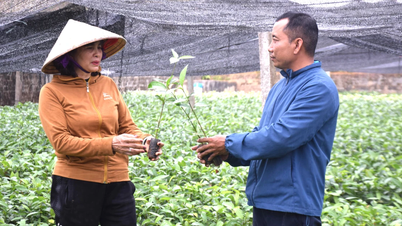
In recent times, Hanoi's agricultural sector, in coordination with local authorities, has applied scientific and technical advancements to production, implementing numerous production models following VietGAP and organic farming standards. Sharing information on this matter, Ms. Vu Thi Huong, Director of the Hanoi Agricultural Extension Center, stated that in 2024, the Center successfully developed many agricultural extension models, yielding high economic efficiency and increasing farmers' income.
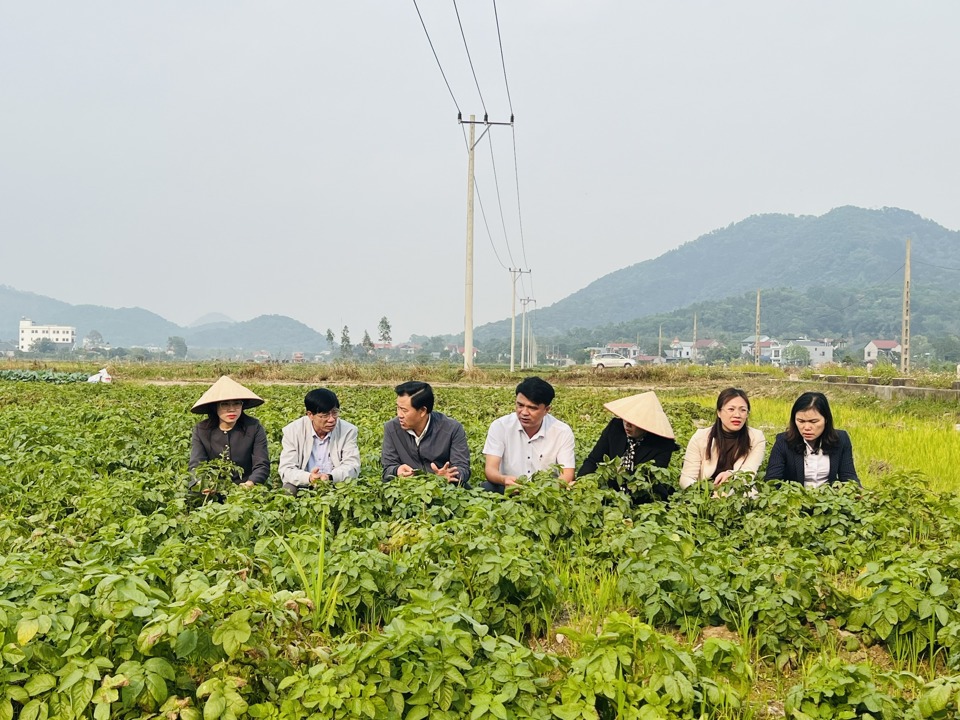
Accordingly, the Center has supported the implementation of 20 agricultural extension models, including 12 crop cultivation models, 4 livestock farming models, and 4 aquaculture models; and 2 agricultural extension projects. The models were implemented at 82 locations with 1,502 participating households on 423 hectares of cultivated land, over 44 hectares of water surface area, 200 tons of raw materials (for mushroom cultivation), and nearly 15,700 livestock.
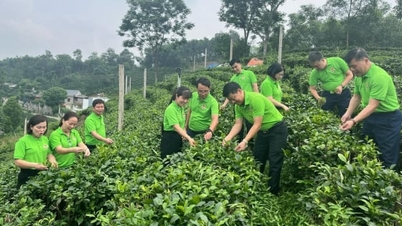
The models are divided into 10 groups, focusing on key areas such as: developing organic and VietGAP-compliant vegetable, flower, and fruit production, applying high technology, and certification; developing production linkages with product consumption; implementing mechanization; and cage aquaculture...
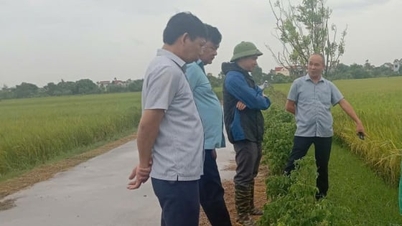
A highlight of the program supporting the implementation of green and safe agricultural models is the high-quality rice production model according to VietGAP standards, linked to product consumption, on a scale of 100 hectares. This includes 50 hectares in the spring crop using TBR225 and HD11 rice varieties, and another 50 hectares in the summer crop supplemented with glutinous rice varieties.
The model's effectiveness not only improves economic efficiency by about 10%-20% compared to conventional methods, but also creates safe rice products, changes farmers' perceptions, contributes to building sustainable agriculture, and results in high harvest yields, guaranteed purchase by businesses, helping farmers increase income and stabilize output. Specifically, the TBR225 variety yields 62-69.7 quintals/hectare, the HD11 variety yields 63.9-68.5 quintals/hectare, and the glutinous rice variety (Nếp Cái Hoa Vàng) yields 50 quintals/hectare for fresh rice flakes and 47.2 quintals/hectare for dry rice…
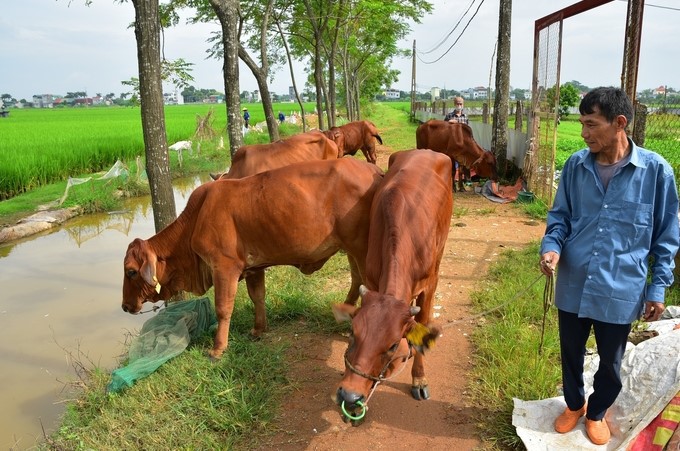
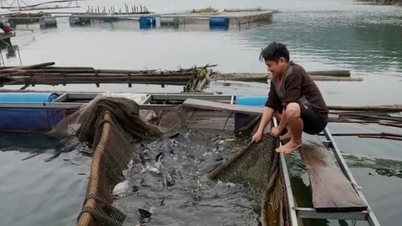
Regarding livestock farming, the center has supported the development of production linkages in poultry farming, linking it with product consumption, such as: commercial colored-feather chicken farming models following VietGAP standards linked to product consumption; livestock farming development aimed at increasing value and adapting to climate change; breeding cattle farming models in 2023-2024; and disease-free pig farming, reducing negative impacts on the environment. Regarding aquaculture, the center focuses on supporting farmers to raise fish according to VietGAP standards…
Organic farming models and VietGAP standards help increase the value of products and contribute to the comprehensive and sustainable development of the agricultural sector by preventing disease outbreaks, achieving high yields, increasing income for farming households, and contributing to the construction of new rural areas and ecological agricultural zones; they are supported by local authorities and enthusiastically embraced by farmers.
Agricultural models such as the production of new potato varieties and biomass corn have proven effective, helping farmers restore production and adapt to harsh climatic conditions.
Applying high technology and increasing linkages along the value chain.
According to Nguyen Thi Thanh Tam, Head of the Economic Department of Me Linh District, the district has collaborated with the Hanoi Agricultural Extension Center to effectively implement agricultural extension programs through the construction and demonstration of models and the transfer of advanced techniques in crop cultivation, livestock farming, and aquaculture to farmers. These models help increase crop and livestock productivity, yield high economic efficiency, limit disease outbreaks, reduce environmental pollution, and ensure food safety and hygiene.
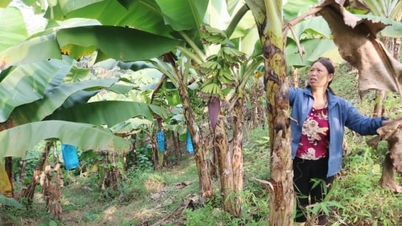
Currently, the district maintains and develops stable specialized farming areas with a scale of 20 hectares or more per area, such as high-quality rice production in the communes of Lien Mac, Tam Dong, Tu Lap, and Thanh Lam; and fruit tree cultivation in the communes of Hoang Kim and Chu Phan...
To develop green agriculture, in the coming period, the Hanoi Agricultural Extension Center will continue to review and synthesize the results of the agricultural extension program for the period 2020-2025, research and advise on the development of a draft agricultural extension program for the city for the period 2026-2030, in line with the orientation of developing advanced, modern, efficient, and sustainable agriculture in the capital city.
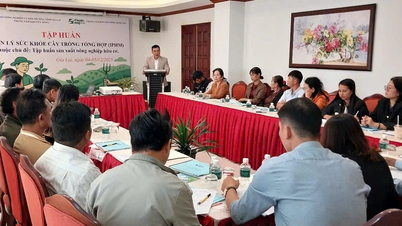
It is expected that by 2025, the center will coordinate with training units to provide training to approximately 5,000 agricultural extension collaborators, farmers, and producers, enabling them to access and grasp scientific advancements and improve their management and production skills. This will help people proactively manage their production based on their own knowledge, increase connectivity, and promote the application of scientific advancements in production and business.
This aims to transfer technological advancements through demonstration models, improve production efficiency, and increase economic efficiency by approximately 10-20% compared to areas outside the models; transform the structure of crops and livestock, expand the production of essential agricultural products, and develop value chain linkages; gradually expand models applying high technology and good agricultural practices; and strengthen linkages along the value chain.
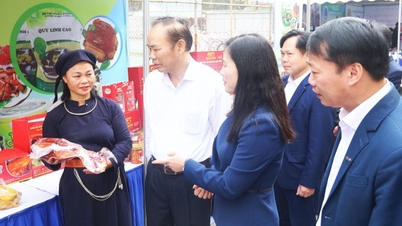
According to Nguyen Manh Phuong, Deputy Director of the Hanoi Department of Agriculture and Rural Development, in addition to green agricultural production, to address the issue of safe agricultural product consumption, Hanoi's agricultural sector continues to coordinate with localities to build large-scale, standardized specialized farming areas with strict cultivation processes, establish planting area codes, packaging facility codes, and brands; and promote digital transformation in agricultural production, thereby enabling product traceability.
In addition, the Department of Agriculture and Rural Development continues to coordinate with other departments, agencies, and local authorities to promote trade, bringing safe agricultural products into modern distribution channels, and creating high value for farmers.
Source: https://kinhtedothi.vn/ha-noi-nhan-rong-mo-hinh-nong-nghiep-xanh.html

![[Photo] Prime Minister Pham Minh Chinh presides over a meeting on private sector economic development.](/_next/image?url=https%3A%2F%2Fvphoto.vietnam.vn%2Fthumb%2F1200x675%2Fvietnam%2Fresource%2FIMAGE%2F2025%2F12%2F20%2F1766237501876_thiet-ke-chua-co-ten-40-png.webp&w=3840&q=75)































































Comment (0)