

Recently, Hanoi announced the results of the supplementary inventory of historical relics for the period 2015-2025, bringing the total number of inventoried relics in the city to 6,489. Every street and corner of the capital city bears the imprint of time, the depth of tradition, and national identity.
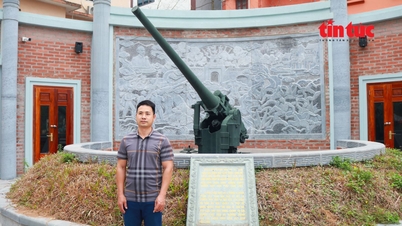
In Long Bien district, which boasts over 100 historical sites, the preservation and promotion of heritage values are always a priority for the government and the people.
Ms. Le Thi Huong (Head of the Culture, Science and Information Department of Long Bien District, Hanoi) stated that Long Bien has been ranked among the top 10 national-level historical sites by the city. Long Bien District always prioritizes investment in, preservation of, and prevention of encroachment on historical sites, while also integrating this into traditional education programs for the younger generation. This is also part of the strategy to develop the cultural industry in conjunction with local tourism.
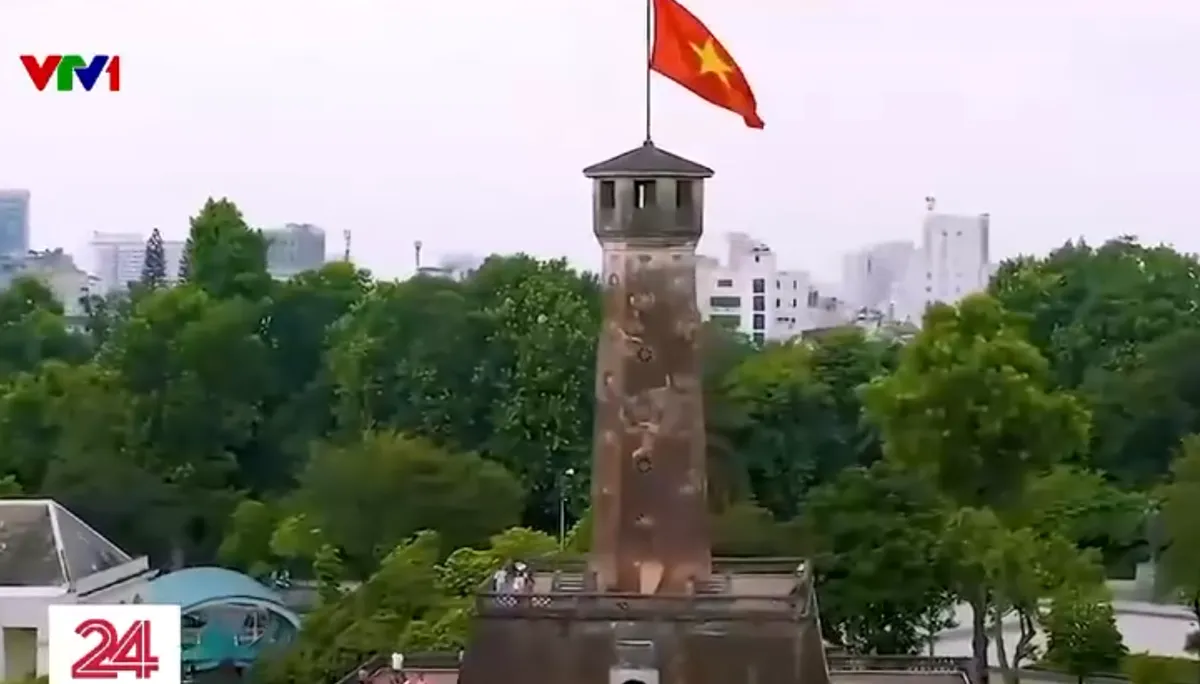
6,489 historical sites – this is not just a number, but a testament to the cultural depth of Hanoi.
In the last five years, 10 historical sites in the area have been classified as national-level heritage sites. Protecting these sites is closely linked to traditional education, the development of cultural industries, and sustainable tourism .
Notably, the two historical sites of Rừng Temple and Gia Thượng Communal House in Ngọc Thụy ward have recently been recognized at the city level, becoming a source of pride for the local people.
According to statistics, Hanoi currently has 1 World Cultural Heritage site - Thang Long Imperial Citadel, 22 special national monuments, more than 1,200 national monuments and over 1,500 city-level monuments.
Dr. Nguyen Lan Anh (Head of the Cultural Heritage Management Department - Hanoi Department of Culture and Sports) stated that the inventory of historical relics is not merely a statistical measure, but a foundation for classification, proposing ranking dossiers, and ultimately preserving and promoting heritage. Historical relics are a significant resource for developing the cultural industry, especially cultural tourism, a key economic sector of the capital city in the coming years.
Today, these historical sites not only preserve the past but also serve as places for education, creativity, and nurturing love for the homeland in the younger generation.
6,489 historical sites – this is not just a number, but a testament to the cultural depth of Hanoi. The heritage city is transforming, harmonizing the preservation of tradition with modern life, so that the values of the past will continue to flourish in the present day.
Source: https://vtv.vn/doi-song/ha-noi-thanh-pho-di-san-voi-hon-6000-di-tich-lich-su-20250329002239421.htm


![[Photo] Prime Minister Pham Minh Chinh holds a phone call with the CEO of Russia's Rosatom Corporation.](/_next/image?url=https%3A%2F%2Fvphoto.vietnam.vn%2Fthumb%2F1200x675%2Fvietnam%2Fresource%2FIMAGE%2F2025%2F12%2F11%2F1765464552365_dsc-5295-jpg.webp&w=3840&q=75)
![[Photo] Closing Ceremony of the 10th Session of the 15th National Assembly](/_next/image?url=https%3A%2F%2Fvphoto.vietnam.vn%2Fthumb%2F1200x675%2Fvietnam%2Fresource%2FIMAGE%2F2025%2F12%2F11%2F1765448959967_image-1437-jpg.webp&w=3840&q=75)







































![[OFFICIAL] MISA GROUP ANNOUNCES ITS PIONEERING BRAND POSITIONING IN BUILDING AGENTIC AI FOR BUSINESSES, HOUSEHOLDS, AND THE GOVERNMENT](https://vphoto.vietnam.vn/thumb/402x226/vietnam/resource/IMAGE/2025/12/11/1765444754256_agentic-ai_postfb-scaled.png)











































Comment (0)