

 |
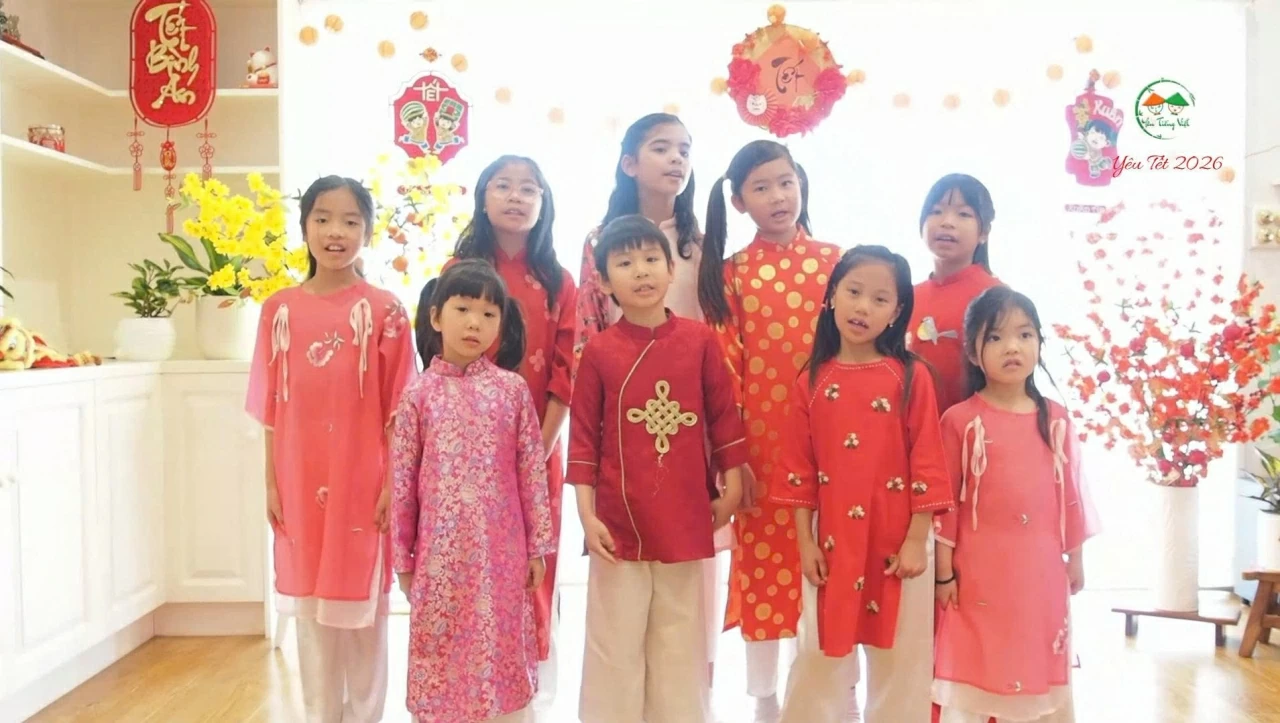
| Children in Australia perform songs and dances praising their homeland. (Source: School for Loving Vietnamese) |
Educational studies show that children's personalities and value systems are largely shaped through observation, imitation, and the reception of emotions from adults.
Therefore, besides the role of teachers, parents also profoundly influence the nurturing of love for their homeland and national pride in children. When adults cherish the past, subsequent generations can more easily feel the sacred meaning of their roots.
Many parents hope their children will live responsibly towards their country, love their homeland, and be proud of their national traditions.
However, in daily life, stories about history rarely appear. Family meals usually revolve around schoolwork, work, or life's worries, while memories of previous generations gradually fade away. This gap makes history seem alien to children.
While schools help students approach history through knowledge, families help them experience it through emotion. Teachers convey important milestones and events of the country, while parents help their children understand why they should be grateful to those who sacrificed to protect independence and freedom. Sometimes, just a sincere story from parents is enough to deeply move a child's soul.
Children absorb a great deal through observation. From the emotional reaction of parents watching a war film to the solemnity of the flag-raising ceremony or the respect shown to national heroes, all of these subtly influence a child's perception. These values are naturally transmitted from their daily environment.
Conversely, if adults view history solely as a subject for exams, children are likely to develop a similar mindset. Many parents dedicate significant time and effort to subjects considered important but pay little attention to helping their children understand their roots. This inadvertently leads children to believe that history is a secondary subject that doesn't require much attention.
Psychology also affirms that every person needs a sense of connection to their roots to form their own identity. A child who understands their nation's past will have a deeper connection to their homeland and country. Through this, they are more likely to cultivate a sense of responsibility towards the community and society.
Loving history is also a way of expressing patriotism. It's not just about remembering events or dates, but also about understanding the values forged over generations: gratitude, independence, and responsibility to the nation. When we understand the wars, losses, and sacrifices our ancestors made to protect the homeland, we will appreciate the peace we enjoy today even more.
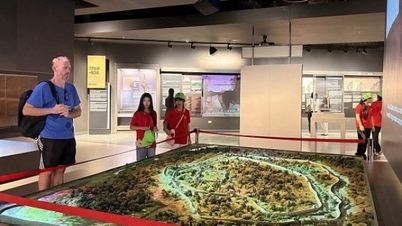
In the digital age, children are exposed to countless sources of information every day. If the family does not become a place to preserve and pass on traditional values, children can easily be swept away by fleeting trends and forget their roots. Therefore, it is extremely important for parents to explore history with their children, visit museums, explore historical sites, or tell stories about the difficult times the nation has gone through.
Patriotism doesn't come naturally. It's a feeling nurtured daily through the most familiar things in life. When parents appreciate the past and share national pride with their children through emotion, the seeds of patriotism will silently sprout in their children's hearts.
After all, what remains in a child's memory is not only the lessons learned from books, but also how their parents treated their roots, traditions, and national history. It is these things that sustainably nurture love for their homeland and national pride over the years.
Source: https://baoquocte.vn/hay-day-con-tre-ve-long-yeu-nuoc-400633.html


























![[Photo] Reception to welcome General Secretary and President To Lam and his wife on their State visit to the Philippines](https://vphoto.vietnam.vn/thumb/1200x675/vietnam/resource/IMAGE/2026/06/01/1780295488620_vna-potal-chieu-dai-chao-mung-tong-bi-thu-chu-tich-nuoc-to-lam-va-phu-nhan-tham-cap-nha-nuoc-toi-philippines-8798060-7855-jpg.webp)





















































Comment (0)