

What is screen visual syndrome?
Ms. Hoai Thuong (27 years old, Hanoi ) works in the field of graphic design. She describes herself as a "workaholic," meaning she can sit in front of a computer all day long.
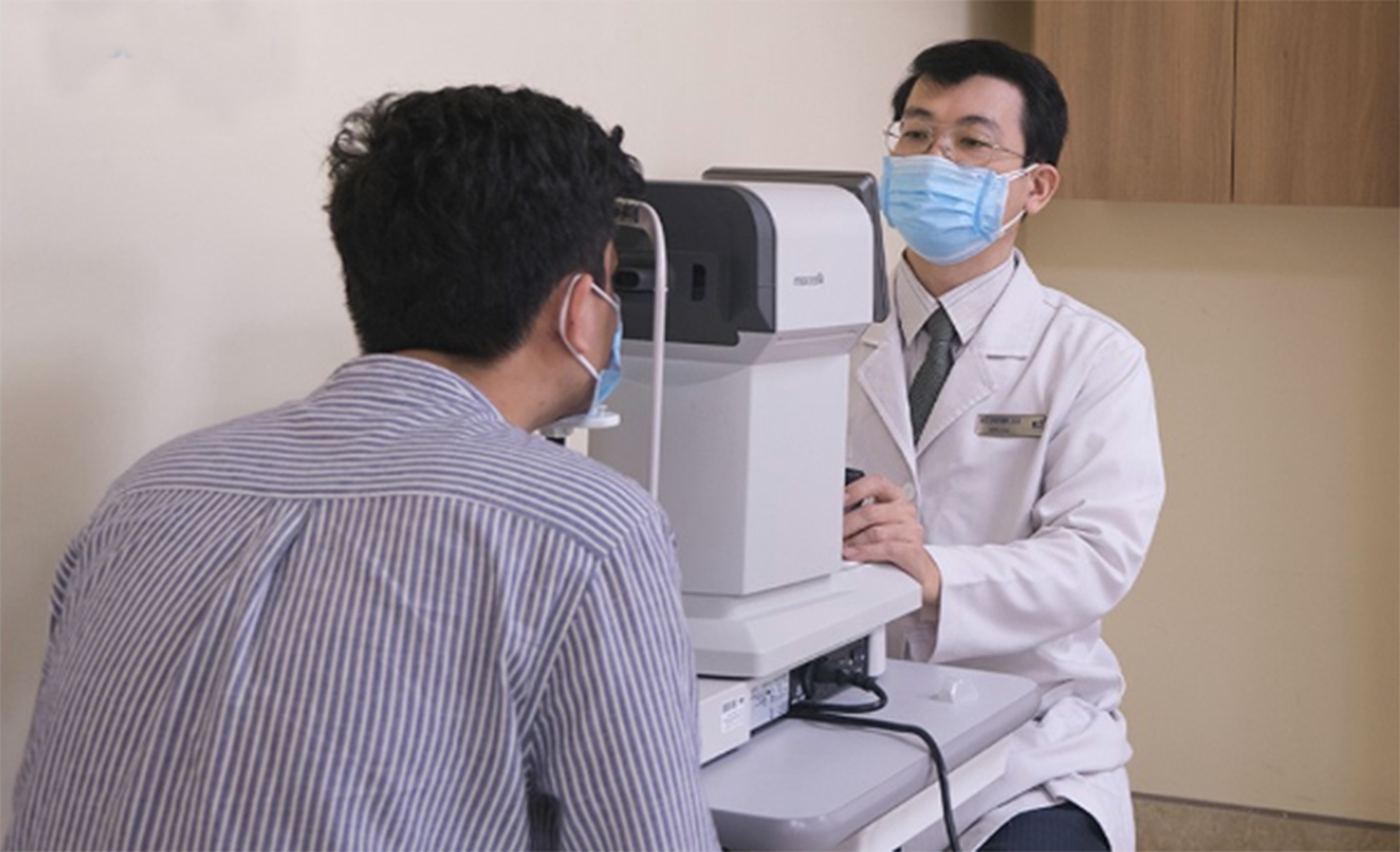
MSc. Doctor Pham Huy Vu Tung examines a patient.
However, for almost a year now, Ms. Thuong has noticed a significant decline in her vision, often accompanied by tearing. After seeing a doctor, she learned she has screen visual syndrome.
According to Dr. Hoang Thanh Nga from Hanoi Eye Hospital 2, screen visual syndrome is understood as a group of problems related to the eyes and vision caused by prolonged and frequent use of electronic devices such as computers, tablets, phones, and televisions.
This is not a specific disease but encompasses a range of symptoms such as: eye strain; dry or red eyes; burning eyes; blurred vision; double vision or difficulty focusing; sensitivity to light; eye pain, accompanied by systemic symptoms such as: headache; neck, shoulder, or back pain.
Many visual symptoms experienced by computer and electronic device users are temporary and will subside after a break. However, some people may continue to experience impaired visual function, such as unstable distant vision, even after ceasing computer use.
Causes of the disease
Dr. Pham Huy Vu Tung, an ophthalmologist at Tam Anh General Hospital in Ho Chi Minh City, said that although not a dangerous disease, screen visual syndrome causes discomfort for patients and affects their daily lives.
Generally, reducing screen time can help alleviate symptoms of screen-related vision problems. However, if we continue using electronic devices daily, the symptoms may return and worsen.
Dr. Thanh Nga further explained that the cause of computer vision syndrome is that the eyes have to focus continuously when working with computers, leading to a reduced blinking frequency, causing the eyes to dry out, become tired, and experience blurred vision.
Many people also frequently use electronic devices in low-light conditions, such as turning off the lights, watching TV or using their phones under blankets all night, or in excessively bright (glaring) light, such as shining a light directly onto a computer screen or increasing the screen brightness of their phone to maximum.
An inappropriate distance between the eyes and the electronic device screen—either too close or too far—can cause the eyes to constantly adjust, leading to fatigue.
How can we fix this?
Screen vision syndrome can be quickly remedied by adjusting some bad habits such as: adjusting your sitting posture, computer screen, and work documents to suit your needs, so that your eyes don't have to constantly change their focus.
Adjust the lighting of electronic devices and the surrounding space to a suitable level, neither too bright nor too dim; consider using a screen glare filter to reduce the amount of light reflected from the screen.
Additionally, people can develop the habit of resting their eyes with the 20-20-20 rule: Every 20 minutes of screen time, rest your eyes by looking at an object 20 feet (6m) away for 20 seconds. And, after every 2 hours of work, you can leave your position and relax for at least 15–20 minutes.
Regular blinking or using artificial tears to keep eyes moist, along with establishing a habit of having regular eye exams every six months to check vision, can help limit symptoms associated with screen visual syndrome and prevent the development of eye diseases.
Research indicates that most people who work continuously in front of computer screens for more than three hours a day are at a higher risk of developing computer vision syndrome.
The level of irritation and discomfort in the eyes increases proportionally with the frequency of electronic device use. If left undiagnosed and untreated, this can not only affect work performance but also potentially lead to severe vision loss.
Source: https://www.baogiaothong.vn/he-luy-cua-hoi-chung-thi-giac-man-hinh-192250324235208949.htm
![[Image] Central Party Office summarizes work in 2025](/_next/image?url=https%3A%2F%2Fvphoto.vietnam.vn%2Fthumb%2F1200x675%2Fvietnam%2Fresource%2FIMAGE%2F2025%2F12%2F18%2F1766065572073_vptw-hoi-nghi-tong-ket-89-1204-jpg.webp&w=3840&q=75)






















































































Comment (0)