

(NADS) - The Da River, a vibrant and promising waterway nestled amidst the majestic Northwest mountains, has become a bright spot on Vietnam's power development map in recent years. The cascade of hydroelectric power plants built along this river has become a prime example of efficient and sustainable exploitation of renewable energy sources.
Through the lens of photographer Vu Phi Long ( Son La ), the Song Da hydroelectric cascade system has been fully captured in its grandeur, majesty, and beauty. This photo series, "The Song Da Hydroelectric Cascade System," showcases the magnificent and majestic nature of these structures. Vu Phi Long's work excellently won the Gold Medal at the 2024 Northern Mountain Region Festival.
With its favorable topography, including high mountains and a strong, stable flow, the Da River is an ideal location for constructing large hydroelectric power plants. To date, there are six large hydroelectric power plants on the Da River: Hoa Binh, Son La, Lai Chau , Ban Chat, Pac Ma, and Huoi Quang.
The construction of hydroelectric power plants on the Da River not only helps solve the problem of electricity shortages during the dry season, but also plays a crucial role in ensuring national energy security. These hydroelectric power plants are integrated into the national power grid, providing a stable power supply and contributing to the socio -economic development of the Northwest region as well as the whole country.
Hoa Binh Hydroelectric Power Plant
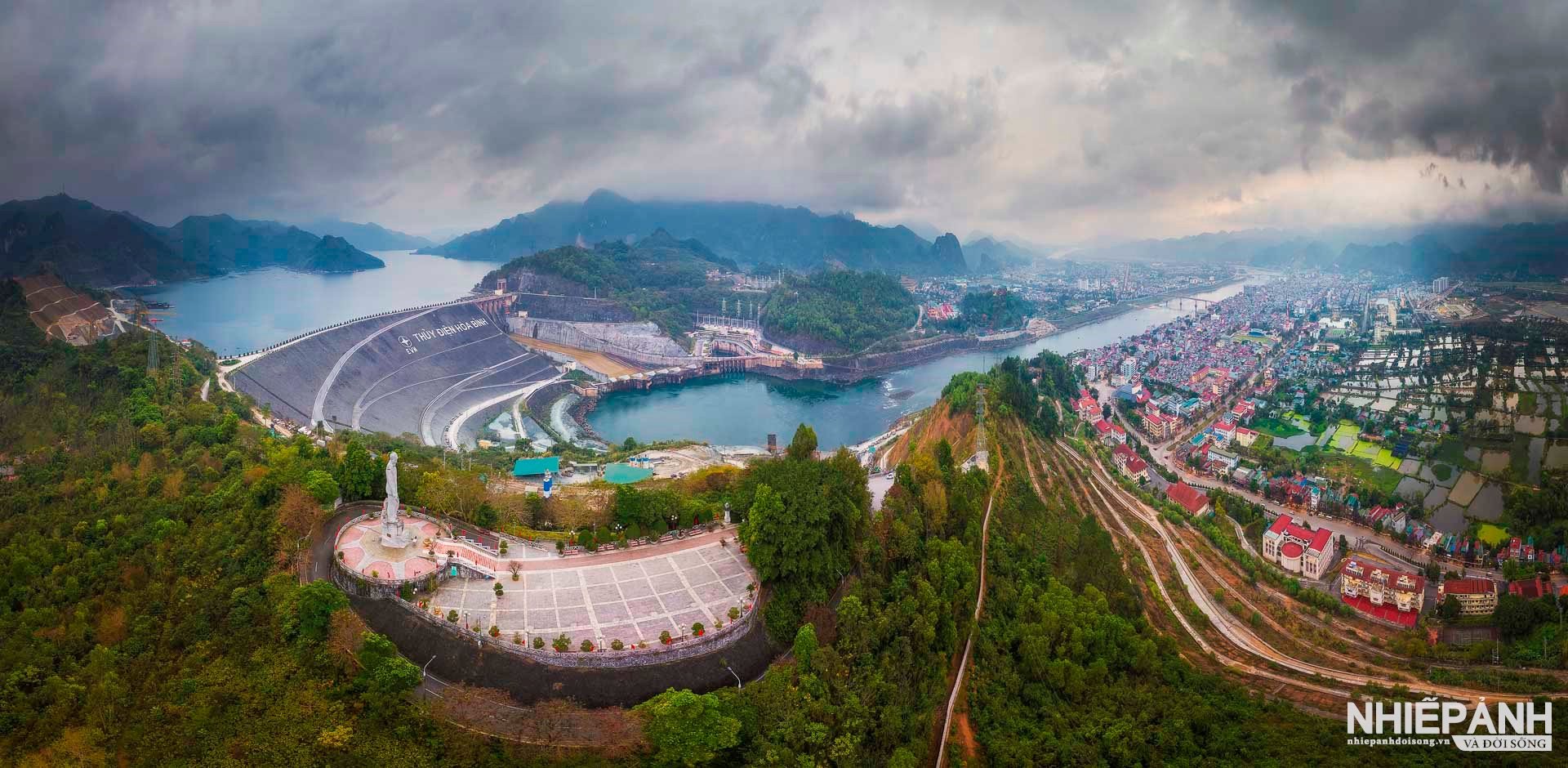
Built on the Da River in Hoa Binh province, about 150 km from Hanoi, the dam was designed and equipped by the Soviet Union. Construction began on November 6, 1979, and it was inaugurated on December 20, 1994. To construct the dam, workers had to dam the river twice: the first time on January 12, 1983, and the second time on January 9, 1986.
The workforce involved in the project included: 30,000 workers and engineers, 5,000 soldiers, 750 Soviet experts, and 1,000 project management staff.
The Hoa Binh hydroelectric power plant, the largest in Southeast Asia in the 20th century, served four purposes, among which flood control to ensure the safety of Hanoi, the Red River Delta provinces, and electricity supply were considered crucial.
The spillway has 12 bottom gates and 6 surface gates with a maximum discharge capacity of 35,400 m3/s. The reservoir has a capacity of 9.8 billion m3 of water. Pyramid-shaped concrete pillars are built at the floodgates to reduce the water velocity during discharge. The plant's average annual electricity output is approximately 7-8 billion kWh.
Son La Hydroelectric Power Plant
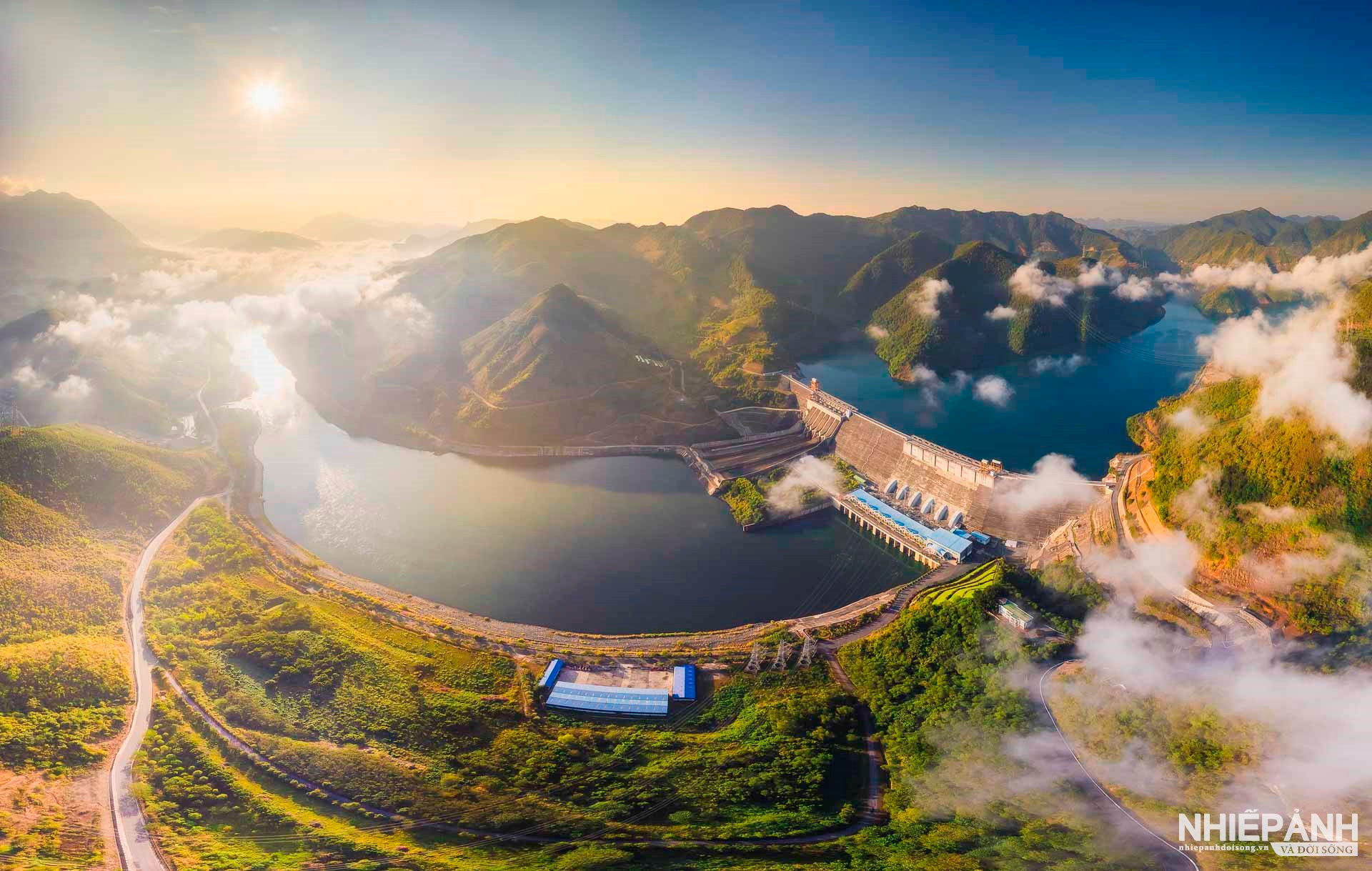
Located on the Da River in Muong La district, Son La province, about 300 km from Hanoi, the Son La hydroelectric power plant is a key national project. Construction began on December 2, 2005, and it was inaugurated on December 23, 2012, becoming the largest hydroelectric power plant in Southeast Asia. The Son La hydroelectric power plant was designed and constructed using new technology – roller-compacted concrete – which offers many advantages in controlling thermal stress in large concrete masses.
The Son La hydroelectric power plant has an installed capacity of 2,400 MW, with 6 generating units. The headworks complex includes a roller-compacted concrete main dam, a conventional reinforced concrete spillway, and the power plant itself. The plant's average annual electricity output is approximately 9-10 billion kWh, supplying about 25% of the national electricity demand and contributing to alleviating electricity shortages in the North.
Lai Chau Hydropower Plant
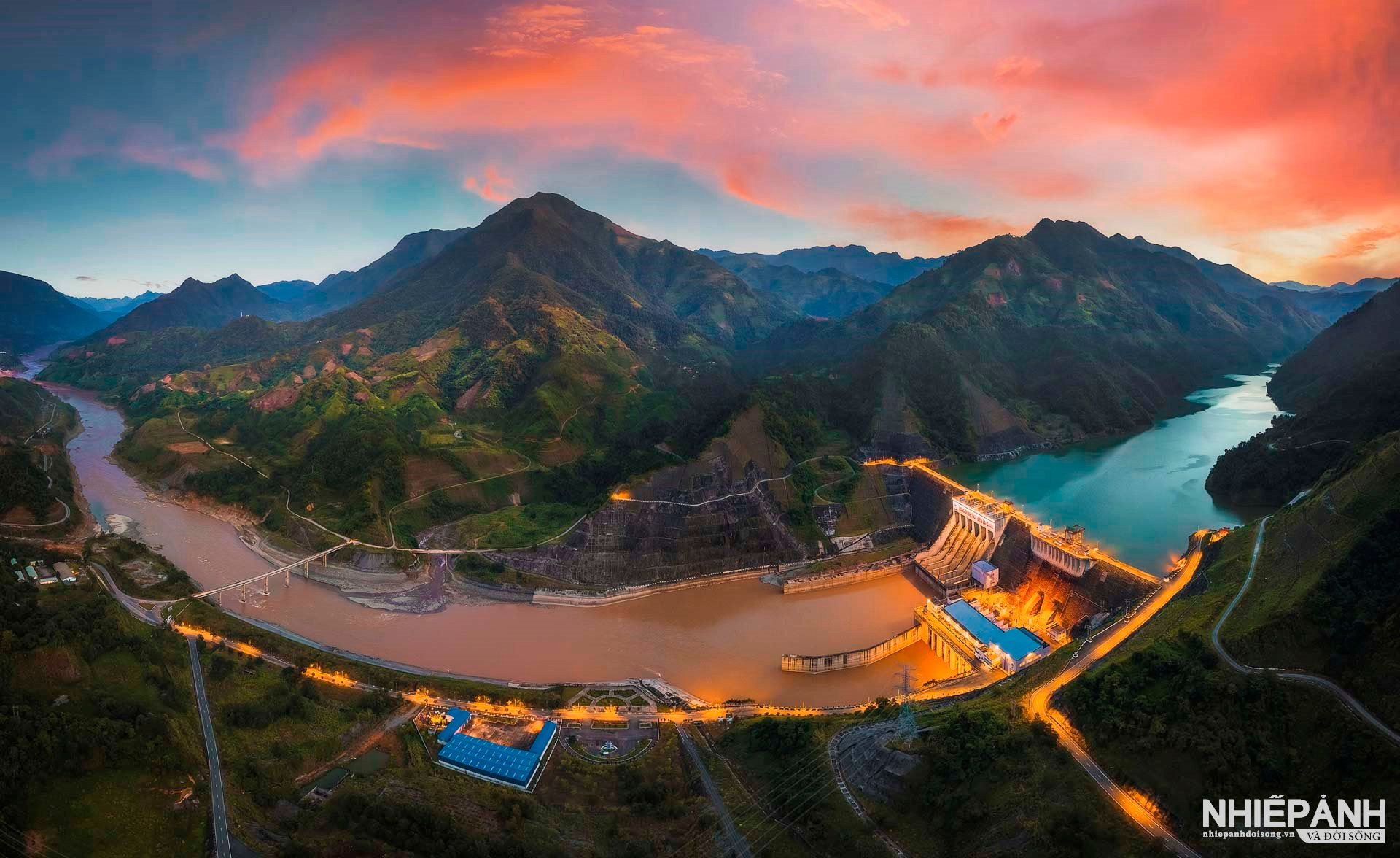
The Lai Chau Hydropower Plant, also known as the Nam Nhun Hydropower Plant, is a key national project of Vietnam, built on the main stream of the Da River in Nam Nhun town, Nam Nhun district, Lai Chau province, about 450 km from Hanoi.
The Lai Chau Hydropower Plant has a total installed capacity of 1,200 MW with 3 generating units. Construction began on January 5, 2011, all 3 units were connected to the grid in November 2016, and the plant was inaugurated in December 2016.
This project is being built on the uppermost step of the main stream of the Da River in Vietnam, above the Son La hydropower plant. The project has an estimated preliminary investment of over 35,700 billion VND. The Lai Chau Hydropower Plant will supply approximately 4,670.8 million kWh to the national power grid annually.
This hydroelectric project plays a crucial role not only in developing electricity and supplying water to the Red River Delta during the dry season, but also in creating opportunities for socio-economic development in Lai Chau and Dien Bien provinces, and ensuring national security and defense in the Northwest region.
Huoi Quang Hydroelectric Power Plant
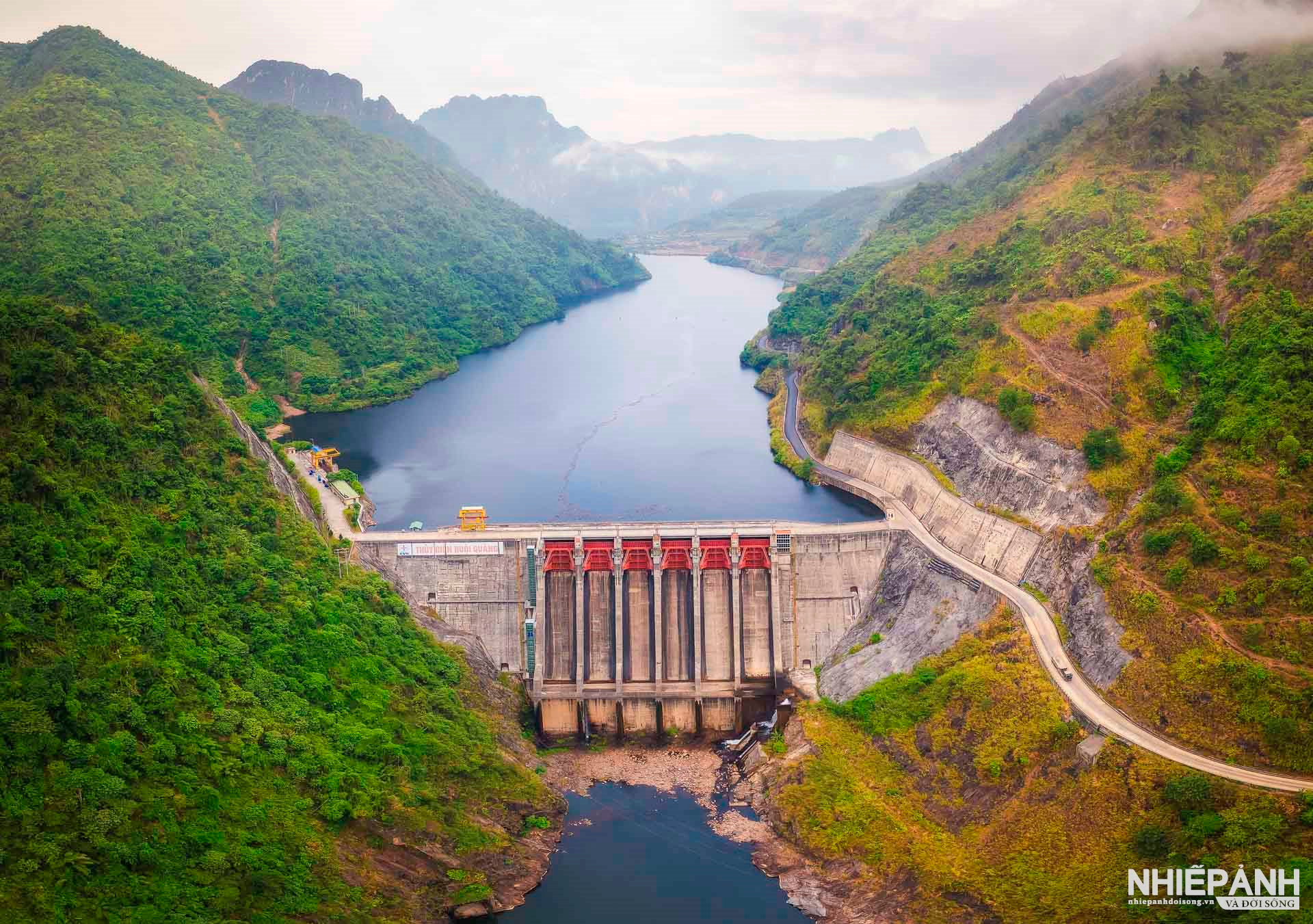
Huoi Quang Hydroelectric Power Plant (also spelled Huoi Quang in some documents) is a hydroelectric project built on the Nam Mu River in Khoen On commune, Than Uyen district, Lai Chau province, and Chieng Lao commune, Muong La district, Son La province, in northwestern Vietnam.
The Huoi Quang hydroelectric power plant was started in January 2006 and completed in May 2016.
The reservoir has a catchment area of 2,824 km2, an average annual flow rate of 158.1 m3/s, a normal water level of 370 m, a downstream water level of 215 m, a surface area of 870 ha, and a capacity at normal water level of 184.2 million m3.
The plant plays a crucial role in supplying electricity to the national grid. It participates in regulating water flow on the Nam Mu River, contributing to increased production for the Hoa Binh and Son La hydropower plants, regulating floods during the rainy season, and providing water during the dry season for downstream areas of the Northern Delta.
Ban Chat Hydroelectric Power Plant
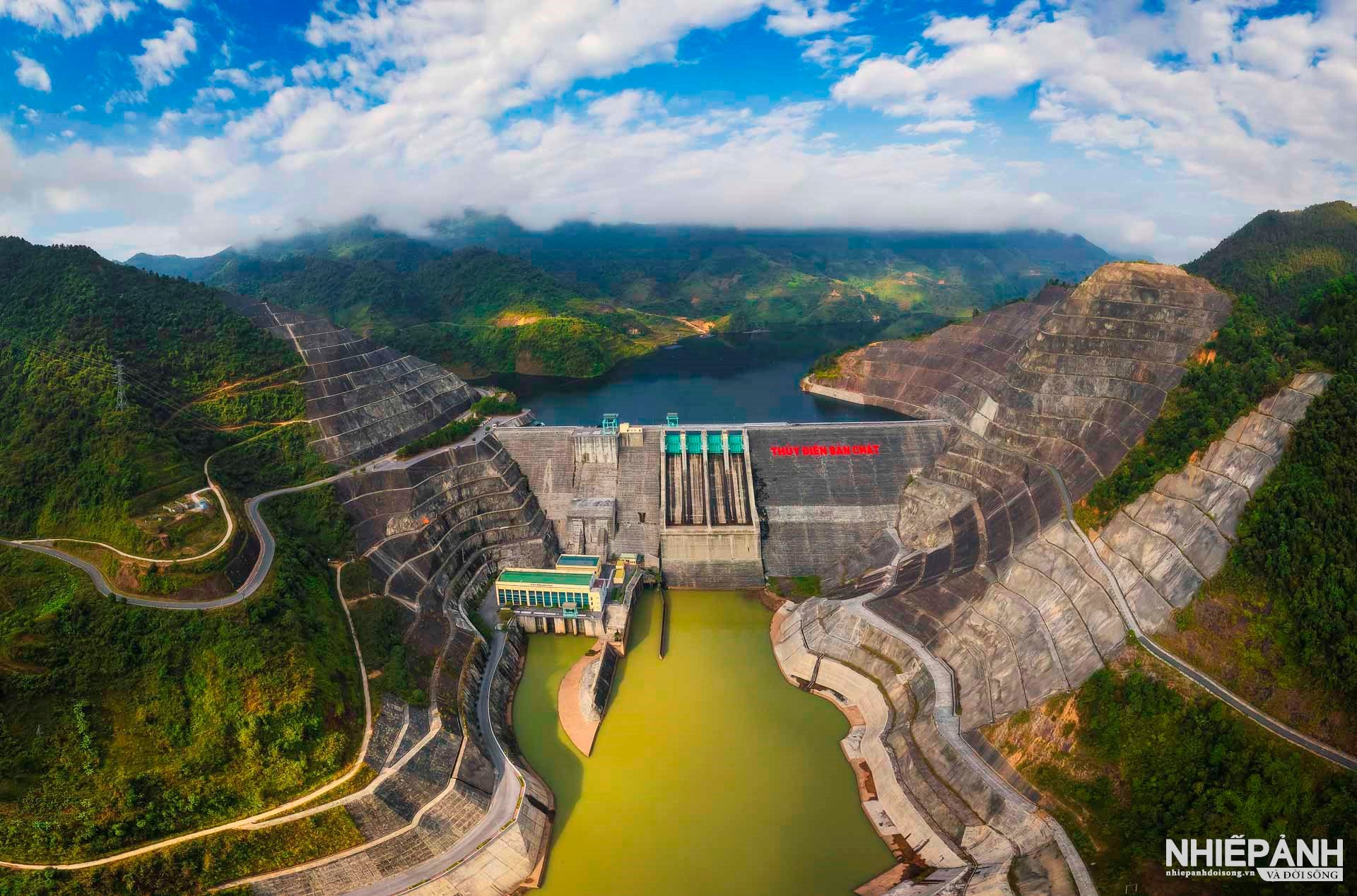
The Ban Chat hydroelectric project is located on the Nam Mu River in Than Uyen and Tan Uyen districts of Lai Chau province. Construction officially commenced on January 8, 2006, and the first phase of river damming and diversion through temporary structures was completed on February 15, 2008. From October 8, 2012, the reservoir began its second phase of water impoundment, reaching the normal water level. After more than seven years of construction, on February 8, 2013, the first turbine unit, and on May 29, 2013, the second and final turbine unit of the Ban Chat hydroelectric project, were officially connected to the national power grid.
With a capacity of 220 MW, comprising 4 units of 55 MW each, the plant's average annual electricity output is approximately 900 million kWh.
The main objective of the Project is to supply electricity to the National grid with a total designed capacity of 220MW (2x110MW), and an average annual electricity output of 769.7 million kWh (in addition to the Hoa Binh and Son La hydropower plants, which contribute 388.4 million kWh).
Pac Ma Hydroelectric Power Plant
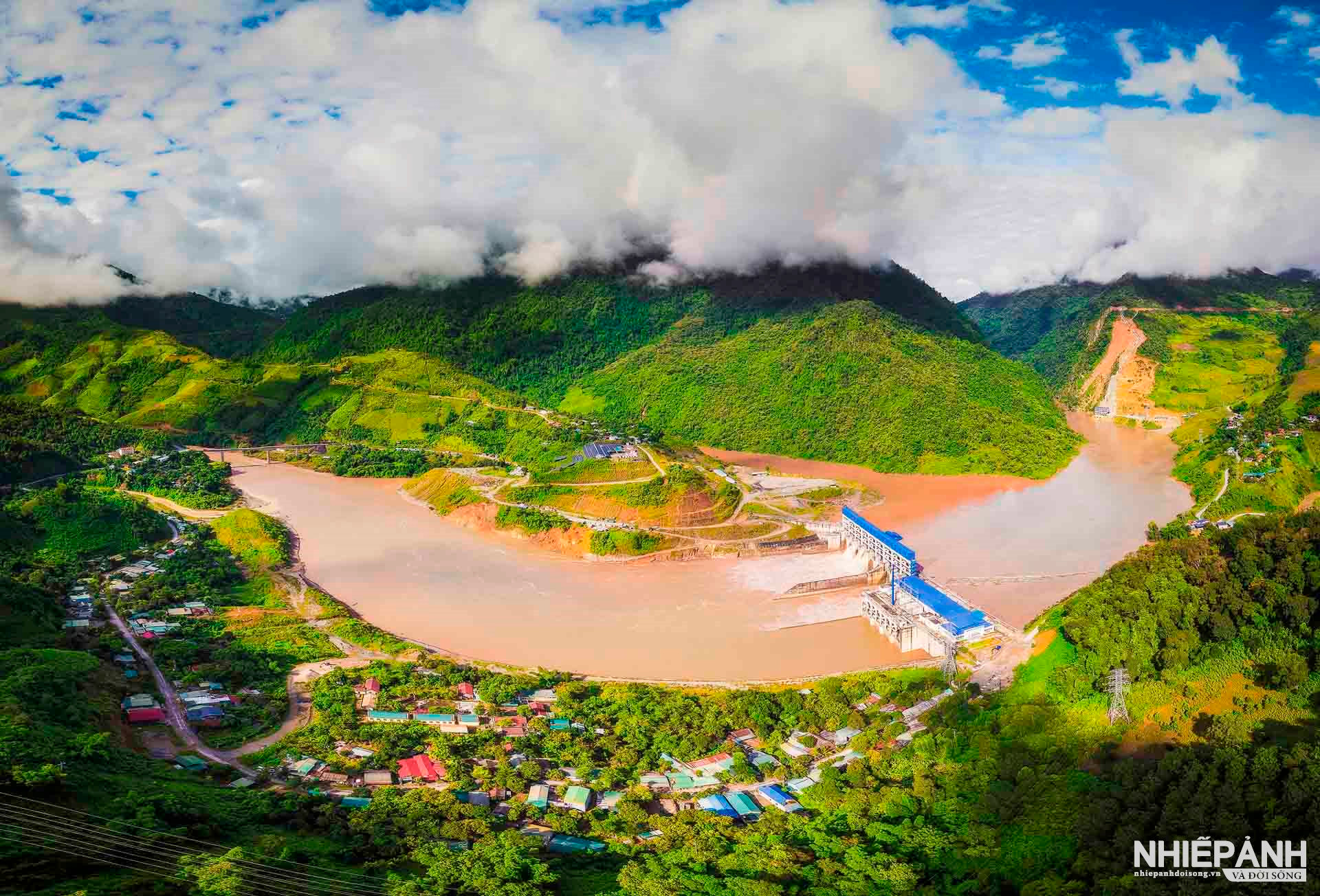
The Pac Ma hydroelectric power plant is built on the Nam Cum River, in Muong Te commune, Muong Te district. Construction began in March 2016. This is the last hydroelectric project on the Da River with an estimated total investment of 5,400 billion VND. It is also the fourth largest hydroelectric power plant after the Lai Chau Hydroelectric Power Plant (1,200 MW), the Huoi Quang Hydroelectric Power Plant (520 MW), and the Ban Chat Hydroelectric Power Plant (220 MW).
The Pac Ma hydroelectric power plant has an installed capacity of 140 MW with 4 generating units, and its estimated annual electricity production is approximately 530 million kWh.
Once operational, the Pac Ma hydropower plant, along with other hydropower projects, will contribute to increasing national electricity production, making a positive contribution to the socio-economic development of Muong Te district in particular and Lai Chau province in general, as well as the Northwest region. It will contribute to the shift in economic structure towards industrialization and modernization, increase local budget revenue, strengthen infrastructure in remote areas, and create jobs and improve income for people in the project area.
Source: https://nhiepanhdoisong.vn/he-thong-bac-thang-thuy-dien-song-da-dot-pha-cong-nghe-nang-luong-xanh-14626.html
![[Image] Nearly 125,000 Hanoi students completed the Literature exam for the 10th grade entrance exam.](https://vphoto.vietnam.vn/thumb/1200x675/vietnam/resource/IMAGE/2026/05/30/1780117233041_ndo_br_thiet-ke-chua-co-ten-2-png.webp)



































![[Photo] Admire the coral "masterpiece" amidst the million-year-old heritage of Dak Lak province.](https://vphoto.vietnam.vn/thumb/1200x675/vietnam/resource/IMAGE/2026/05/30/1780107638639_y25-jpg.webp)






























































Comment (0)