


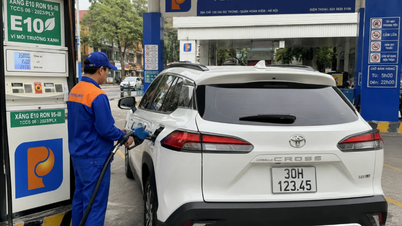
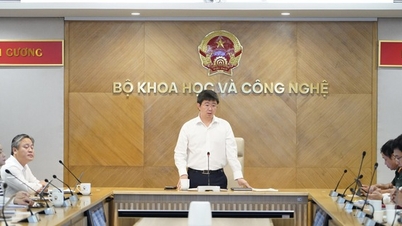
On May 26th, at a meeting organized by the Central Propaganda and Mass Mobilization Department, Deputy Minister of Industry and Trade Nguyen Sinh Nhat Tan provided detailed information on the use of E10 gasoline.
According to the Deputy Minister of Industry and Trade, with thorough preparation ranging from institutional policies and raw material supply to blending capacity and distribution systems, Vietnam is ready to introduce E10 bioethanol to the market.
Previously, on November 7, 2025, the Minister of Industry and Trade issued Circular No. 50/2025/TT-BCT (Circular 50).
According to this Circular, from June 1, 2026, unleaded gasoline must be blended into E10 gasoline for use in gasoline engines nationwide.
The introduction of E10 gasoline will replace traditional mineral gasoline, marking a significant transformation in Vietnam's energy market.
However, to ensure the rights and absolute safety of some older vehicle models that are incompatible with E10, the Ministry of Industry and Trade has also made a flexible decision to continue maintaining, blending, and producing E5RON92 gasoline until December 31, 2030. This creates a reasonable technical buffer, giving consumers time to switch vehicles without any disruption to their daily lives.
The persistent implementation of the roadmap to introduce E10 gasoline to the market is not simply an administrative decision, but also brings immense value in many aspects.
The use of E10 bioethanol directly reduces greenhouse gas emissions, decreases dependence on increasingly depleted fossil fuel resources, and moves towards a green, low-carbon economy .
This is a practical action that contributes to realizing Vietnam's commitment to the international community to bring net CO2 emissions to "zero" by 2050.
Furthermore, developing renewable fuels helps reduce dependence on imported petroleum, minimizing the risk of supply disruptions due to geopolitical and armed conflicts around the world; and creates a stable market for agricultural products by developing the biofuel industry from raw material growing regions such as cassava, corn, and sugarcane.
At the same time, make full use of agricultural by-products such as straw, rice husks, and other biomass to build ethanol production plants, enhancing the value chain for farmers.
One of the biggest concerns for consumers when switching to E10 gasoline is the extent to which this fuel will affect their vehicles.
Regarding this matter, after conducting inspections, gathering opinions, and evaluating feedback from relevant parties, the authorities have stated that all types of vehicles are suitable for using E10 gasoline.
According to research by Associate Professor Pham Huu Tuyen (senior lecturer at Hanoi University of Science and Technology), E10 gasoline has negligible impact on power reduction, fuel consumption, or wear and tear of engine parts compared to traditional mineral gasoline. People can rest assured that it will not reduce engine lifespan.

In addition, there is consensus from major car manufacturers. Documents from the Vietnam Automobile Manufacturers Association (VAMA), the Vietnam Motorcycle Manufacturers Association (VAMM), the Vietnam Registering and Inspection Department, as well as major automobile and motorcycle manufacturers and assemblers such as Toyota, Honda, Hyundai, etc., all confirm that most cars and motorcycles currently in circulation in Vietnam can use E10 gasoline.
Except for some light truck models manufactured between 1996 and 2023 (now discontinued) and a few older motorcycle models, the authorities have issued detailed documents to provide specific warnings to users.
International experience also shows that more than 60 countries around the world have been using E10 gasoline, or even E15 or higher, for many years now.
In Vietnam, the evidence from practice is also extremely convincing. The Ministry of Industry and Trade and businesses have stated that, based on the nationwide distribution of E5 gasoline (since January 2018) and the testing and distribution of E10 gasoline to date, they have not received any official complaints from consumers regarding gasoline quality or negative impacts on engine performance and lifespan.
Nevertheless, to best protect consumer rights, authorities note the need to pay special attention to strictly controlling quality indicators such as: base gasoline blended with ethanol, and ensuring the blending ratio complies with the standards and regulations of the Ministry of Science and Technology.
Authorities will intensify inspections at blending facilities and retail outlets, and strictly penalize violations to prevent substandard gasoline from entering the market.
To prepare for the June 1, 2026 deadline, the Ministry of Industry and Trade has coordinated with other ministries, sectors, localities, and businesses to implement comprehensive infrastructure supply plans, bringing the entire system's capacity far beyond actual needs.
Regarding the supply of Ethanol (E100), with an average gasoline consumption of approximately 1 million m3/month, the demand for E100 to blend with E10 gasoline is estimated at around 100,000 m3/month. Currently, businesses have completely secured their supply through two stable channels.
Domestic production reaches approximately 25,000 m3/month; imports reach approximately 75,000 m3/month.
As of April 23, 2026, 13 out of 26 major petroleum trading companies nationwide had invested in biofuel blending station systems.
In particular, three major enterprises possess extremely powerful blending capacities: Petrolimex reaching 455,000 m3/month and continuing to expand to 550,000 m3/month; PVOIL reaching 320,000 m3/month; and Saigon Petro (Ho Chi Minh City Petroleum Company Limited) reaching 120,000 m3/month.

Besides the three major players mentioned above, there are currently 10 more businesses awaiting blending licenses with a total projected capacity of approximately 297,600 m3/month.
Once these units are licensed, the total blending capacity of all 13 businesses will reach 1,178,600 m3/month, completely exceeding the national consumption demand of 1 million m3/month.
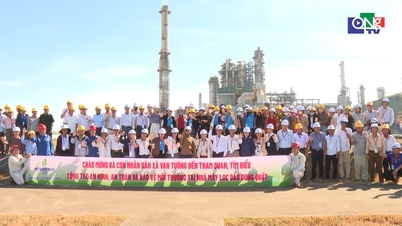
Furthermore, the Binh Son Refinery is ready to increase its blending capacity by 20,000 - 40,000 m3/month (in May 2026) and raise it to 70,000 - 90,000 m3/month from June 2026 when required, creating an extremely solid backup foundation.
Distribution infrastructure plays a crucial role in bringing E10 gasoline to consumers.
Since the nationwide retail system already has experience operating with E5RON92 gasoline, the transition from RON95 mineral gasoline to E10 is merely an upgrade and adjustment of operational techniques, not requiring large-scale new investments.
Businesses are flushing and cleaning storage tanks, pumps, pipelines, and transport vehicles currently used for conventional gasoline to make them compatible with E10RON95 gasoline.
This may cause temporary business disruption and incur costs, but it is all within the control and planning of the respective units.
The two largest distributors, Petrolimex and PVOil, which together account for 70-75% of the retail market share, have pioneered this transformation in a systematic manner.
PVOil proactively conducted trials in Hanoi and Hai Phong starting in August 2025; subsequently, it officially distributed E10 throughout its system of nearly 1,000 stores from May 15, 2026.
Petrolimex conducted trials in the southern region, including Ho Chi Minh City and Vung Tau, and officially began distributing the product throughout its entire system on May 20, 2026.
The successful transition of large enterprises ahead of schedule provides a solid foundation for the remaining petroleum businesses to finalize their plans and prepare for the simultaneous introduction of E10 bioethanol to the market from June 1, 2026, as planned.
Source: https://baovanhoa.vn/kinh-te/he-thong-ha-tang-va-chuoi-cung-ung-xang-e10-da-san-sang-231695.html
![[Image] Pleasant weather helps students enter the 10th grade entrance exam with confidence.](https://vphoto.vietnam.vn/thumb/1200x675/vietnam/resource/IMAGE/2026/05/29/1780034401612_ngay-1-thi-lop-10-minh-duy-8-5009-jpg.webp)



![[Photo] Ba Lang An Lighthouse - the "eye of the sea" amidst the "rock museum" of Quang Ngai province.](https://vphoto.vietnam.vn/thumb/1200x675/vietnam/resource/IMAGE/2026/05/29/1780038698840_anh-man-hinh-2026-05-29-luc-14-10-42.png)





































































Comment (0)