

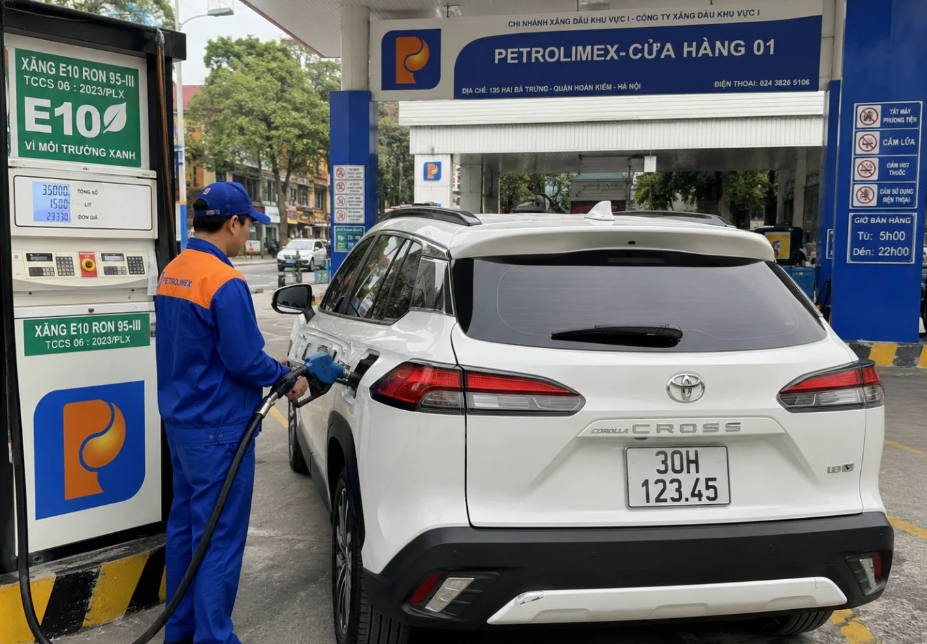
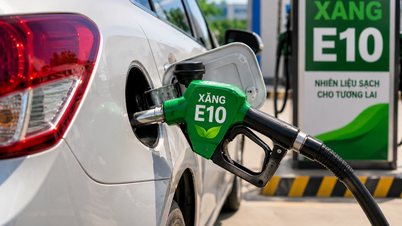
Most newer cars are compatible with E10 gasoline.
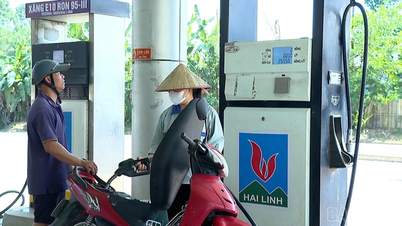
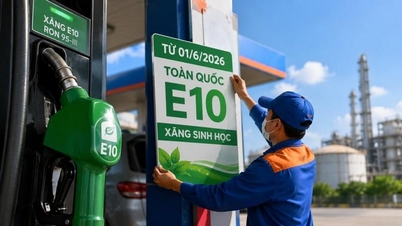
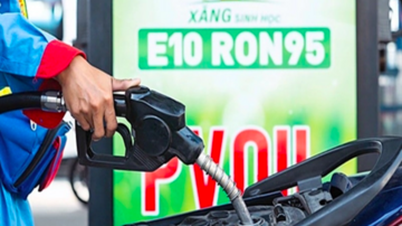
In the roadmap for developing clean fuels and reducing emissions, the deployment of E10 bioethanol is receiving much attention from consumers and automotive businesses.
According to Mr. Dao Cong Quyet, Head of the Communications Subcommittee of the Vietnam Automobile Manufacturers Association (VAMA), car manufacturers always support the government 's clean fuel development orientation and have made early preparations to ensure the compatibility of vehicles with E10 gasoline.
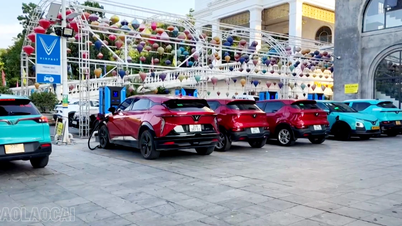
Currently, most new car models from VAMA members are designed to be compatible with E10 fuel. Automotive businesses have also begun providing information to their dealerships and customers about the use of this fuel.
According to VAMA, components in the fuel system such as the fuel tank, fuel pump, fuel injectors, and rubber gaskets are all researched and selected with alcohol resistance in mind to ensure stable operation when using biofuels.
Mr. Dao Cong Quyet stated that corrosion or aging of components in the fuel system will not occur if users use E10 gasoline that meets the standards of the National Technical Regulation QCVN 01:2022 of the Ministry of Science and Technology . Therefore, users of newer car models can rest assured when switching to E10 biofuel.
For older car models, VAMA recommends that users proactively take their vehicles to authorized dealerships to have the fuel system inspected and evaluated, and replace parts such as gaskets or fuel lines if necessary, before using E10 gasoline.
According to VAMA, biofuels are not a new trend globally . Many countries, such as Thailand, Indonesia, and Brazil, have been using ethanol-blended gasoline for a long time. Furthermore, Vietnam has also issued regulations related to biofuels for over 10 years.
Therefore, before introducing vehicles to the Vietnamese market, manufacturers conduct technical assessments based on actual operating conditions and domestic standards to ensure the highest level of product compatibility.
Regarding concerns that E10 gasoline might cause sluggish engine performance or loss of power, Mr. Dao Cong Quyet stated that these phenomena usually only occur when the fuel is of poor quality or has an inappropriate octane rating.
Meanwhile, E10 gasoline has an octane rating equivalent to or higher than regular gasoline, resulting in more stable combustion in the engine. If the vehicle is regularly maintained and uses standard fuel as recommended by the manufacturer, engine hesitation will not occur.
In addition, VAMA advises users not to leave their vehicles unused for too long with low fuel levels, as ethanol can absorb moisture from the air, potentially leading to condensation in the fuel tank. Users should also adhere to regulations regarding regular fuel filter replacement to ensure the fuel system remains clean and operates efficiently.
According to Mr. Dao Cong Quyet, global automobile manufacturers have conducted very thorough research and testing of biofuels before commercializing the product. Current technical standards aim to ensure both stable engine operation and meet the requirements for reducing emissions and protecting the environment.
We need to build consumer trust.
According to VAMA, to effectively implement E10 gasoline in Vietnam, one of the key factors is building a suitable technical standards system that ensures consistency with international practices. The development of standards such as QCVN (Vietnam National Technical Regulation) needs to refer to international experience and carefully assess the practical impact to ensure compatibility with vehicles currently on the market.
Mr. Dao Cong Quyet stated that both automakers and original equipment manufacturers (OEMs) develop products based on internationally proven technical standards to ensure that biofuels do not affect engine performance when put into practical use.
Besides technical factors, communication is considered crucial in building consumer trust. According to VAMA, close coordination is needed between state management agencies, fuel manufacturers, automobile companies, and media outlets to provide scientific, transparent, and complete information to the public about E10 gasoline.
When the regulatory agency announces the roadmap for deploying E10 fuel, fuel manufacturers need to ensure a supply that meets standards. At the same time, automotive companies need to proactively explain to customers the compatibility of each vehicle model with biofuels.
For VAMA members, the association stated that it has used its distribution and dealer network to advise customers on vehicle models suitable for E10 gasoline, as well as vehicles requiring more thorough inspection or replacement of certain parts before switching fuel. The goal is to ensure the fuel system operates efficiently, without affecting vehicle usage or engine lifespan when E10 gasoline is applied in the future.
TT (compiled)Source: https://baohaiphong.vn/hau-het-o-to-hien-nay-tuong-thich-voi-xang-e10-543914.html
![[Photo] Solemn bathing ceremony and Buddha procession in Hue](https://vphoto.vietnam.vn/thumb/1200x675/vietnam/resource/IMAGE/2026/05/31/1780228263543_1-jpg.webp)

![[Photo] The General Secretary, President and his wife begin their state visit to the Philippines.](https://vphoto.vietnam.vn/thumb/1200x675/vietnam/resource/IMAGE/2026/05/31/1780230559452_anh-man-hinh-2026-05-31-luc-19-28-11.png)

![[Photo] Admire the coral "masterpiece" amidst the million-year-old heritage of Dak Lak province.](https://vphoto.vietnam.vn/thumb/1200x675/vietnam/resource/IMAGE/2026/05/31/1780221235105_anh-man-hinh-2026-05-31-luc-16-53-27.png)













![[Video] Sunset at Lap An Lagoon – Where the sun sets over the fishing nets](https://vphoto.vietnam.vn/thumb/340x192/vietnam/resource/IMAGE/2026/05/31/1780192137701_beach-landscape-sea-water-nature-grass-745871-pxhere-com.jpeg)





































![[Photo] Admire the coral "masterpiece" amidst the million-year-old heritage of Dak Lak province.](https://vphoto.vietnam.vn/thumb/402x226/vietnam/resource/IMAGE/2026/05/31/1780221235105_anh-man-hinh-2026-05-31-luc-16-53-27.png)

























Comment (0)