Lao Cai province is concretizing Resolution No. 19-NQ/TW of the 13th Central Committee of the Communist Party of Vietnam on agriculture , farmers, and rural areas through Plan No. 47-KH/TU of the Provincial Party Standing Committee and Plan No. 128/KH-UBND of the Provincial People's Committee. This is a comprehensive "blueprint" aimed at fundamentally transforming production methods, improving the appearance and living standards of rural people in the province by 2030, with a vision to 2045.

The focus of the province's agricultural development strategy is the shift from a mindset of agricultural production to an agricultural economy , using added value and sustainability as benchmarks. The goal is to achieve an average annual growth rate of 5% or more in agricultural production value by 2030.

To achieve this, the province has determined that it must accelerate the restructuring of the industry towards ecological, organic, and circular economy practices, aiming for a product value of 115 million VND per hectare of cultivated land and aquaculture.
Looking at the results of the first quarter of 2026, the growth indicators have shown positive signs. This is evidence of the correct direction in shifting the crop structure, focusing on products with market advantages.
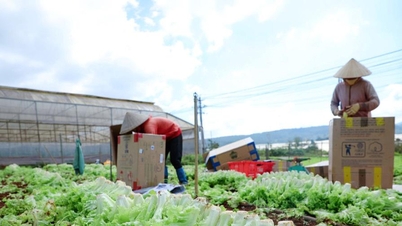
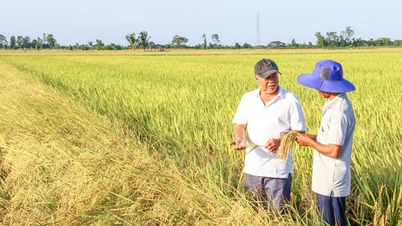
The value of agricultural, forestry, and fisheries production (at 2010 constant prices) reached VND 1,543 billion, equivalent to 15.3% of the plan and a 2.4% increase compared to the same period in 2025. Agricultural production played a leading role with VND 1,157 billion. Total grain production reached 41,650 tons, a 1.1% increase compared to the same period. Notably, winter crops covered 11,238 hectares with a total vegetable production of 165,736 tons.
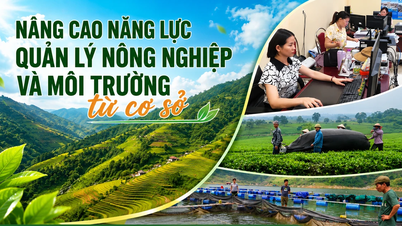
For agriculture to truly become a pillar of the economy, the application of science and technology and digital transformation are considered breakthrough solutions. The province directs the development of concentrated commodity production, the application of high technology, and green agriculture to adapt to climate change. At the same time, to achieve the goal of ecological agriculture, the province must not only focus on productivity but also manage all production data.
Establishing a system of planting area codes and traceability is essential for Lao Cai agricultural products to not only maintain a strong position in the domestic market but also meet the standards for official export to demanding markets.
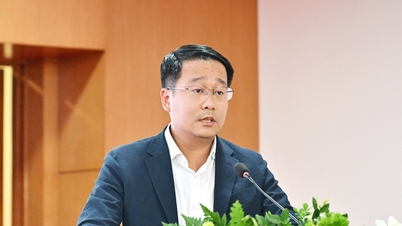
Mr. Ha Manh Cuong - Deputy Director of the Department of Agriculture and Environment
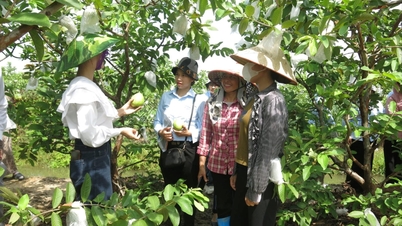
By the end of the first quarter, the province had maintained and newly issued 16 export-oriented planting area codes, along with 10 domestic planting area codes, focusing on key products such as bananas, pineapples, and tea.

Civilized farmers are defined as rural residents with advanced production skills, a market-oriented mindset, and modern digital skills. The province aims to provide vocational training to 142,000 people during the 2026-2030 period.
To achieve this, vocational education institutions have developed enrollment pathways closely aligned with real-world needs, focusing on integrating digital skills and industrial work ethics into their students.

Ms. Do Thi Thanh Thuy, Vice Principal of Yen Bai Vocational College, emphasized the responsibility of partnering with the province in developing human resources through training. Accordingly, businesses directly participate with the school from curriculum development and practical training guidance to organizing internships and recruiting graduates. A prime example is the 70/30 training model, which allows students to spend up to 50% of their time practicing at factories.
Mr. Bui Thai Son, Head of the Basic Sciences Department at Yen Bai Vocational College, stated: "The school proactively invited businesses such as LG Hai Phong and Thang Long Metalworking Company to participate in reviewing the curriculum and developing detailed programs based on the actual requirements of the labor market. This close cooperation helps workers master technology and be ready to participate in the development of the digital economy right in their hometown."

Alongside economic development is the challenge of building modern rural areas. Lao Cai province is not chasing after quantitative achievements but focuses on the quality of communes meeting the standards of new rural areas. By 2030, the target is for 62% of communes to meet the standards of new rural areas, including some that will achieve the status of modern new rural areas.
Essential infrastructure systems such as transportation, irrigation, clean water, and sanitation are prioritized for investment. In particular, the province aims for 50% of the rural population to have access to clean water that meets standards and for over 90% of household solid waste to be collected and treated in accordance with standards.
During implementation, the leading role of businesses and cooperatives is crucial. Mechanisms and policies are being reviewed and supplemented to encourage investment in ecological agriculture and the circular economy. According to the plan, the province will establish 10 to 15 new agricultural cooperatives each year, contributing to improving processing and preservation capabilities and building strong brands for agricultural products.

Looking back at the results of the first quarter of 2026, despite facing many challenges from the global situation and rising fuel costs, Lao Cai's production has maintained a stable pace. Social welfare work, including the elimination of temporary housing for poor households, has also been actively implemented, with 409 houses completed, demonstrating the spirit of leaving no one behind in the journey towards modernization.
The roadmap to 2045 has been outlined with a vision for modern, efficient, and environmentally friendly agriculture. Achieving these goals requires the decisive involvement of the entire political system, from ideological indoctrination to the proactive participation of each household.
The concretization of the Central Government's objectives into specific tasks, as outlined in Plan No. 47-KH/TU, demonstrates Lao Cai's determination to build rural areas into "livable spaces," where farmers are truly the main actors and beneficiaries of the development process. With the right direction and synchronized implementation, the goals of ecological agriculture, modern rural areas, and civilized farmers will soon become a reality in the border region of Lao Cai.
Source: https://baolaocai.vn/hien-thuc-hoa-muc-tieu-tam-nong-post898149.html























































































Comment (0)