

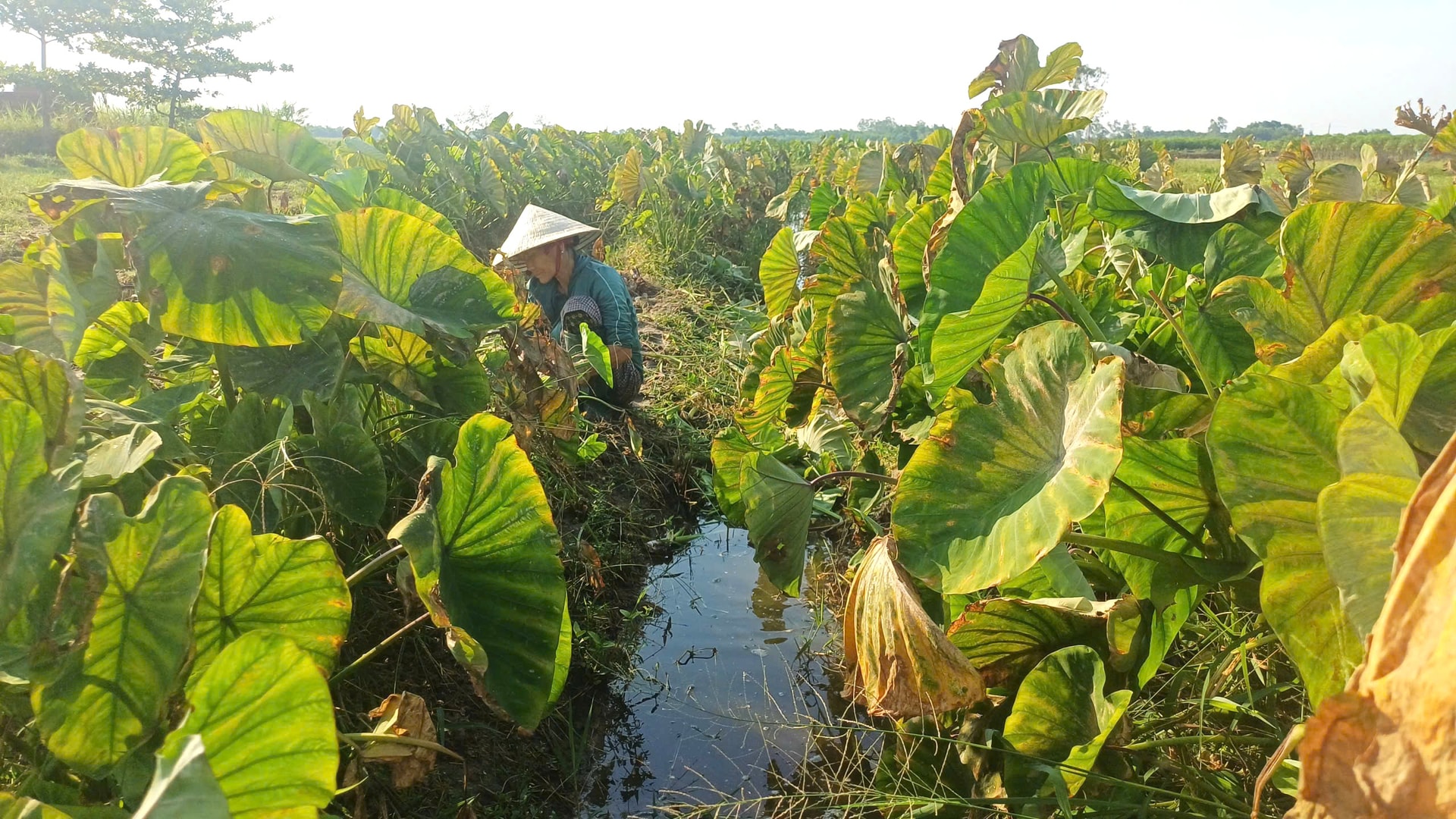
From early morning, Mrs. Vo Thi Than (70 years old, Quy Thanh 1 village) was already out in the fields harvesting her family's 2 sao (approximately 0.2 hectares) of taro. After pulling up the plants, she used a sickle to cut the tubers and separated the shoots to use as seeds for the next season.
Ms. Than said that the taro was planted in September of the lunar calendar in 2025 and after about 6 months of growth, it will begin to be harvested. After harvesting, she sorts the taro tubers right at home to sell to traders at prices ranging from 15,000 to 35,000 VND/kg, depending on size.
Accordingly, with 2 sao (approximately 0.2 hectares) of land, Ms. Than invested 8 million VND in planting fragrant taro; each harvest brings in 15-20 million VND. "Growing fragrant taro is easy to care for, but you have to pay attention to pests and diseases to achieve high yields. Compared to growing rice, the income from fragrant taro is twice as high," Ms. Than said.
Besides selling the tubers as a commercial crop, many households in Quy Thanh 1 village also keep the taro shoots for propagation in subsequent seasons. On average, people plant two crops of fragrant taro per year, intercropping them with other crops such as peanuts, sesame, and cassava to increase their income.
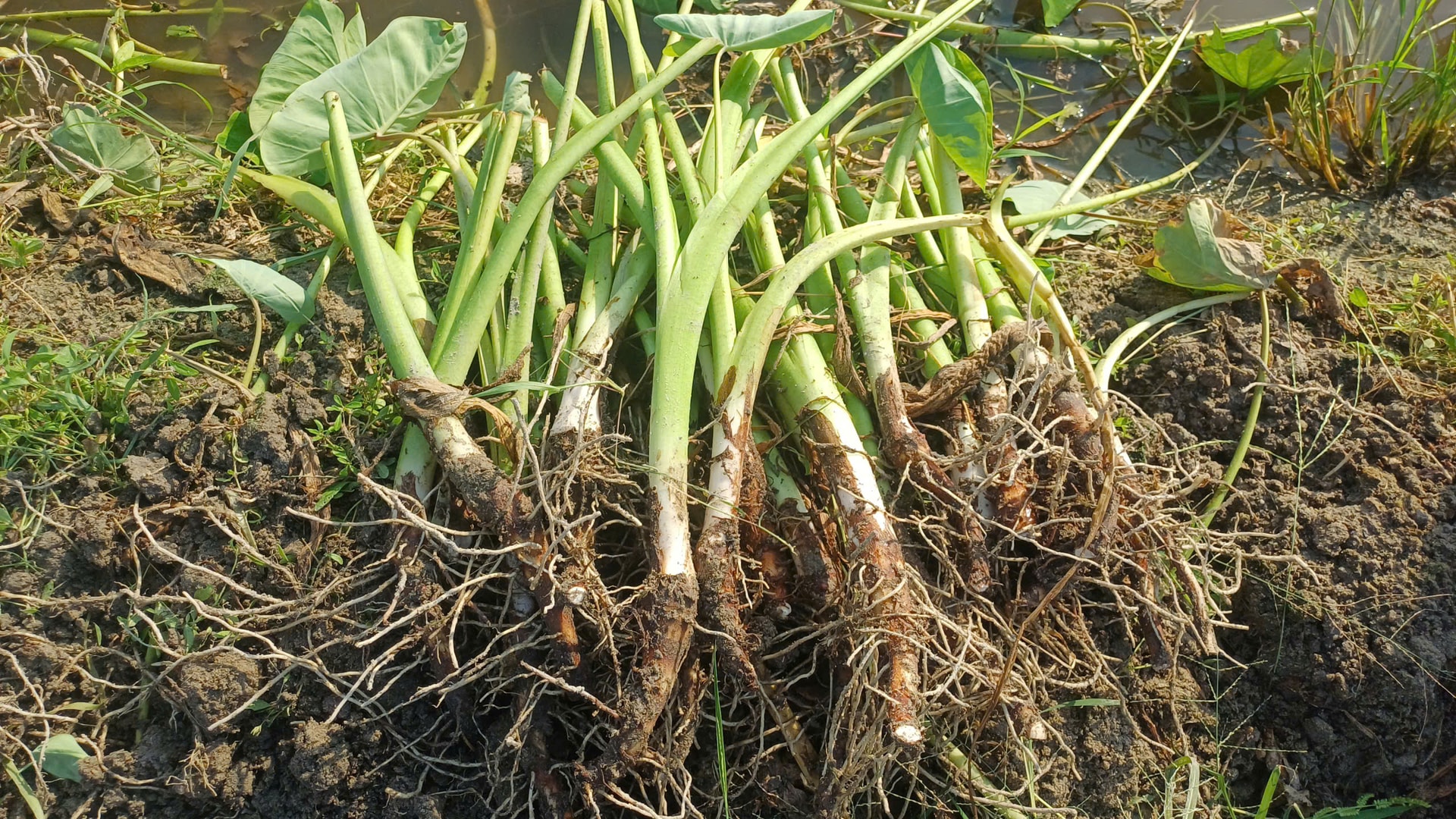
The summer-autumn crop is usually sown in March and harvested in August; the winter-spring crop lasts from September to March of the following year. Each plot of land accommodates approximately 1,000 seedlings. To prevent waterlogging, farmers must raise the raised beds to about 40cm high and maintain a reasonable distance between the beds.
Although taro is an easy plant to grow, it is quite "picky about soil," preferring sandy loam soil that is loose and has a constant water supply. Attention should be paid to controlling fungal diseases and pests when the plant begins to sprout.
Currently, the main market for taro is in the central area of Da Nang city. Thanks to stable demand, traders buy up all the produce as soon as it's harvested, giving farmers peace of mind in their production. On average, taro growers can earn a profit of 10-15 million VND per sao (approximately 1000 square meters) per year.
According to Mr. Dang Nhan, head of Quy Thanh 1 village, the entire village currently has 30 households cultivating fragrant taro, which provides a relatively stable source of income.
Source: https://baodanang.vn/hieu-qua-trong-mon-huong-tren-dat-lua-3337136.html


![[Photo] General Secretary and President To Lam presides over the meeting to approve the draft report on the results of the second inspection by the Politburo of the Standing Committee of the Hanoi City Party Committee.](https://vphoto.vietnam.vn/thumb/1200x675/vietnam/resource/IMAGE/2026/05/26/1779789811432_a2-bnd-4430-9620-jpg.webp)

































































































Comment (0)