

Residential land and agricultural land are prerequisites for ethnic minority communities to stabilize their lives and escape poverty. Therefore, in recent years, the lives of ethnic minorities and people in mountainous areas of Lam Dong province have undergone significant changes, especially in stabilizing their living conditions and developing their livelihoods.
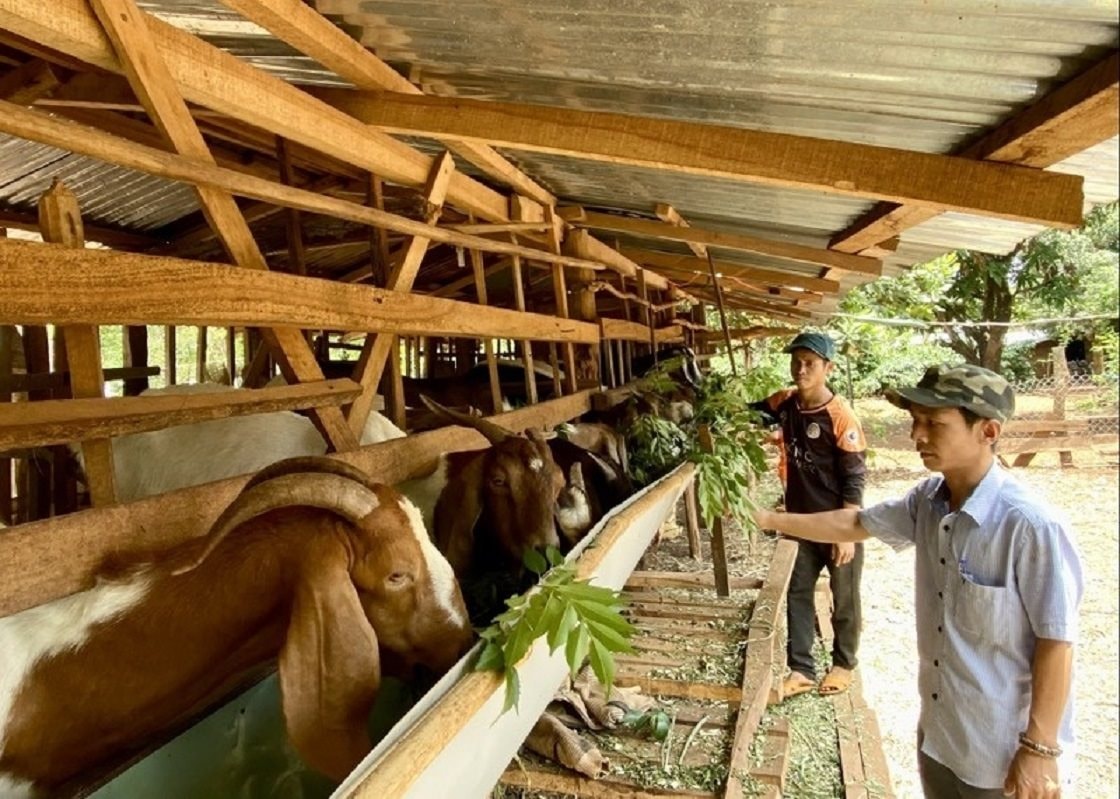
According to a report by the Ethnic Affairs Committee of Lam Dong province, for Project 1, which addresses the shortage of residential land, housing, production land, and clean water, Lam Dong province aims to provide housing support for 301 households in 2024; support 8 projects to provide centralized clean water for 406 households, decentralized clean water for 706 households, and vocational retraining for 1,574 households.
In the first nine months of 2024, the total capital allocated for the implementation of the National Target Program 1719 in Lam Dong province was over 268 billion VND. This funding was allocated according to Decision No. 2471 dated December 11, 2023 and Decision No. 2571 dated December 22, 2023 of the Lam Dong Provincial People's Committee, including over 100 billion VND in recurrent expenditure; over 168 billion VND in investment capital; and 20 billion VND in preferential credit capital. Of this amount, Project 1 has been allocated a total of over 31 billion VND.
One of the localities that has implemented ethnic minority policies well is Lam Ha district. The entire district has implemented National Target Program 1719 to address housing issues for 29 ethnic minority households, of which the District Social Policy Bank has provided loans of over 1 billion VND to 26 households. In addition to housing support, the district is also completing several centralized water supply projects, reaching 90% completion.
Mr. Hoang Son, Chairman of the Fatherland Front Committee of Lam Ha district, said that the district has made efforts to effectively utilize investment capital, ensuring that projects are focused on key areas and not spread too thinly. In addition, the district is also one of the localities that has done well in replicating effective economic development models among ethnic minority communities.
Specifically, the district has implemented a livelihood support project for 185 ethnic minority and poor households to adopt mulberry cultivation and silkworm farming models in 7 communes and towns with ethnic minority populations. The model was implemented in August 2022. From the livelihood support funds for 2022-2023, to date, the entire district has seen 41 households escape poverty, 26 households escape near-poverty, and the area of mulberry cultivation and silkworm farming has increased by 27.9 hectares compared to the area registered for support in 2022.
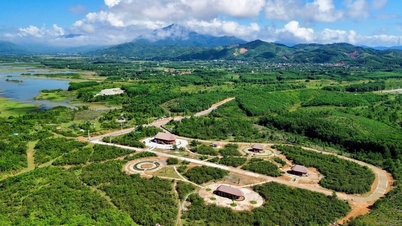
In Di Linh district, the district is also actively implementing Project 1, which supports the construction of housing for poor ethnic minority households using funds from the Program. The project is being implemented in five communes: Dinh Trang Thuong, Gung Re, Dinh Trang Hoa, Bao Thuan, and Tan Nghia, aiming to address the shortage of residential and agricultural land for the people. Furthermore, to improve the lives of ethnic minorities, Di Linh district has approved a concentrated resettlement area in the R'Hang Ploi residential area, Hang Lang village, Gung Re commune. This area covers a total of 20 hectares and is expected to serve 87 households with a total of 435 people. The construction of this resettlement area not only solves the housing problem but also creates favorable conditions for the people to develop production and stabilize their lives.
According to Mr. Bon Yo Soan, Vice Chairman of the Lam Dong Provincial Fatherland Front Committee, effectively implementing ethnic policies and providing appropriate livelihood support is a solution to help people reduce poverty sustainably. Therefore, the Lam Dong Provincial Fatherland Front Committee has organized meetings with localities and relevant sectors to survey and develop a plan for a project supporting livelihood models for poor and near-poor households. Implementation has shown that supporting livelihoods and creating jobs for the poor in ethnic minority areas has received attention and support from Party committees, government, the Vietnam Fatherland Front, and mass organizations from the provincial to the grassroots level. This is a way for the locality to make breakthroughs in promoting people's self-governance in conjunction with sustainable poverty reduction among ethnic minorities in the locality.
Source: https://daidoanket.vn/ho-tro-sinh-ke-giup-nguoi-dan-giam-ngheo-ben-vung-10293788.html


![[Photo] Ba Lang An Lighthouse - the "eye of the sea" amidst the "rock museum" of Quang Ngai province.](https://vphoto.vietnam.vn/thumb/1200x675/vietnam/resource/IMAGE/2026/05/29/1780038698840_anh-man-hinh-2026-05-29-luc-14-10-42.png)
![[Image] Pleasant weather helps students enter the 10th grade entrance exam with confidence.](https://vphoto.vietnam.vn/thumb/1200x675/vietnam/resource/IMAGE/2026/05/29/1780034401612_ngay-1-thi-lop-10-minh-duy-8-5009-jpg.webp)




























































































Comment (0)