

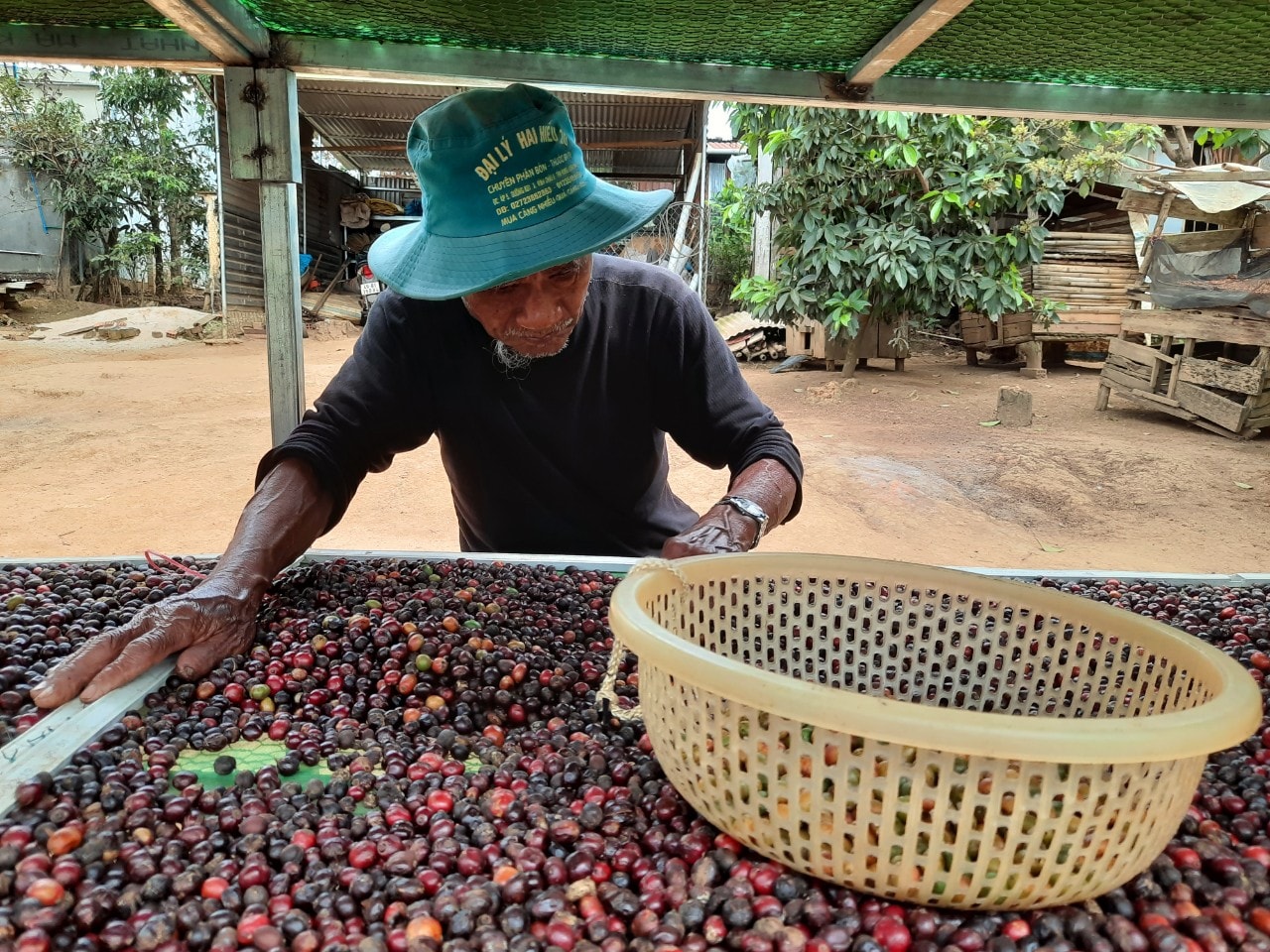
According to the classification of the Vietnam Cooperative Alliance, the cooperative-enterprise linkage model is currently developing at three levels. Level 1 - broad linkage (enterprises supply input materials, technology, and services and guarantee the purchase of output products; cooperatives organize production, build concentrated raw material areas, and ensure output and quality); Level 2 - market penetration linkage (cooperatives proactively link with enterprises to bring products directly into modern consumption channels); and Level 3 - in-depth linkage (cooperatives and enterprises link logistics, deep processing, credit, tourism , and environmental protection). Each level of linkage corresponds to the level of sustainability of each model. Sharing risks (when the market fluctuates), sharing benefits (enterprises accept buying at prices higher than market prices), and joint investment (enterprises invest in technology, cooperatives contribute land) are gradually becoming the preferred solutions for cooperatives and enterprises to achieve sustainable development.
According to statistics from the Provincial Cooperative Union, 77 cooperatives in Lam Dong province have implemented automatic irrigation systems, built greenhouses and polytunnels, and invested in cold storage facilities. In addition, six cooperatives in Lam Dong have been granted planting area codes for export purposes. According to Mr. Vo Ngoc Hiep, Vice Chairman of the Provincial People's Committee, the collective economic sector – cooperatives – is an important component in the local socio-economic structure. Cooperatives have gradually affirmed their position as an important channel for implementing socio-economic development policies, and are also the foundation for implementing national target programs in the province. The Provincial Cooperative Union reports that by the end of 2025, Lam Dong will have 1,190 cooperatives, attracting 144,702 members. The number of permanent workers in cooperatives is 35,015. Each cooperative has an average profit of nearly 290 million VND per year. The average income of a regular worker in cooperatives reaches 78 million VND/year. These figures speak volumes, clearly demonstrating the role of cooperatives in creating jobs, increasing farmers' incomes, improving rural life, and making a positive contribution to the socio-economic growth of the province.
Currently, the number of cooperatives in the province has formed 416 production-consumption linkage chains for agricultural products, encompassing 30 product groups in which the locality has strengths, with the participation of 45,475 farming households. Among these, coffee, tea, vegetables, flowers, macadamia nuts, fruit trees, dairy cattle, honey, etc., play a leading role. Deputy Prime Minister and Head of the National Steering Committee on Collective Economy, Nguyen Chi Dung, while chairing the 2025 Cooperative Economy Forum at the Government's headquarters, emphasized that cooperatives and businesses must join forces for development. Ministries, departments, localities, and units need to identify the core reasons hindering the collaboration between cooperatives and businesses in order to overcome them and promote the formation of strong linkage chains between cooperatives and businesses.
Source: https://baolamdong.vn/hop-luc-de-phat-trien-409238.html
























![[Video] Sunset at Lap An Lagoon – Where the sun sets over the fishing nets](https://vphoto.vietnam.vn/thumb/340x192/vietnam/resource/IMAGE/2026/05/31/1780192137701_beach-landscape-sea-water-nature-grass-745871-pxhere-com.jpeg)






![[Photo] The General Secretary, President and his wife lay flowers at the Ho Chi Minh Monument in Manila.](https://vphoto.vietnam.vn/thumb/1200x675/vietnam/resource/IMAGE/2026/05/31/1780219759477_anh-man-hinh-2026-05-31-luc-16-29-07.png)







































































Comment (0)