

According to analyses by many National Assembly deputies and economic experts, imposing a 5% VAT rate on fertilizers would benefit everyone involved: the state, businesses, and farmers.
The issue of imposing a 5% VAT on fertilizers in the draft amendment to the Value Added Tax Law is attracting public attention.
It benefits the government, farmers, and businesses alike.
In Can Tho City, Mr. Tran Van Chien, Chairman of Truong Khuong A Fruit Tree Cooperative, shared that among agricultural supplies, fertilizers account for the largest portion of input costs. Farmers are not fully aware of the specific tax policies, but they have requested that the State ensure stable fertilizer prices, with a downward trend, to make production profitable. "We also need fertilizer manufacturers to provide more support to farmers in terms of pricing and technical assistance to increase production efficiency," Mr. Chien said.
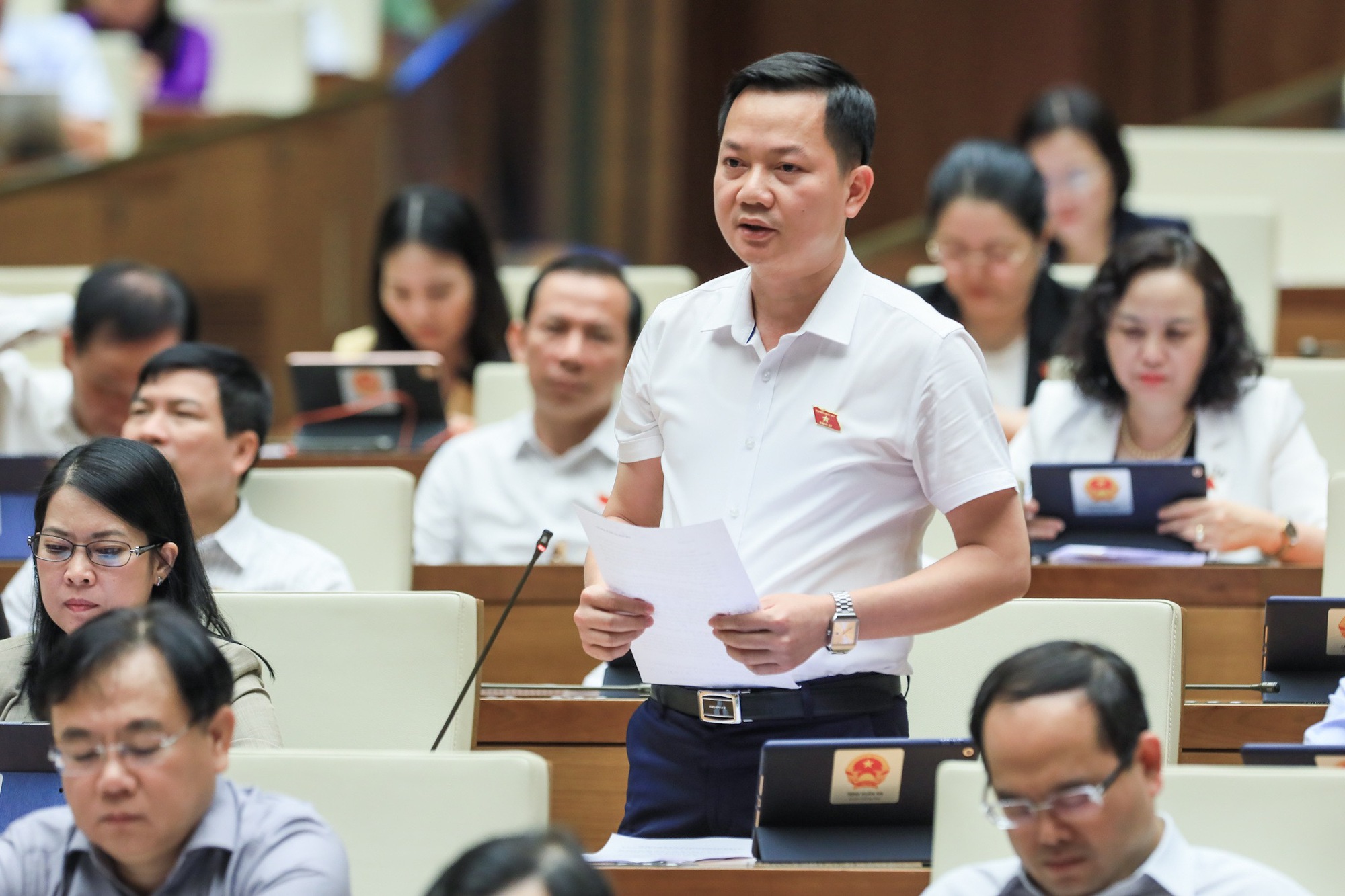
National Assembly representative Trinh Xuan An ( Dong Nai Provincial Delegation). Photo: TN Newspaper
From the perspective of a manufacturing enterprise, Mr. Nguyen Van Son – Deputy Director of Ca Mau Fertilizer Plant – stated that they are ready to support farmers with quality fertilizers at reasonable prices. "If the National Assembly approves the VAT policy on fertilizers, businesses will have even more opportunities to better support farmers," Mr. Son said.
There are currently some concerns that if VAT is imposed on fertilizers, farmers will bear the burden of this tax due to increased selling prices. However, Associate Professor Dr. Dinh Trong Thinh has provided an analysis showing the opposite.
"Many people think that reducing VAT or not applying VAT to fertilizers benefits farmers, but that's not actually the case. Foreign businesses selling fertilizers to our market have already benefited from VAT refunds in their countries. This creates unfair competition for the domestic fertilizer industry."
"If a 5% VAT is applied to fertilizers, it will help save production costs, enhance competitiveness, and enable businesses to support farmers. The state will collect tax revenue. Farmers will benefit from this policy, creating a three-way benefit," said Associate Professor Dr. Dinh Trong Thinh.
In the National Assembly, National Assembly representative Trinh Xuan An (from the Dong Nai Provincial Delegation) stated that applying a 5% tax rate to domestic fertilizer manufacturers would allow them to deduct input costs, and that this regulation would only affect importing businesses.
"Applying a 5% tax rate on fertilizers benefits three parties: farmers, the government, and businesses," Mr. An said.
"I agree with the explanation of the National Assembly Standing Committee; here, domestic and importing businesses are treated equally. This 5% tax only affects importing businesses, while domestic businesses are also protected, and people will have the opportunity to get lower prices," Mr. An added.
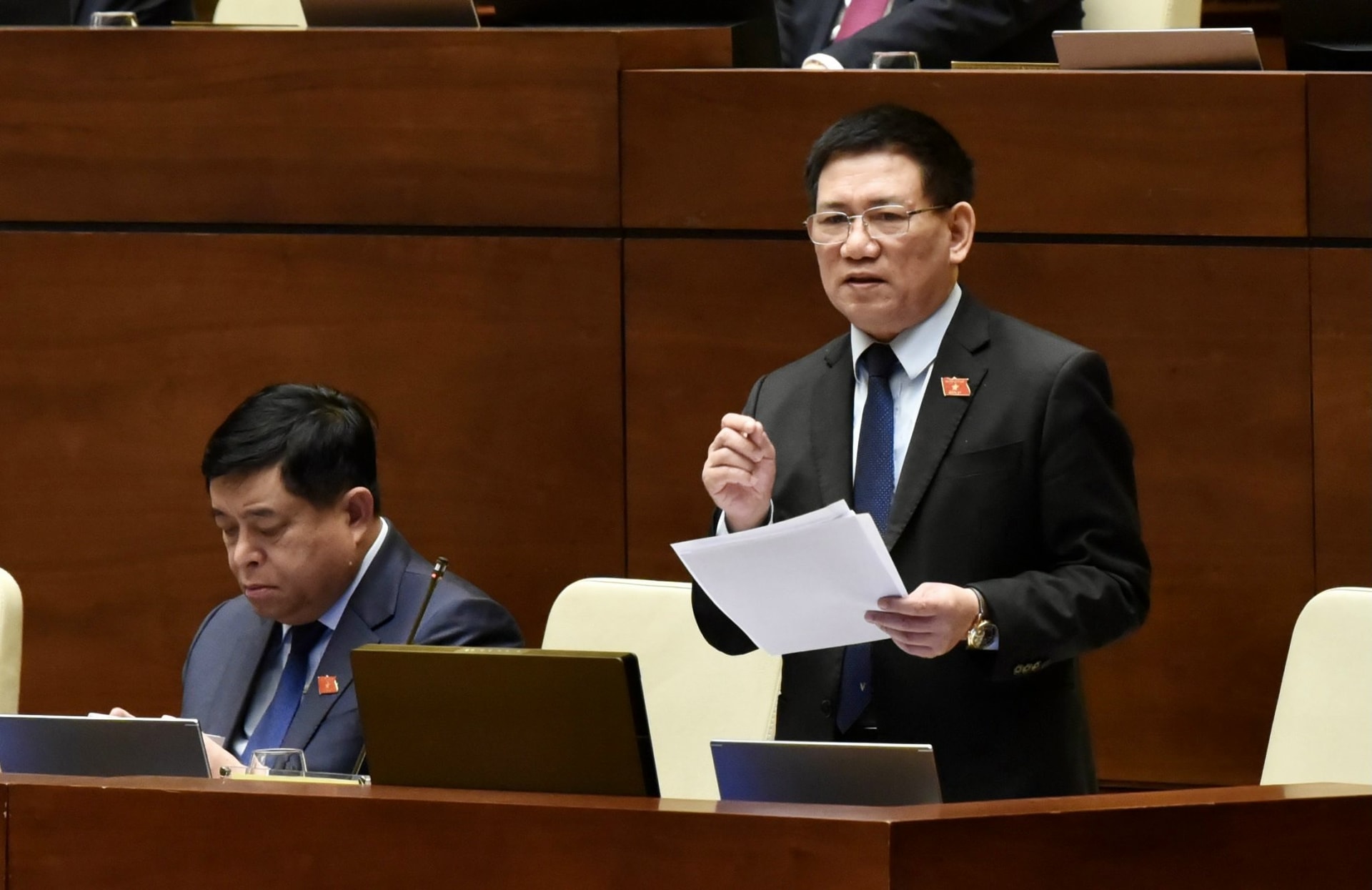
Deputy Prime Minister and Minister of Finance Ho Duc Phoc. Photo: VGP/Nhat Bac
Increase self-reliance and independence.
Representative Truong Trong Nghia (Ho Chi Minh City National Assembly Delegation) also affirmed that applying a 5% value-added tax rate "benefits not only businesses but also farmers." "When we are self-reliant, independent, and strong in many areas, the Government will be able to control and apply measures to reduce the burden on consumers and farmers," Mr. Truong Trong Nghia stated.
Meanwhile, Representative Ha Sy Dong (Quang Tri Provincial National Assembly Delegation) said that while farmers might suffer losses, domestic production would be better ensured, domestic supply would be boosted, and there would be no dependence on imported fertilizers, thus avoiding disruptions in the supply chain.
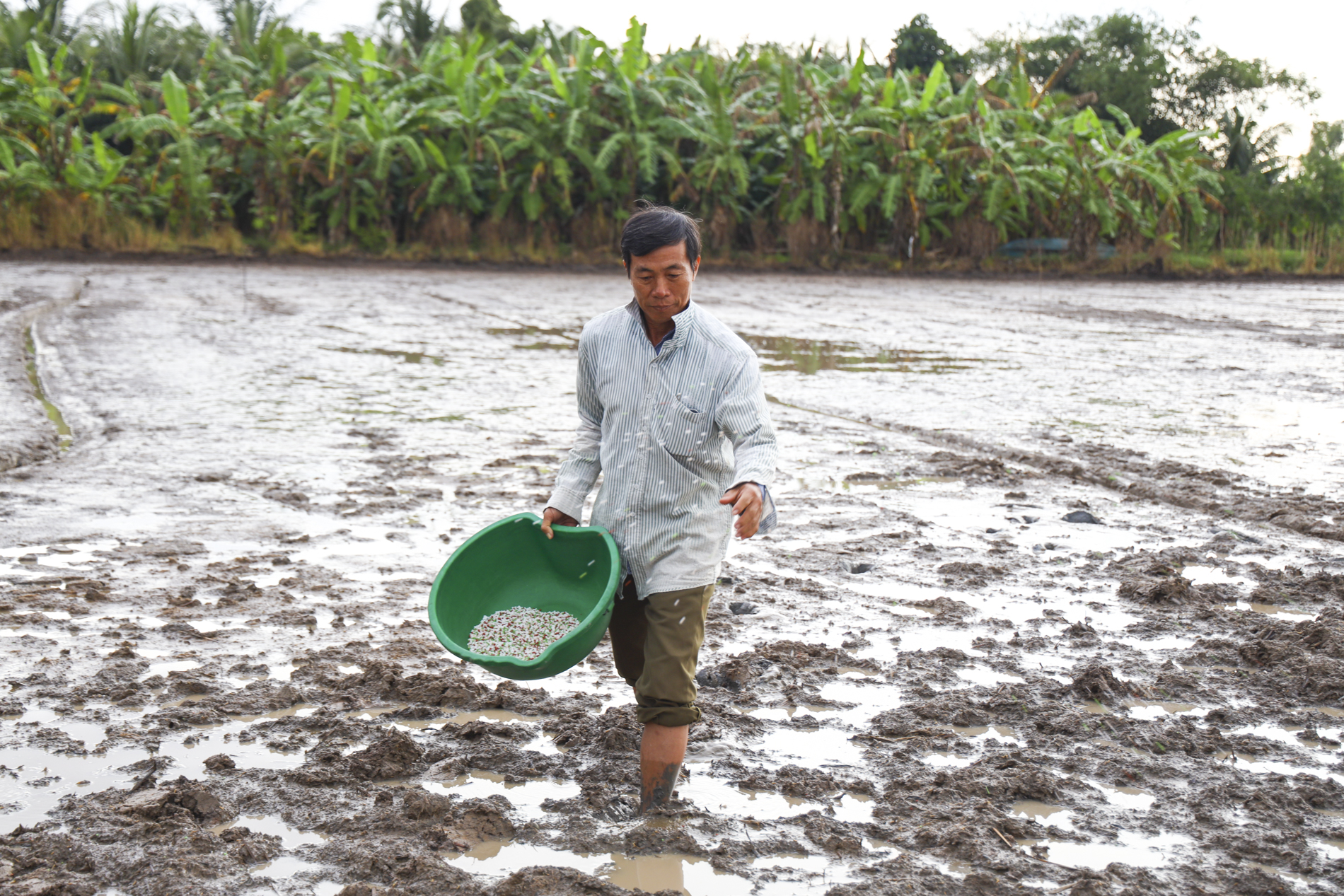
Mr. Pham Truong Giang, Chairman of Long Giang Agricultural Service Cooperative in Tran Van Thoi district, Ca Mau province, uses fertilizer for his rice crop. Photo: Nguyen Chuong
On November 10th, a seminar titled "VAT for Fertilizers – For the Benefit of Farmers and the Development of the Domestic Fertilizer Industry" will be held at the headquarters of the Nong Thon Ngay Nay Newspaper. The seminar will be attended by leaders of the Central Committee of the Vietnam Farmers' Association, National Assembly delegates, representatives from the General Department of Taxation, financial experts, and representatives of farmers.
Representative Nguyen Van Chi, from the National Assembly delegation of Nghe An province, also agreed with the proposal to apply a 5% VAT tax on fertilizers: "With the switch to applying a 5% tax, it does not mean that the price level will increase by 5% because domestic fertilizer businesses have room to reduce prices when they are allowed to deduct this input tax or, in many cases, they will receive a refund, so the price level will decrease. Therefore, it cannot be said that farmers or the agricultural sector will be affected."
Dr. Nguyen Tri Ngoc, Vice President and General Secretary of the Vietnam General Association of Agriculture and Rural Development, added that applying a 5% value-added tax instead of tax exemption on fertilizers would have many benefits.
Specifically, farmers will benefit because fertilizer manufacturers will receive input tax deductions, reducing investment costs and production costs, which could lead to lower fertilizer prices.
Businesses are motivated to invest in research, technological innovation, and the production of high-tech, next-generation fertilizers that will increase productivity and production efficiency, leading to higher crop yields, improved product quality, and thus sustainably enhancing agricultural efficiency.
The government collects taxes on fertilizers, which provides additional resources for scientific research... this will help farmers increase production efficiency per unit area and enhance the competitiveness of domestic agricultural products.
At the National Assembly, Deputy Prime Minister and Minister of Finance Ho Duc Phoc analyzed the benefits of imposing a 5% VAT on fertilizers. From the farmers' perspective, according to Mr. Ho Duc Phoc, fertilizer prices depend not only on whether VAT increases or decreases but also on production costs, supply and demand in the market… Meanwhile, product costs depend on science and technology, labor productivity, modernization…
In fact, although we haven't taxed fertilizers in recent years, urea fertilizer prices still increased by 19.70-43% between 2018 and 2022. In 2023, urea fertilizer prices increased by 6.29-6.4%. Thus, fertilizer prices fundamentally depend on supply and demand in the market.
From the perspective of fertilizer businesses, imposing a 5% VAT on fertilizers will give domestic businesses an advantage and a competitive edge over foreign businesses. With the tax in place, it is estimated that foreign businesses will have to pay 1,500 billion VND, while domestic businesses will only have to pay 200 billion VND. This will allow domestic businesses to improve their techniques, adopt modern technologies, reduce production costs, and lower selling prices, ultimately benefiting consumers.
"I hope that the National Assembly deputies will support the proposal to set the VAT rate on fertilizers at 5%," the Deputy Prime Minister emphasized.
Source: https://danviet.vn/de-xuat-thue-vat-5-doi-voi-mat-hang-phan-bon-huong-den-loi-ich-ba-nha-20241108103706124.htm


![[Photo] Standing Committee member of the Party Central Committee Tran Cam Tu working with the Central Inspection Committee](https://vphoto.vietnam.vn/thumb/1200x675/vietnam/resource/IMAGE/2026/05/28/1779969579668_ndo_br_bnd-2495-jpg.webp)






















































































Comment (0)