

Genetic defects passed down through generations.
The National Hospital for Tropical Diseases has successfully performed surgery on a 6-year-old patient, NV, from Lao Cai province, who suffered from congenital bilateral preauricular fistula. Remarkably, a review of the family history revealed that from the grandfather and father to the sons, all members of the family have had this defect and have undergone surgical intervention to remove the fistula tract.
According to the child's family, the two fistulas in front of V.'s ears frequently secreted a white, cheesy substance, causing an unpleasant odor and itching when blocked. Concerned about the risk of recurrent infection, similar to what happened to his 12-year-old brother, the family decided to take him to the National Hospital for Tropical Diseases for thorough treatment.
Doctors assessed this as an opportune time for surgery because the lesion had not yet shown signs of acute inflammation. Early intervention helps reduce the risk of complications and limit recurrence later on.
According to Dr. Trinh Thuy Lien, a specialist in Otolaryngology at the Central Hospital for Tropical Diseases, a preauricular fistula is a congenital defect formed by the incomplete fusion of the outer ear's structural ridges during the fetal stage, around the 6th week of gestation. The defect usually manifests as a small hole in the anterior auricle, with a system of fistula tracts attached to the ear cartilage membrane inside.
Many people consider this just a "small bump in front of the ear" and don't worry about it, so they often ignore it. However, inside the fistula is an epithelial layer capable of secreting fluid. If the fluid accumulates for a long time or is not properly cleaned, the patient is very susceptible to infection, forming pus pockets and abscesses.
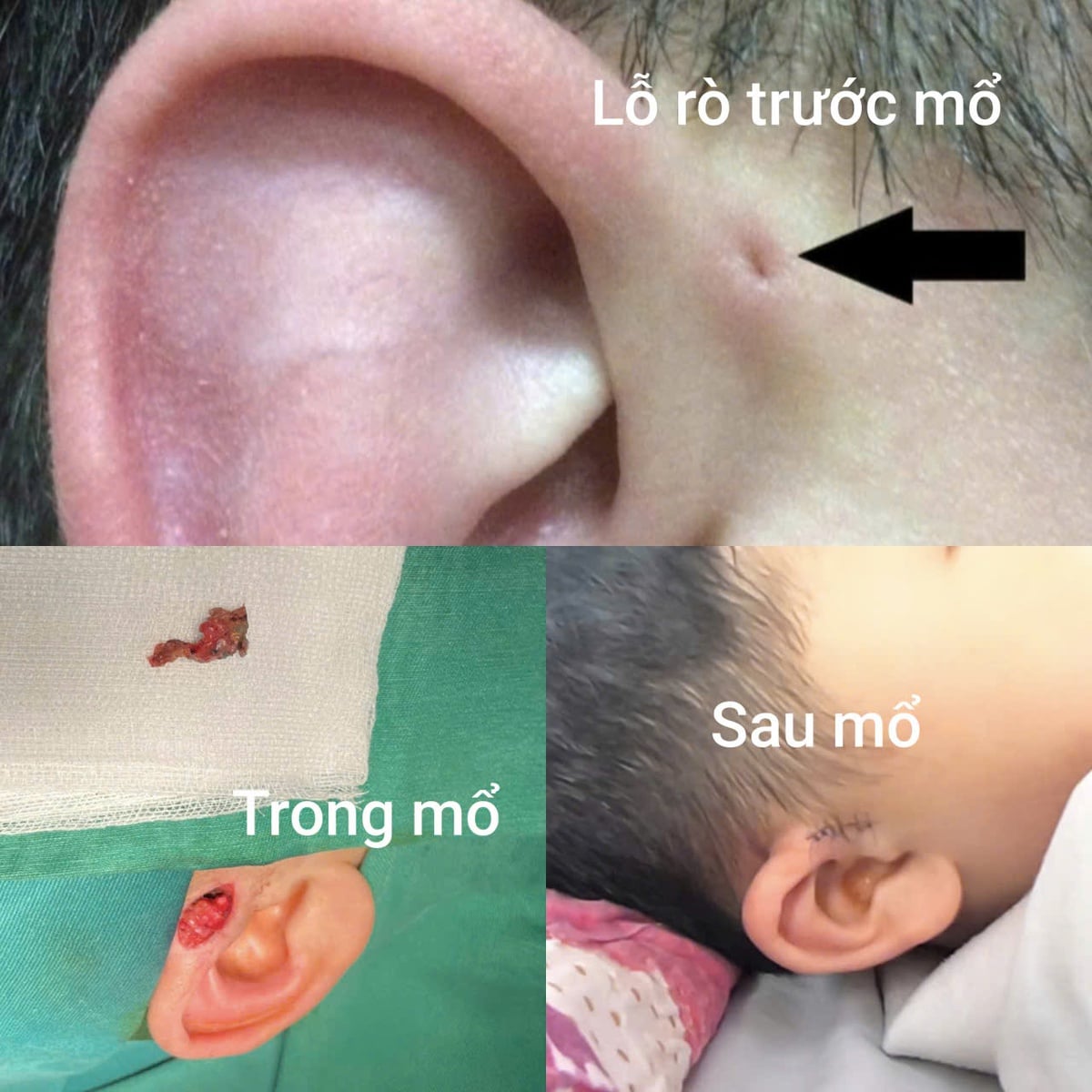
Congenital preauricular fistula in both ears of the child.
According to Dr. Lien, preauricular fistulas may be related to genetic factors in some cases. This defect is noted to have a tendency to be inherited as an autosomal dominant trait, but the penetrance is not complete. This means the disease can appear continuously through many generations, or in some cases, it can "jump," with individuals carrying the disease gene but not showing obvious symptoms.
"The case of patient V.'s family is quite special, as the birth defect has appeared consecutively in male members for three generations. This indicates a very clear genetic predisposition," Dr. Lien shared.
During the surgery, the doctors completely dissected the fistula tract, and also removed a portion of the perichondrium at the base of the sinus and the cartilage near the base of the fistula tract to completely eliminate the risk of recurrence.
After more than an hour of surgery, the operation went smoothly. Just one day later, the child was alert, had no fever, the surgical wound was clean and dry, and there was almost no significant pain.
Neglecting your responsibilities can lead to dangerous complications.
According to doctors, most cases of ear fistula, if not infected, usually have little impact on health, so many families tend to be complacent and only seek treatment when swelling, pain, or pus discharge occurs.
However, allowing the inflammation to recur repeatedly can lead to a series of dangerous complications such as widespread cellulitis, abscesses around the fistula, inflammation of the auricular cartilage, and cartilage resorption causing ear deformity. More seriously, patients are at risk of sinus venous thrombosis or facial nerve paralysis.
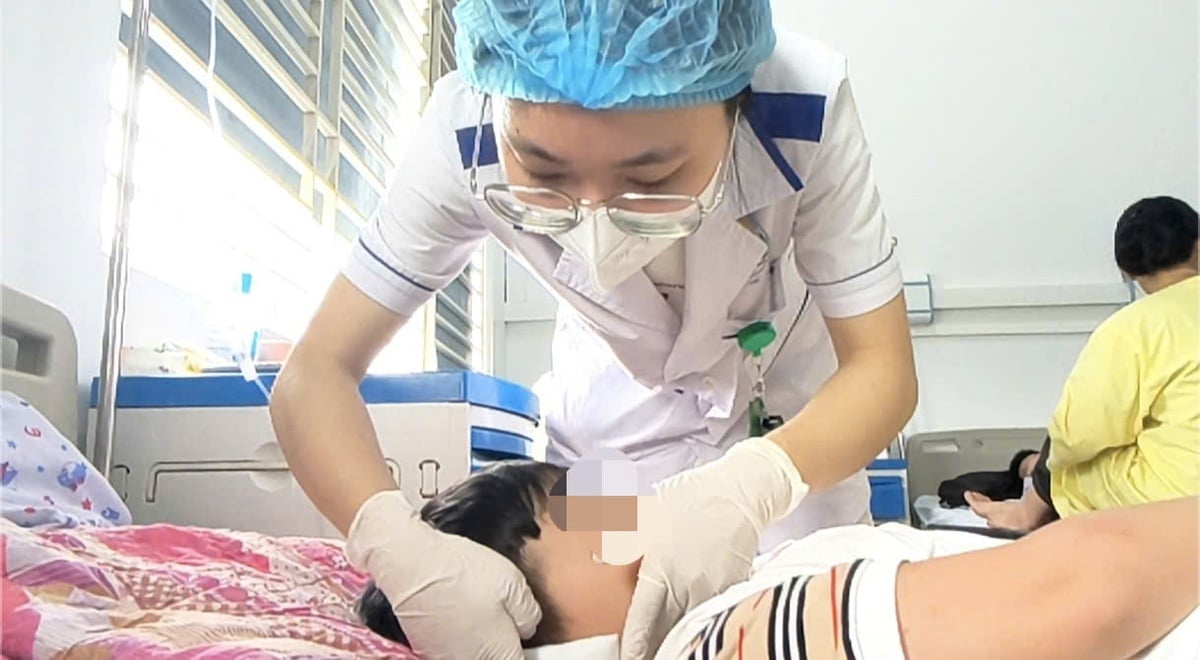
Neglecting the issue can lead to dangerous complications if not treated promptly.
Dr. Trinh Thuy Lien advises parents to closely monitor any unusual symptoms in the area in front of their child's ear. If signs such as foul-smelling discharge, swelling, redness, pain, or a lump around the fistula appear, the child should be taken to a specialized medical facility for timely examination and treatment.
Furthermore, parents should not attempt to squeeze, prick, or use folk remedies at home, as this can spread the infection and complicate the subsequent surgical procedure.
Experts also state that the most appropriate time for surgical treatment of preauricular fistula is when the lesion has passed the acute inflammatory phase and the skin around the fistula opening is stable. If surgery is performed while the inflammation is severe, the risk of incomplete fistula drainage and recurrence is higher.
Source: https://phunuvietnam.vn/hy-huu-gia-dinh-3-the-he-cung-mac-di-tat-238260526143522517.htm
































































































Comment (0)