

In response to the latest wave of criticism and sanctions from the US and Europe, accusing Iran of selling ballistic missiles to Russia, Iran has responded rather sparingly, primarily through official statements from officials.
On September 11, Iranian Foreign Minister Abbas Araghchi declared that Tehran had not sent any missiles to Russia.
"Once again, the U.S. and the EU are acting on misinformation and flawed logic – Iran is not transferring ballistic missiles to Russia," Araghchi said in a post on X/Twitter.
"Those addicted to sanctions should ask themselves: How can Iran produce and allegedly sell sophisticated weapons? Sanctions are not the solution, but part of the problem," the Middle Eastern nation's top diplomat declared.
These controlled responses demonstrate a cautious approach by Tehran: seeking to manage the diplomatic consequences without further escalating tensions.
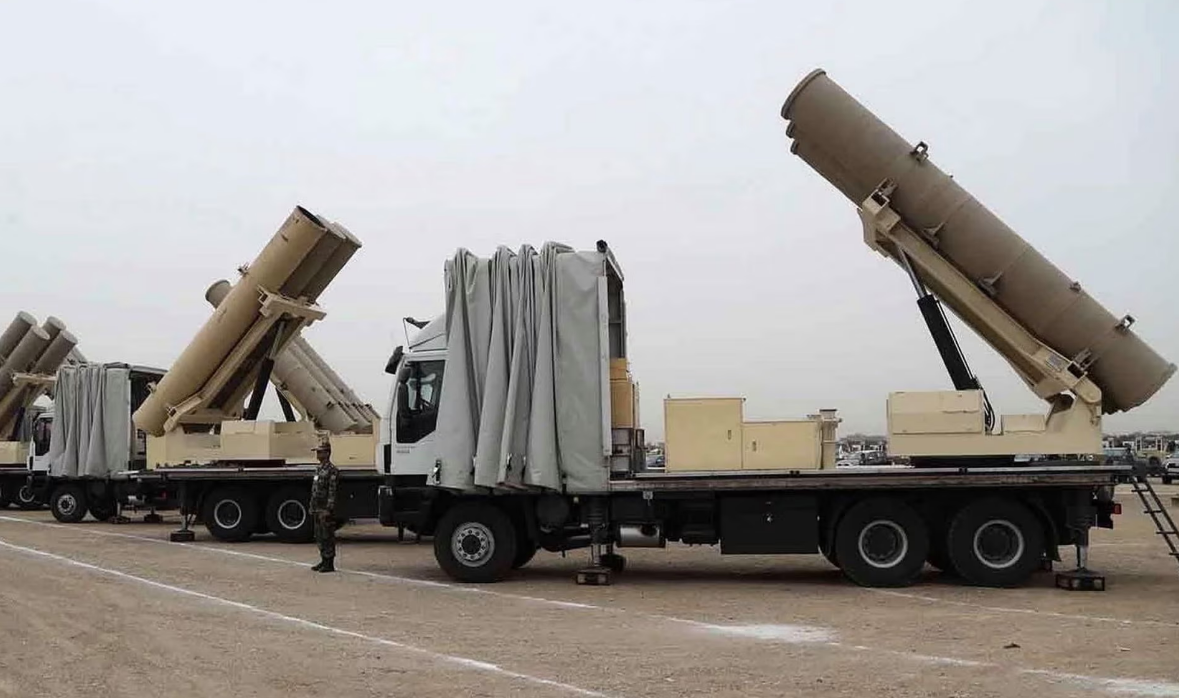
A photograph released by the Iranian military shows a Fath-360 short-range ballistic missile. Photo: The Guardian.
The Fars news agency, which is linked to the Islamic Revolutionary Guard Corps (IRGC), also denied the report, citing "a knowledgeable military source" who said Iran had not sent ballistic missiles to Russia. Fars claimed the report was part of a psychological warfare campaign against Tehran.
On September 12, Tehran-based analyst Ali Bigdeli echoed this sentiment, telling a local news outlet that the allegations regarding missile sales were part of a plot to pressure Iran.
This analyst suggests that the increased pressure coincides with Iranian President Masoud Pezeshkian's planned meetings with European leaders at the upcoming United Nations General Assembly in New York later this month.
Kremlin spokesman Dimitry Peskov denied the news on September 11, saying reports of missile supplies from Iran were inaccurate. However, Peskov called Tehran one of Moscow's important trading partners.
Earlier, on September 10, the US, UK, France, and Germany accused Iran of transferring short-range ballistic missiles to Russia for use in Ukraine, declaring that new sanctions would be quickly imposed afterward.
US Secretary of State Antony Blinken made this announcement during a visit to London at a press conference with his British counterpart, David Lammy.
The French, British, and German governments issued a joint statement condemning the alleged transfer of missiles by Iran, calling it "an escalation by both Iran and Russia" and "a direct threat to European security."
They said they had made it clear in repeated warnings in recent weeks that "new and significant measures against Iran" would be taken if the missiles were delivered.
"We will take immediate steps to cancel bilateral air services with Iran. In addition, we will pursue the designation of key organizations and individuals involved in Iran's ballistic missile program and the transfer of ballistic missiles and other weapons to Russia. We will also strive to impose sanctions on Iran Air," the joint statement from the three European countries said.
Mr. Blinken also outlined similar plans from the US side, again focusing on Iran Air and the Middle Eastern nation's aviation industry.
An updated sanctions list on the U.S. Treasury Department website details new sanctions applied to 10 Iranian citizens and five Iranian companies in the transportation and engineering sectors allegedly linked to the IRGC and Russia.
Minh Duc (According to Iran International, DW)
Source: https://www.nguoiduatin.vn/iran-phan-ung-than-trong-voi-lenh-trung-phat-cua-my-va-eu-lien-quan-den-nga-204240913105513541.htm


![[Photo] Prime Minister Pham Minh Chinh attends the Conference on the Implementation of Tasks for 2026 of the Industry and Trade Sector](/_next/image?url=https%3A%2F%2Fvphoto.vietnam.vn%2Fthumb%2F1200x675%2Fvietnam%2Fresource%2FIMAGE%2F2025%2F12%2F19%2F1766159500458_ndo_br_shared31-jpg.webp&w=3840&q=75)

























































































Comment (0)