

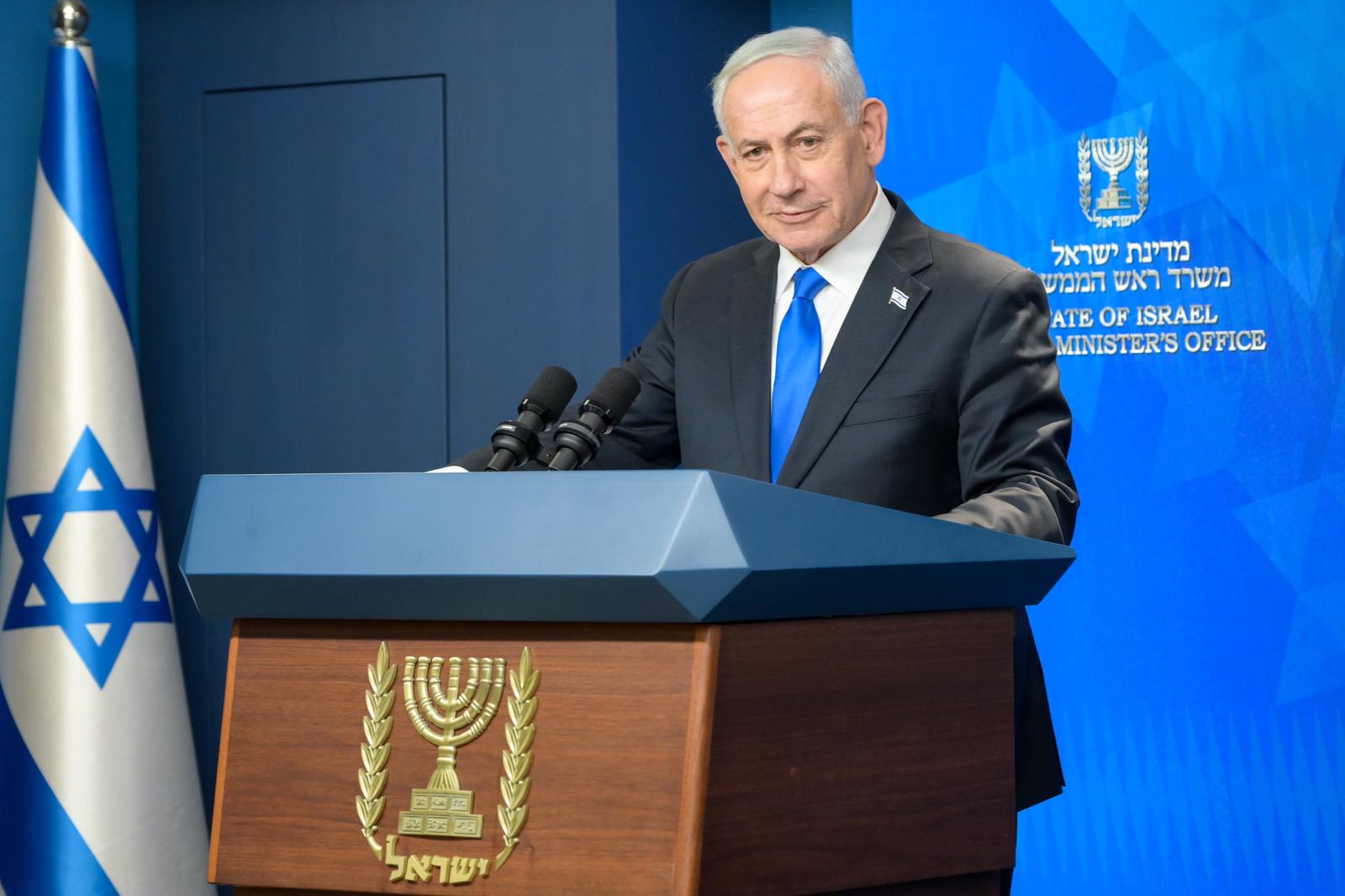
Israeli Prime Minister Benjamin Netanyahu. Photo: GPO
The bill will be put to a first vote at the plenary session later today, opening the possibility of Israel entering a general election that is predicted to be a turning point for the country's political future.
The chairman of the Interior Committee, Ofir Katz, said that due to disagreements within the ruling coalition, the bill currently does not specify a concrete election date. However, options being discussed focus on the period from early September to the end of October 2026. According to the law, the election must be held no later than October 27th if Parliament is officially dissolved.
This move comes as the coalition led by Prime Minister Benjamin Netanyahu faces increasing pressure from political partners, particularly the far-right Orthodox Jewish party (Haredi). Numerous sources indicate that Netanyahu has urged allies against pushing for early elections in September, warning that this timing could diminish the right-wing bloc's chances of winning.
If the election takes place this fall, it will be one of the most important political contests in Israel in years. Not only will it determine who becomes the next prime minister, but the vote will also be seen as a test of Israel's strategic direction after nearly three consecutive years of war, regional tensions, and domestic political crisis.
Recent polls show Netanyahu maintaining his position as Israel's most influential politician and continuing to receive strong support from traditional right-wing voters as well as the Likud party. However, forming a stable governing coalition is proving more difficult than in previous elections.
Criticisms related to the October 7, 2023 attack, the protracted war in Gaza, and tensions with Lebanon and Iran have significantly impacted the veteran leader's political standing. A segment of Israeli voters is seeking new faces capable of bringing political stability while maintaining a firm stance on security.
Emerging as Netanyahu's most formidable opponent is former Prime Minister Naftali Bennett. With the image of a pragmatic right-wing politician, Bennett is trying to attract voters who still support strong security policies but are no longer satisfied with Netanyahu's governance.
His campaign message focused on effective governance, political stability, and reducing divisions within Israeli society.
Meanwhile, former Chief of General Staff Gadi Eisenkot is seen as a more different choice. With his extensive military experience and moderate image, Eisenkot has garnered interest from voters seeking a generational change in leadership. Although lacking the political experience of his rivals, he is highly regarded for his professionalism and ability to build consensus.
Notably, the policy differences between the leading candidates are not significant on core security issues. Netanyahu, Bennett, and Eisenkot all support Israel's military operations in Gaza and Lebanon, and maintain a hardline stance toward Iran. The main differences lie in their leadership styles, the management of their ruling coalitions, and how they coordinate with international allies, particularly the United States.
One factor that could significantly influence the election results is the role of the Israeli Arab community, which comprises approximately 22% of the country's population. If Arab parties achieve unity and increase voter turnout, they could become a decisive factor in forming a new governing coalition.
However, Israeli political realities show that many Jewish parties remain cautious about the possibility of bringing Arab political parties directly into the government. This makes the question of the political role of Arab citizens one of the most debated issues in Israeli democracy today.
Observers believe the upcoming election is not just a contest between individuals, but also a debate about the model of Israeli leadership in the post-war period. If Netanyahu remains in power, it is likely that current policies will be maintained, including prioritizing military deterrence and a hardline stance towards Iran and the Palestinian issue. Conversely, a victory for Bennett or Eisenkot could bring about changes in governing style and foreign relations, although it is unlikely to create a major reversal in security policies.
Source: https://baoangiang.com.vn/israel-tien-gan-toi-bau-cu-som-a487503.html






























![[Photo] Reception to welcome General Secretary and President To Lam and his wife on their State visit to the Philippines](https://vphoto.vietnam.vn/thumb/1200x675/vietnam/resource/IMAGE/2026/06/01/1780295488620_vna-potal-chieu-dai-chao-mung-tong-bi-thu-chu-tich-nuoc-to-lam-va-phu-nhan-tham-cap-nha-nuoc-toi-philippines-8798060-7855-jpg.webp)





































































Comment (0)