


Mike Fischer currently teaches at the USC School of Cinematic Arts and has previously held senior management positions at Amazon, Microsoft, and as CEO of Square Enix America.
Speaking to Tuoi Tre newspaper in Hanoi , veteran game expert Mike Fischer (USA) - who has participated in developing publishing strategies for many famous game brands such as Final Fantasy and Tomb Raider - emphasized that Vietnam has been recognized worldwide as a powerhouse in game development, especially mobile games.
Games are culture.
* You met Vietnamese students and young people during this trip. What were your impressions of their energy?
- I visited a university that shares many similarities with the one I attended when I was younger. Surprisingly, there are so many young people studying online game design. This is a testament to the solid foundation this industry has built.
Vietnamese students are full of energy and carry many creative dreams. I can feel this when I talk to them. Game lovers are a "global tribe"; no matter where we are, we can talk about our love for Final Fantasy, Mario, or Fortnite. I feel a deep connection when I talk to them.
* What trends or innovations have you observed happening in the Vietnamese gaming industry?
- I see two trends. First, the global trend is how to optimally utilize artificial intelligence (AI) tools in the gaming industry. If done correctly, AI will help small development teams around the world create high-quality games. But AI cannot truly replace the creative process. That's a common challenge for the entire industry.
The second, more specific point is that Vietnam is moving up the value chain. Its technical, artistic, and creative capabilities are on par with the best in the world. However, much of the work here is not about creating original intellectual property (IP) but rather about outsourcing or developing basic games.
I am very pleased to learn that the Ministry of Culture, Sports and Tourism of Vietnam is the agency directly responsible for managing online games. Like books, films, or music , games are culture. Today, games are the best way to reach a wider audience around the world.
I want the next generation of game developers to be seen not only as outsourced technical resources, but also as creative teams capable of telling stories about traditional culture, new narratives, science fiction, wars, and stories with a unique Vietnamese identity.

Mike Fischer met with students from the Posts and Telecommunications Institute of Technology during his visit to Vietnam in May 2026.
Game development teams in Vietnam will create a "super hit".
* Resolution 80 identifies video games as one of the key areas for development in Vietnam's cultural industry. How do you assess this direction? How can Vietnam unleash the potential of the gaming industry and expand into the region and globally?
- I think this is a very appropriate approach. The government, academia, and the business community have reached a consensus and are all moving forward positively.
I am not only an instructor but also an investor, so I believe that strong intellectual property protection and a transparent business environment are extremely important. I need to know that if I invest in a game development team here and they succeed, we can share the profits fairly.
The gaming industry in Vietnam is undoubtedly a global market. The missing element is practical experience in publishing and business. I predict that in the future, a game development team in Vietnam will create a "super hit." This will be a beacon to inspire other developers and attract new investors.
What's needed is to create an environment that fosters entrepreneurship, with tax incentives, seed investment from the government or public-private partnerships, and incubation programs. Interestingly, the gaming industry doesn't require factories or land; it only needs talent and computers.
From game engines like Unity and Unreal to AI support, a team of around 10 people today can develop a game that previously required 50 people. This opens up opportunities for small, low-capital teams in Vietnam to create products that meet international standards.
Are there any countries that have been successful from which Vietnam can learn?
- I think there are a few prime examples. First is Finland, a country with only 5.5 million people, but at its peak, led by Angry Birds and Clash of Clans, it accounted for 5% of total iOS game revenue. Some developers became successful, they invested their profits in the next generation of developers, and that positive ecosystem helped each other to grow.
Next is Poland. Initially, it was just a source of cheap outsourced labor, but after a few years, these groups started creating their own original games, initially low quality, then average, and now they create some of the best and most successful games in the world. The common point between these two countries is a transparent business environment, a solid legal framework, and good IP protection.
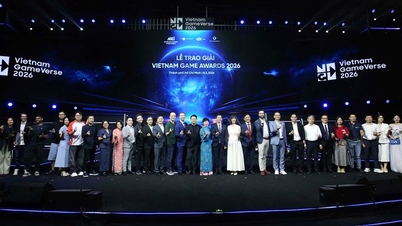
And I have absolutely no doubt that Vietnam will be the next world leader in gaming. Vietnam is a larger country, has more talent, and is receiving support from the government and academic programs. The Vietnam GameVerse event is expanding in scale each year and attracting more attention from around the world.
Many global game franchises like Final Fantasy and Tomb Raider have successfully combined storyline, cultural identity, and commercial success. What can Vietnam do to build game franchises that bear its own cultural imprint while also having international appeal?
- I once went to Cambodia because I really love the game Tomb Raider. Standing in front of Angkor Wat, I felt like I was Laura Croft.
I think that telling stories about different regions of Vietnam will attract people to visit these lands. I want to emphasize that these don't necessarily have to be traditional stories; they could be modern stories, even science fiction, based on Vietnam's unique cultural heritage. That would be something unique to Vietnam.
Next time I'll be back as an investor, evaluating studios that I can help scale up and turn into global success stories.
2
According to GameGeek's 2025 report, Vietnamese mobile games are expected to reach 4.9 billion downloads, ranking second globally. Vietnam is emerging as a global mobile game production hub with 27,388 new games projected for 2025 (a 13% increase compared to 2024).
The market is clearly export-oriented, with over 90% of downloads coming from developing countries and only 5.5% from the domestic market. Furthermore, the report indicates that "made in Vietnam" games are shifting from quantitative growth to qualitative growth, focusing on genres with depth and long-term value.
Source: https://tuoitre.vn/ke-chuyen-viet-nam-cho-the-gioi-qua-game-2026051110113171.htm



![[Photo] General Secretary and President To Lam presides over the meeting to approve the draft report on the results of the second inspection by the Politburo of the Standing Committee of the Hanoi City Party Committee.](https://vphoto.vietnam.vn/thumb/1200x675/vietnam/resource/IMAGE/2026/05/26/1779789811432_a2-bnd-4430-9620-jpg.webp)




































































































Comment (0)