Located beside the tranquil Dong Ba River, Dieu De Pagoda (Phu Xuan Ward) has long been one of the most famous ancient temples in Hue .
Not only is it a sacred spiritual destination, but it also preserves many historical, cultural, and architectural values of the Nguyen Dynasty's imperial court, closely associated with the Buddhist life of the ancient capital for nearly two centuries.
During your exploration of Hue, if you're looking for a place that is both ancient and serene, yet deeply imbued with royal charm, then Dieu De Pagoda is a must-see destination.
The national temple bears the royal imprint of the Nguyen dynasty.
Dieu De Pagoda is located at 100B Bach Dang Street, near Gia Hoi Bridge, overlooking Ho Thanh River and Dong Ba River. The pagoda boasts a unique location amidst Hue's ancient residential area, surrounded on all sides by major roads, creating an imposing yet intimate atmosphere for the local community.
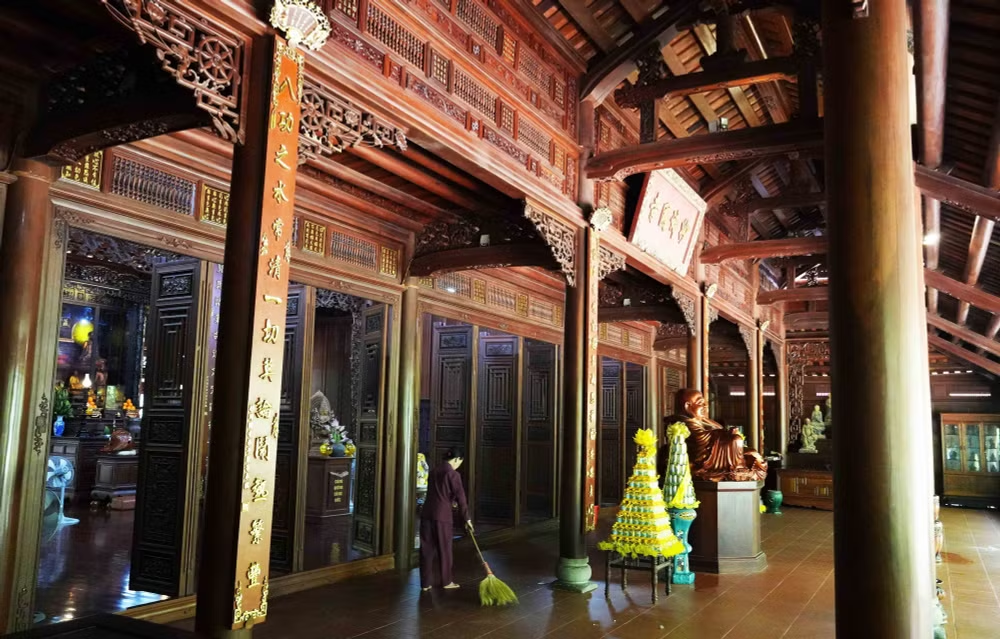
The main hall of Dieu De Pagoda in Phu Xuan Ward, Hue City, is built of wood, with a traditional three-bay, two-wing architectural style. (Photo: Nguyen Ly/VNA)
This place was originally the former residence of Phuc Quoc Cong - the maternal grandfather of Emperor Thieu Tri, and also the birthplace of Emperor Thieu Tri in 1807. After ascending the throne, the emperor had it rebuilt into a temple to pray for the people's well-being and bestowed upon it the title of National Temple in 1844. To construct the temple, the court mobilized 600 soldiers, demonstrating the project's special importance to the Nguyen dynasty.
Having endured numerous historical events, Dieu De Pagoda suffered significant damage. After the fall of Hue in 1885, many structures were demolished, and the buildings within the pagoda grounds gradually deteriorated over time. However, thanks to several restorations during the reign of King Thanh Thai, the Buddhist revival movement in the early 20th century, and subsequent major renovations, the pagoda has retained the core values of a national temple of the Nguyen dynasty.
In particular, in 2018, Dieu De Pagoda underwent a major renovation. Among the key activities was the relocation of the 350m2 main hall (Dai Hung Hall) approximately 19m backward, aimed at preserving the pagoda's precious historical values.
Ancient architecture with a strong royal feel.
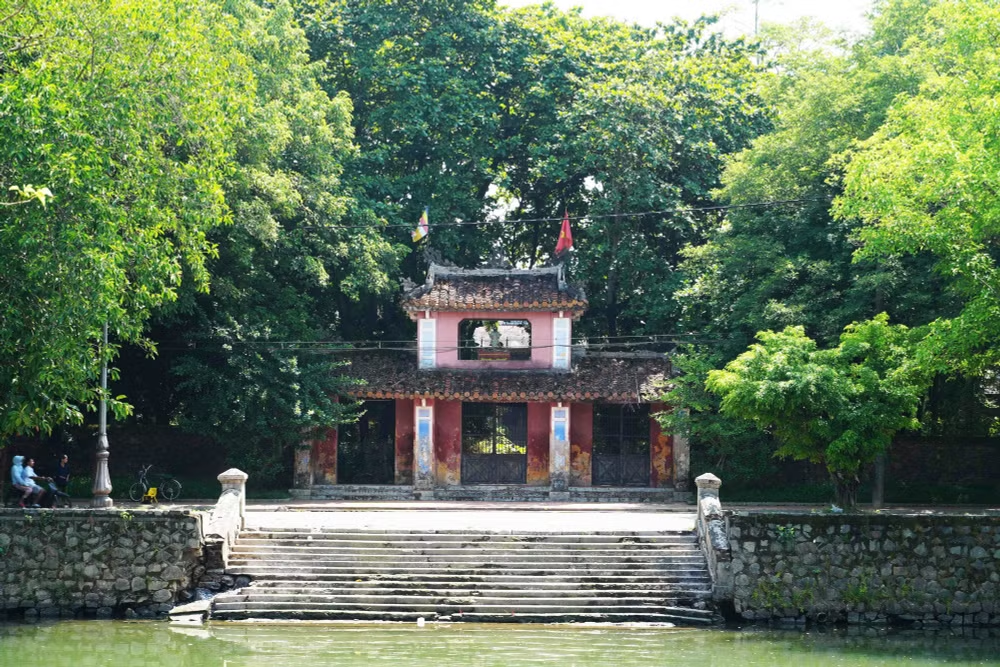
Unlike many traditional temples in Hue, Dieu De Pagoda is strongly influenced by the Nguyen Dynasty's imperial architecture. The entire grounds, covering approximately 2,500 square meters, are surrounded by a sturdy wall, creating the majestic appearance of a royal structure.
According to ancient records, the temple once had about 10 large and small structures, including the Dai Giac Hall, the Dao Nguyen Pavilion, the bell tower, the drum tower, the stele tower, the meditation hall, and many other auxiliary buildings. In front of the temple is the three-gate Phuong Mon, and outside there is a boat dock overlooking the river, creating a harmonious feng shui setting characteristic of Hue architecture.
Since its construction, Dieu De Pagoda has gone through many historical ups and downs, but it still preserves many important Buddhist relics, with many architectural works bearing the characteristics of the royal court, associated with the reign of Emperor Thieu Tri - the third emperor of the Nguyen dynasty.
The pagoda still retains its distinctive ancient features, including the main hall (Dai Hung Hall), the Guardian Deity Tower, the stele house, the bell house, and the majestic two-story triple-arched gate.
Upon entering the temple grounds, visitors can easily sense the serene and tranquil atmosphere. The moss-covered tiled roofs, ancient columns, and the resonant sound of the temple bells create a sacred and profound beauty in the heart of Hue city.
The Great Bell - a bell that resonates through history.
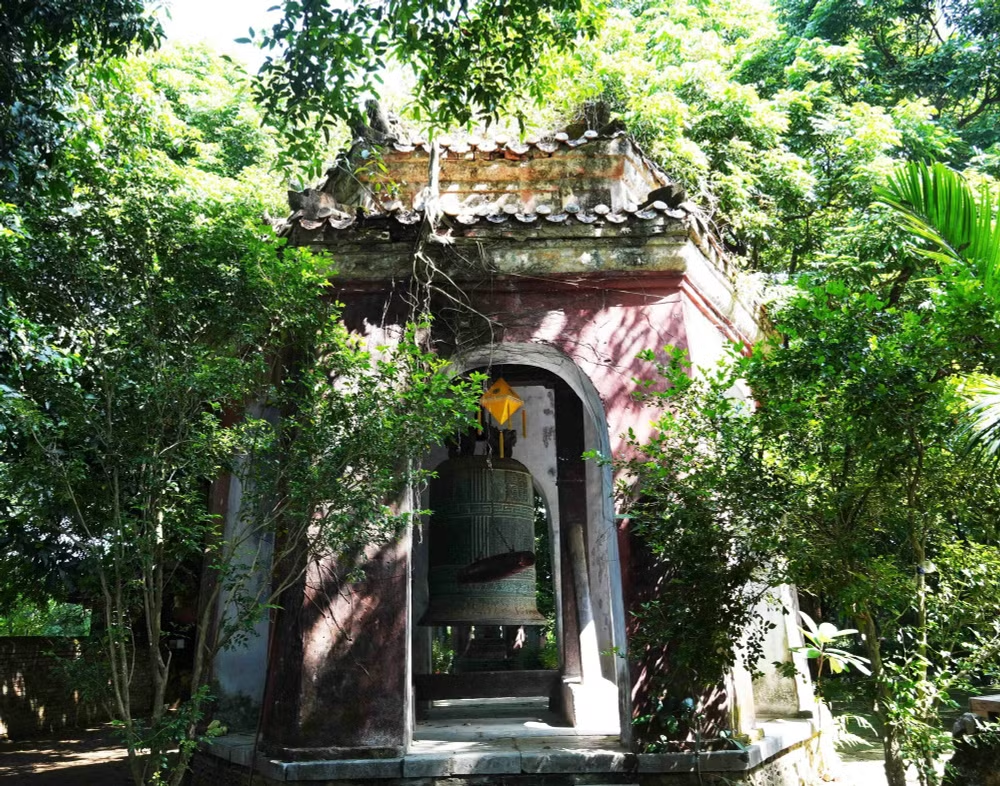
The ancient bell tower stands amidst the green space of Dieu De Pagoda, Phu Xuan Ward, Hue City. (Photo: Nguyen Ly/VNA)
One of the most prominent religious artifacts of Dieu De Pagoda is the two precious large bronze bells that have been preserved to this day.
According to the Nguyen Dynasty archives, the casting of the first large bronze bell was presided over by Emperor Thieu Tri himself. The court established a separate committee consisting of officials from the Ministry of Public Works, the Ministry of Rites, and the Ministry of Finance to research, design, and organize the bell casting. After selecting an auspicious date, the court also held chanting ceremonies and announcement rituals before pouring the molten bronze.
The bell casting process lasted over two months, and after its completion, the imperial court held a grand seven-day and seven-night ceremony to pray for national peace and prosperity, to pray for the souls of the deceased, and to officially inaugurate the bell.
The two large temple bells are not only valuable in terms of religious beliefs but also unique works of art, embodying the spirit of the three religions (Buddhism, Confucianism, and Taoism) and the court art of the Nguyen dynasty. The sound of the temple bells ringing every morning or during major Buddhist ceremonies serves as a reminder of the profound history of this sacred national temple in the heart of the ancient capital.
"Long Vân Khế Hội" - a unique masterpiece of painting.
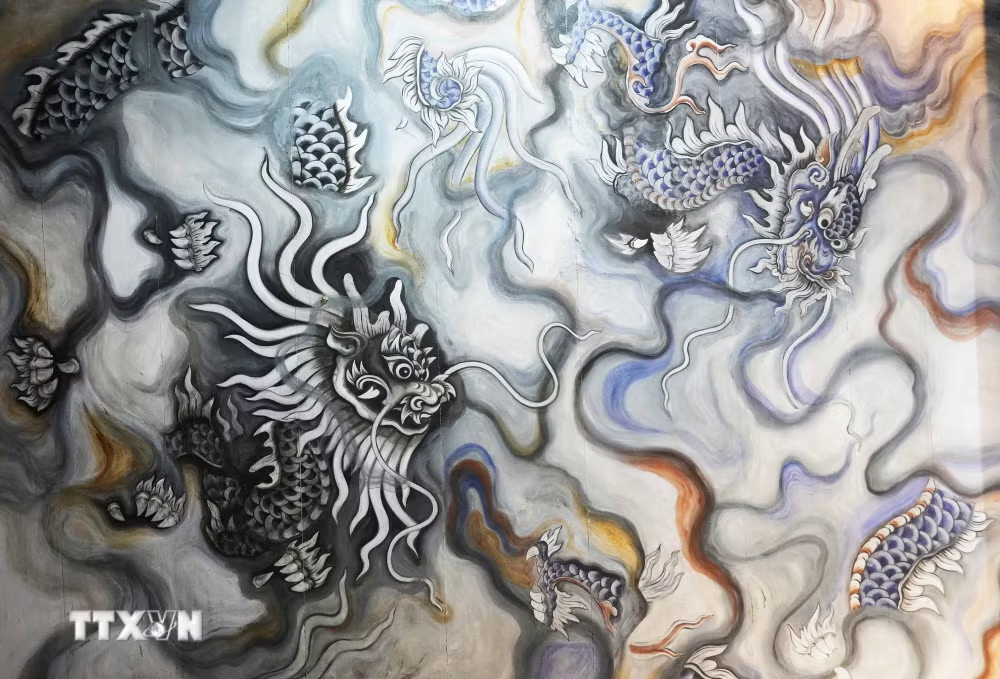
The famous painting "Dragon and Cloud Meeting" on the ceiling of the main hall of Dieu De Pagoda, Phu Xuan Ward, Hue City. (Photo: Nguyen Ly/VNA)
When mentioning Dieu De Pagoda, one cannot fail to mention the famous "Long Van Khe Hoi" painting on the ceiling of the main hall. This has been recognized by the Vietnam Book of Records Center as "The oldest and largest painting on the ceiling of a main hall in Vietnam".
The painting, approximately 10 meters long and 11 meters wide, depicts five dragons hidden amidst the clouds on the ceiling of the Dai Giac Palace, along with four dragons coiled around four large pillars. The entire painting was created using highly durable water-based paint, adapted to the harsh climate conditions of Hue.
The unique feature of "Long Vân Khế Hội" lies in its dragon sculptures, reflecting the imperial style of the Nguyễn dynasty. The dragons' gracefully curving bodies, multicolored scales, sharp claws, large eyes, and long, robust forms create a sense of majesty yet vibrancy.
Beyond its artistic value, the painting also carries multiple layers of symbolic meaning. The five dragons on the palace ceiling represent the emperor's authority and harmony with heaven and earth. The four dragons coiled around the pillars symbolize stability, fulfillment, and longevity.
Notably, the artwork features a total of nine dragons, symbolizing "nine"—a symbol of longevity and prosperity according to Eastern philosophy. Eight of these dragons have five claws, representing the emperor, while the four-clawed dragon is considered a highlight, showcasing the fusion of court and folk art.
Today, amidst the modern pace of life in Hue city, Dieu De Pagoda still retains its majestic and ancient appearance, becoming a destination that attracts many Buddhists, locals, and tourists from all over the world.
(Vietnam+)
Source: https://www.vietnamplus.vn/kham-pha-chua-dieu-de-diem-den-linh-thieng-giua-long-co-do-hue-post1111588.vnp


![[Image] Hanoi's urban life under the challenge of a "scorching hot" environment](https://vphoto.vietnam.vn/thumb/1200x675/vietnam/resource/IMAGE/2026/05/25/1779706979265_nang-nong-t5-2026-minh-duy-7-4636-jpg.webp)


![[Image] Close-up view of the interchange connecting the two expressways and Long Thanh Airport.](https://vphoto.vietnam.vn/thumb/1200x675/vietnam/resource/IMAGE/2026/05/25/1779703378210_ndo_br_z7863716673926-224453a31600126cce10622af6290afd-4549-jpg.webp)





































































Comment (0)