

Lam Thanh Mountain is located on the banks of the Lam River, in Lam Thanh commune ( Nghe An province). It is not only a place of stunning natural beauty, but also a historical site classified as a national historical and cultural relic.
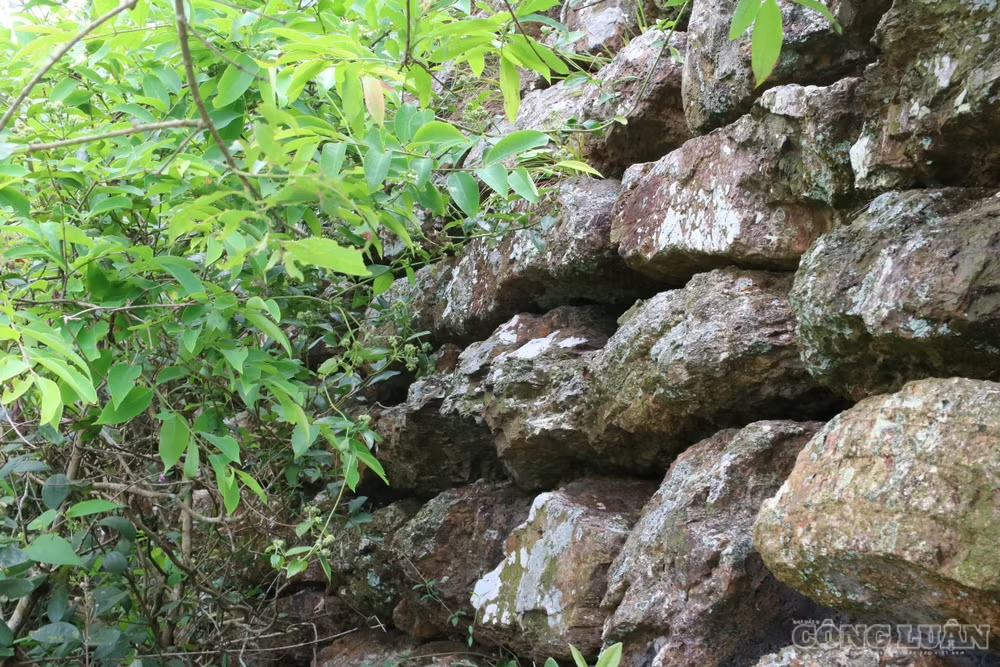
On the summit of Lam Thanh Mountain lies an ancient citadel built over 600 years ago. This citadel is known as Rum Citadel or Lam Thanh Citadel. The citadel is over 150 meters high and approximately 1,000 meters long, constructed of red and limestone, curving along the mountainside overlooking the Lam River. The citadel's width is about 500 meters, narrowing at both ends. The ramparts are trapezoidal in shape, with watchtowers and gun emplacements for battle warnings.
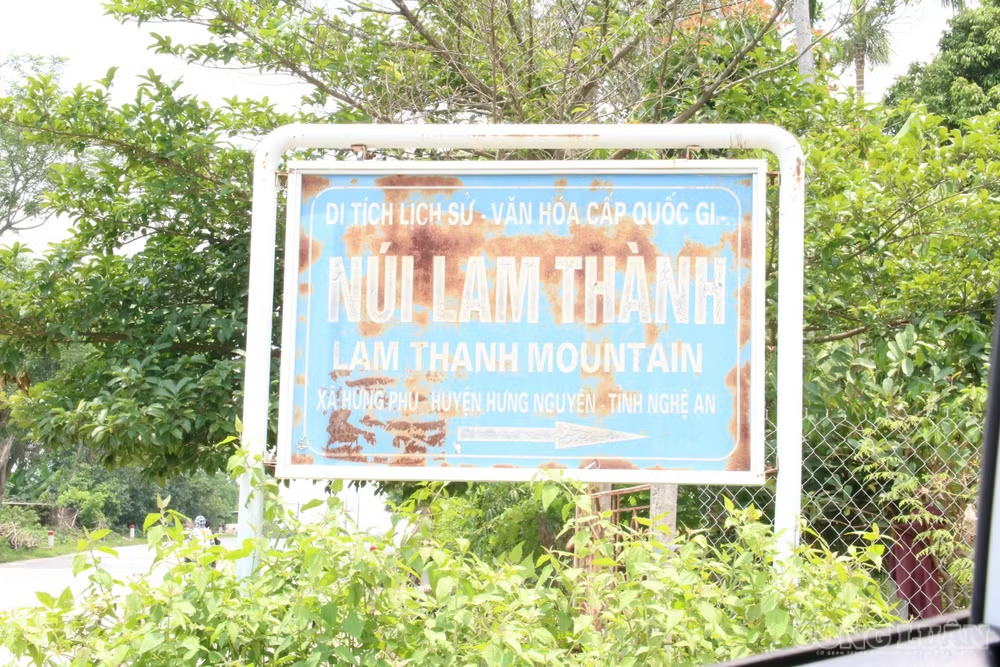
In the past, Lam Thanh held a particularly important strategic position, serving as a "witness" to many glorious historical events of the nation. With its sturdy mountain-backed location, it was not only a natural scenic spot but also an impregnable military base.
According to oral tradition, during his reign, Ho Quy Ly (1336-1407) paid special attention to strengthening military defenses to prevent the threat of Ming invasion. He ordered the construction of Tay Giai Citadel in 1397 (now Ho Dynasty Citadel in Thanh Hoa ) and many other fortifications, including Rum Citadel. After conquering Dai Viet, the Ming army deployed troops to garrison Rum Citadel as an important military stronghold.
By 1425, facing relentless attacks from the Lam Son rebels led by King Le Loi, the Ming army suffered repeated defeats and were forced to retreat and defend themselves within the citadel. After months of siege, in 1427, the Ming general Thai Phuc was forced to open the citadel gates and surrender approximately 10,000 troops.
For over 370 years (1428-1801), Lam Thanh was chosen as the administrative center of the region. In the early 19th century, King Gia Long ascended the throne and chose Yen Truong (formerly Vinh City) as the administrative center of Nghe An province. Since then, the ancient citadel on the mountain and the administrative center around Lam Thanh have gradually fallen into oblivion.
The unique feature of Rum Citadel is its architecture, which is entirely based on the natural rocky terrain. For over 600 years, sections of the citadel have stood strong on the mountainside, a testament to the history of national defense by the army and people of the feudal dynasties. Today, many sections and remnants of the stone citadel walls remain relatively intact.
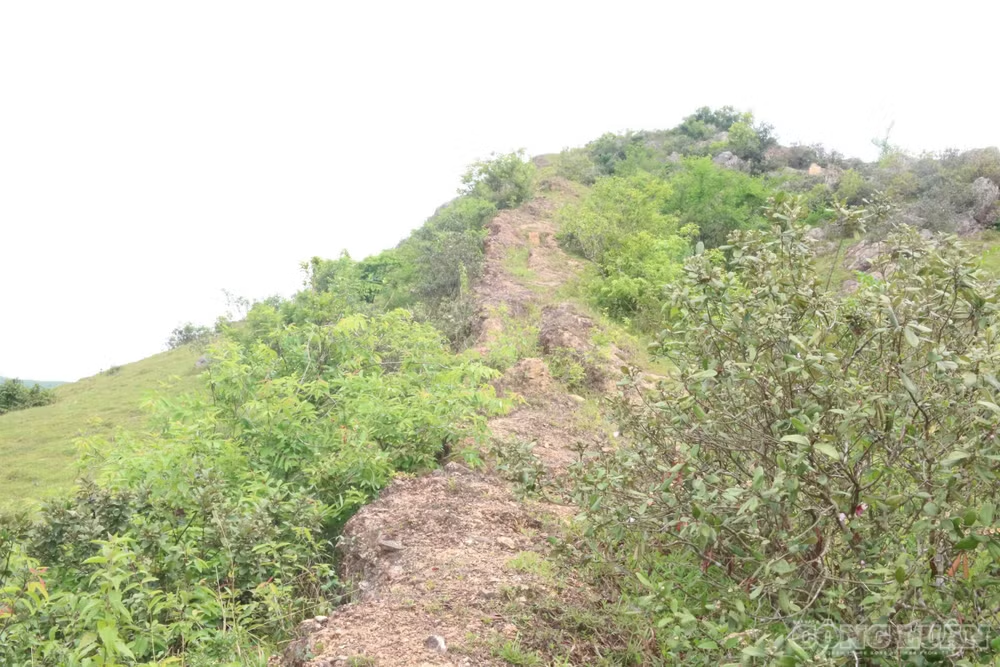
Bearing immense historical value, the Lam Thanh mountain complex was recognized as a national historical and cultural relic in 1962. With its serene and wild beauty, Lam Thanh mountain and the remnants of Rum Citadel have been a familiar destination for locals seeking a peaceful spot to admire the Lam River from above.
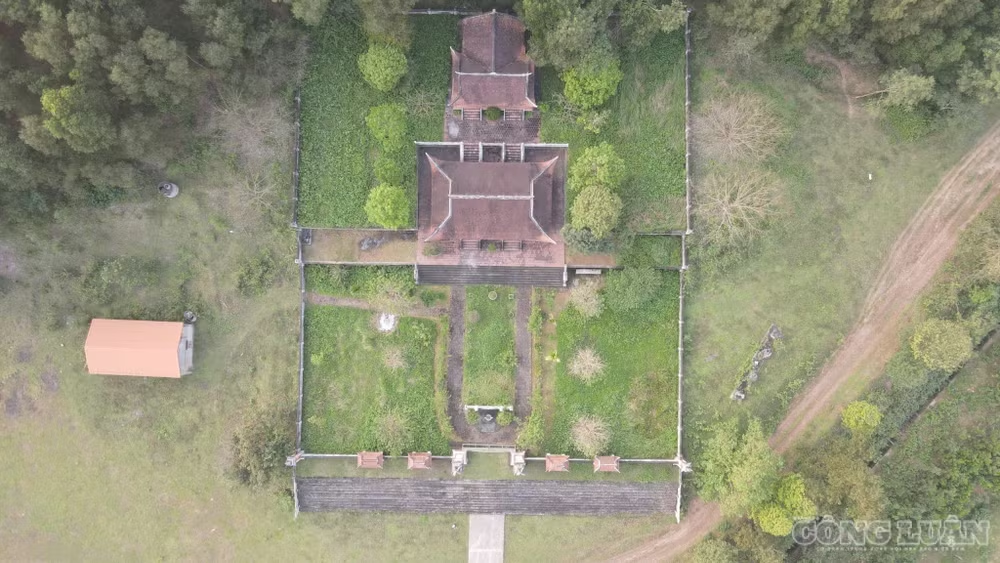
Mr. Nguyen Huu Ha, Chairman of the Lam Thanh Commune People's Committee, said that the locality is aiming to promote the value of the Lam Thanh historical site in conjunction with the development of spiritual tourism and agro-tourism. In particular, the western slope of the mountain has a relatively flat terrain with many natural sim flower hills, considered an advantage for developing experiential tourism. Currently, the locality is developing a plan to build a road up the mountain to facilitate access for locals and tourists to visit and explore the landscape.
Keywords:
Source: https://congluan.vn/kham-pha-thanh-co-hang-tram-nam-tren-nui-lam-thanh-post347966.html


![[Image] Nearly 125,000 Hanoi students completed the Literature exam for the 10th grade entrance exam.](https://vphoto.vietnam.vn/thumb/1200x675/vietnam/resource/IMAGE/2026/05/30/1780117233041_ndo_br_thiet-ke-chua-co-ten-2-png.webp)





























































































Comment (0)