

In this context, the transformation of crop structures becomes more urgent, requiring a strategic approach to improve land use efficiency, increase farmers' income, and create a foundation for sustainable development.
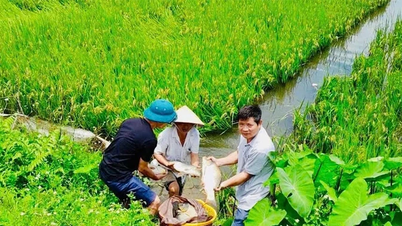
Experience from many localities shows that when the right crops are grown on the right land, linked to market demand and supported by specialized agencies, economic efficiency increases significantly, farmers' livelihoods become more stable, and sustainable development for local agriculture is opened up.
From unproductive land to "profitable land"
Binh Hiep commune is one of the bright spots in the process of restructuring crop patterns. From 2022 to the present, the locality has converted approximately 450 hectares of low-yield rice and cassava land to peanut cultivation.
According to Ho Si Lai, Vice Chairman of the People's Committee of the commune, peanuts have a short growing season and can be cultivated 2-3 times a year; the main winter-spring crop alone yields 2.2-2.5 quintals/acre, with selling prices ranging from 25,000-37,000 VND/kg, resulting in a profit of about 4.5-5 million VND/acre/crop, which is 3 times higher than growing rice and 5-6 times higher than growing cassava.
This effectiveness is vividly demonstrated in practice. Mr. Bui Ba Tao (Thuan Hanh village, Binh Hiep commune) said that converting 12 acres of low-yield rice land to peanuts helps his family harvest more than 2.5 tons each season, earning a profit of over 30 million VND, three times higher than growing rice. This is something that was previously impossible to achieve with rice cultivation.
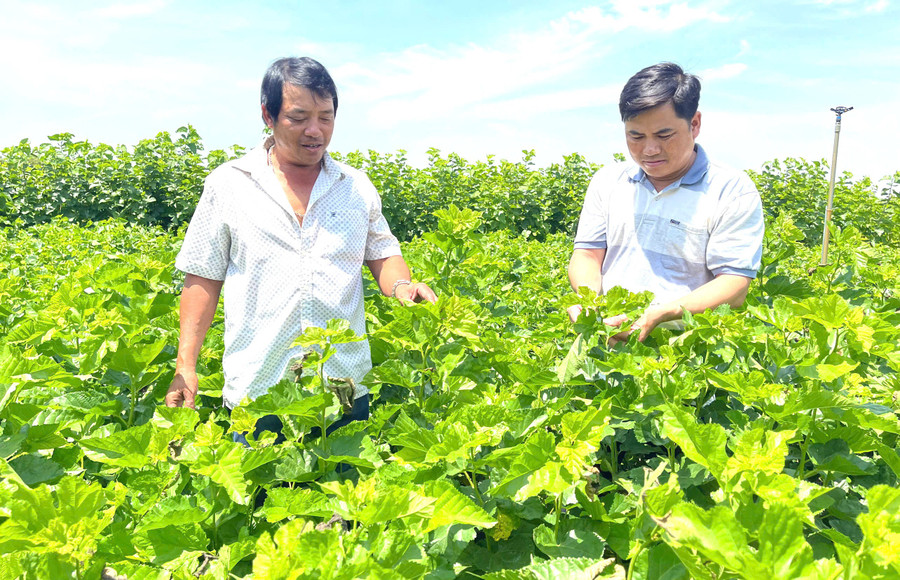
In Ia Pa commune, crop restructuring has been implemented on a large scale and with diverse approaches. According to Nguyen Xuan Liem, Vice Chairman of the Commune People's Committee, in 2025 alone, the locality converted over 990 hectares, including over 240 hectares of rice land far from irrigation canals and 750 hectares of low-yield cashew and cassava crops, to sugarcane, tobacco, watermelon, and mulberry cultivation.
Notably, the mulberry cultivation and silkworm rearing model yields profits exceeding 30 million VND/hectare/month, more than three times higher than rice and cashew cultivation on the same land.
Mr. Tran Van Them's family (Dong Son village, Chu A Thai commune) has converted 1.2 hectares of low-yielding cashew trees to mulberry cultivation for silkworm farming. "Each silkworm cycle lasts about 15 days, with 3-4 cycles per month. With a stable selling price of 180-200 thousand VND/kg, the profit is around 30-40 million VND per month – an income level that was impossible to achieve with cashew farming before," Mr. Them affirmed.
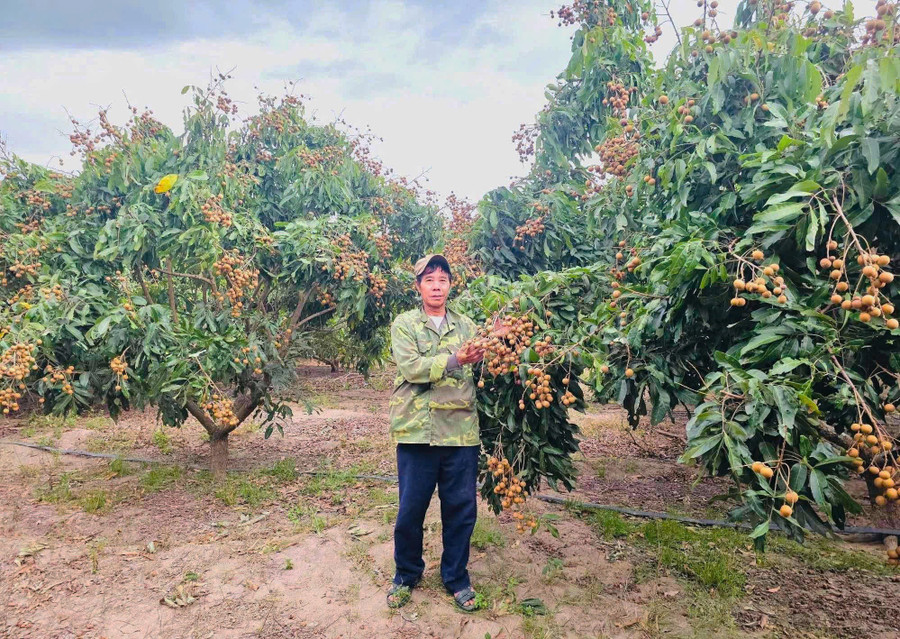
Besides short-term crops, the trend of switching to high-value fruit trees and perennial crops is becoming increasingly evident. Mr. Lai Quang Huan (Ia Cha Wau village, Chu A Thai commune) shared: "Due to the fluctuating and unstable price of sugarcane, my family decided to convert 10 hectares to planting longan and Australian mangoes. Currently, we harvest nearly 30 tons of fruit each year, and with a selling price of 25,000-30,000 VND/kg, the profit is 500-700 million VND/year, double that of growing sugarcane."
Flexible transformation, geared towards sustainable production.
In Ia Krêl commune, the issue of crop restructuring has been systematically addressed. The Chairman of the Commune People's Committee, Nguyen Quoc Tu, explained: The commune has over 2,000 hectares of cashew trees, with a yield of only slightly more than 1 ton/ha. Even with good intensive farming practices, the yield only reaches 1.5 tons/ha, resulting in a farmer income of 40-60 million VND/ha (before deducting costs), which is far too low. Meanwhile, coffee trees are well-suited to the soil, yielding over 3 tons of beans/ha, generating a profit of 150-200 million VND/ha.
"Based on the review, the commune has identified approximately 700 hectares of cashew trees to be converted to coffee plantations. By 2030, about 10 hectares will be converted annually, while also aiming to intercrop coffee in cashew orchards, eventually transitioning to fruit trees such as coconut and mango."
"Resources from national target programs will be integrated to support people with seeds, techniques, and input materials," Mr. Tu affirmed.
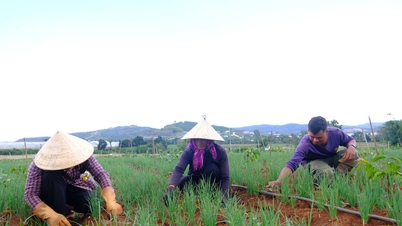
Meanwhile, in addition to maintaining the effective conversion of over 530 hectares of low-yield rice fields to corn, chili peppers, onions, and peanuts, in 2026, De Gi commune will expand the conversion of an additional 5-7 hectares of medicinal plants on low-yield rice fields, linked with the development of a product consumption chain.
"The commune will step up the implementation of agricultural extension programs, disseminate techniques, and guide farmers to switch to using organic fertilizers, biological pesticides, and water-saving irrigation systems to improve production efficiency and move towards sustainable development," informed Dinh Phuoc Thang, Head of the Economic Department of the commune.
Mr. Huynh Viet Hung, Director of the Provincial Agricultural Extension Center, said: In 2025, the unit implemented 14 agricultural extension models on crops such as shallots, chili peppers, rice, mung beans, biomass corn, coconut, coffee, mango, and Gynostemma pentaphyllum… Most of the models were implemented on areas with low-yield crops and on the same type of soil, all yielding higher economic results than before.
In the future, the Center will continue to develop demonstration models, improve production techniques, and create a foundation for sustainable crop restructuring.
Statistics show that in 2025 alone, the entire province converted over 13,351 hectares of land, mainly low-yield rice, cassava, sugarcane, and cashew plantations, to cultivate peanuts, corn, vegetables and various types of beans, fruit trees, perennial crops, and fodder crops…
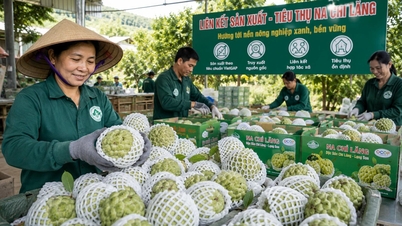
The converted models yield 2-5 times higher value than the previous crops. Mr. Tran Xuan Khai, Head of the Provincial Department of Crop Production and Plant Protection, affirmed that this is the basis for the province's agricultural sector to continue converting over 8,000 hectares of low-efficiency crops to fruit trees (over 3,700 hectares) and vegetables, legumes, and medicinal plants (4,200 hectares) in 2026.
The transformation will be based on assessing land suitability, selecting new high-yield, high-quality varieties, strengthening supply chain linkages, and applying technology.
Source: https://baogialai.com.vn/khan-truong-chuyen-doi-co-cau-giong-cay-trong-post577986.html


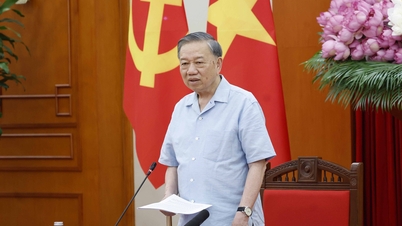
![[Photo] General Secretary and President To Lam presides over a meeting on preparations for the review of one year of operation of the three-tiered government system.](https://vphoto.vietnam.vn/thumb/1200x675/vietnam/resource/IMAGE/2026/06/02/1780391821195_a1-bnd-4595-9717-jpg.webp)























































Comment (0)