


The "low investment, high profit" formula.
Looking at the box office rankings of Vietnamese films over the past two years, a clear shift is evident: horror films have truly become the darling of the box office. From 2024 to mid-2026, the market witnessed an unprecedented boom with a series of films released consecutively.
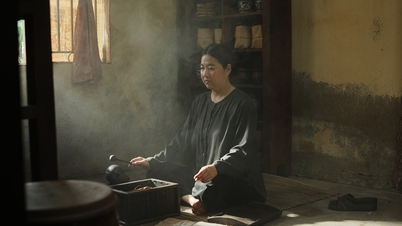
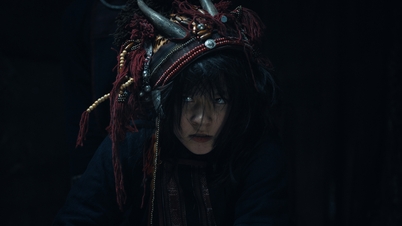
During this period alone, domestic cinema has seen the release of at least 17 horror projects, ranging from sensational hits like "Ma Da," "Cam," "Quy Cau," and "Linh Mieu " to record-breaking newcomers like "Phi Phong: Quy Mau Rung Thieng" and "Heo Nam Hoon." This high frequency of releases shows that horror films are becoming a priority in the production strategies of many filmmakers.
The average budget for a Vietnamese horror film today is usually under 20 billion VND, significantly lower than mainstream dramas or the 50-60 billion VND required for action projects with elaborate staging, explosions, or complex special effects. The low break-even point but high profit potential makes this genre particularly favored by investors.
The clearest evidence is that during the April 30th, 2026 holiday, the box office race almost became the exclusive domain of horror films. Phi Phong: Blood Demon of the Sacred Forest grossed over 180 billion VND; Luu Thanh Luan's Five-Toed Pig also quickly reached 100 billion VND and consistently led in screenings. Even films with higher-than-average investments like Ghost of the Skin (around 35 billion VND) easily earned 127 billion VND in revenue, demonstrating the immense appeal of this genre to audiences.
The core strength behind Vietnamese horror films' box office success lies in their thorough exploitation of folklore and local spiritual beliefs. Audiences might be startled by a Western-style haunted doll, but they will truly feel a chill down their spine when confronted with images linked to folklore and cultural memories, such as five-toed pigs, mysterious worship practices, or family curses. Bringing urban legends to the big screen creates a cultural intimacy that even foreign films with hundreds of millions of dollars in budget would find difficult to replicate.
Director Hung Tran, who is working on the project "The Fire Tower" based on the famous legend of the vengeful spirit of Mrs. Hua in the Cholon area, explains: "Folk legends usually already have a foundational element such as who the spirit is, why the vengeful spirit is so strong, what their story is... When brought to the big screen, audiences are more likely to believe what happens in the film compared to completely fictional works. Audiences go to the cinema not only to watch the film, but also to verify whether the oral traditions from the elders of the past match what they have imagined."
That curiosity creates a very strong natural media effect. Excerpts that go viral on TikTok, parody videos , or debates about the validity of customs and traditions have become "zero-cost" advertising campaigns, helping films reach audiences much more effectively than traditional media.
Not limited to the domestic market, the exploration of macabre themes with strong local flavor is also opening up export opportunities for Vietnamese cinema. According to statistics, Vietnamese horror films are now regularly sold to markets such as the US, Canada, South America, and many Asian countries such as Japan, South Korea, Thailand, and India.

The challenge of preserving the attractiveness of this "gold mine"
Building on their success, a series of new horror projects are awaiting release. Notable examples include " Underworld Beauty Salon ," marking Ngoc Trinh's foray into the horror genre; and " Uncle Hoa's Mansion, " directed by Hung Tran, revealing terrifying secrets for the first time. In addition, the project "The Haunted House" from 856 Pictures is also generating high expectations, exploring spiritual secrets and family tragedies, reflecting the helplessness of people pushed to the brink of despair.
However, from a professional perspective, this surge in quantity has also brought about numerous drawbacks. The golden age of low-budget horror films is facing saturation as the "haunted house - ghost - deafening sounds" motifs are being repeated too often. Some recent works have been criticized for overusing jump scares to compensate for a lack of plot depth. In a context where audiences are increasingly exposed to high-quality international horror films, ranging from psychological thrillers to folk-themed films with artistic depth, outdated mechanical scare tactics are no longer as effective.
Furthermore, many filmmakers are confusing cultural imagery with cultural depth. Including mourning clothes, old altars, or traditional prayers in films only serves as surface illustration. True identity emerges when filmmakers understand the root causes of these fears deeply ingrained in the Vietnamese psyche. Without delving into this deeper meaning, films are easily perceived as superficial, leading audiences to quickly become desensitized.
A truly worthwhile horror film should not only startle audiences in the theater but also leave a haunting aftertaste, reflecting the dark sides of morality and social life. Therefore, "quality" is still more important than "quantity," and not every horror film released in theaters can reach the 100 billion VND mark in revenue.
The success of films like "Phi Phong: The Blood Demon of the Sacred Forest" or "The Five-Toed Pig" shows that Vietnamese cinema has found a highly promising segment. However, to prevent this "gold mine" from running out, creativity must go hand in hand with revenue. The biggest challenge now is not making more horror films, but rather breaking free from outdated formulas. This requires filmmakers to invest more seriously in scripts, better control over visual language, and avoid the impatient desire for quick box office success.
Folklore is an almost inexhaustible treasure trove for Vietnamese cinema, but it needs to be exploited with caution and respect so as not to be reduced to cheap embellishment or mere scare tactics. Therefore, the future of Vietnamese horror films will not be determined by box office figures reaching hundreds of billions of dong, but by how many works truly remain in the audience's memory as a hallmark of contemporary cinema.
Source: https://baovanhoa.vn/nghe-thuat/khong-con-la-ke-di-ben-le-232476.html
![[Photo] Ba Lang An Lighthouse - the "eye of the sea" amidst the "rock museum" of Quang Ngai province.](https://vphoto.vietnam.vn/thumb/1200x675/vietnam/resource/IMAGE/2026/05/29/1780038698840_anh-man-hinh-2026-05-29-luc-14-10-42.png)
![[Image] Pleasant weather helps students enter the 10th grade entrance exam with confidence.](https://vphoto.vietnam.vn/thumb/1200x675/vietnam/resource/IMAGE/2026/05/29/1780034401612_ngay-1-thi-lop-10-minh-duy-8-5009-jpg.webp)

















































































Comment (0)