

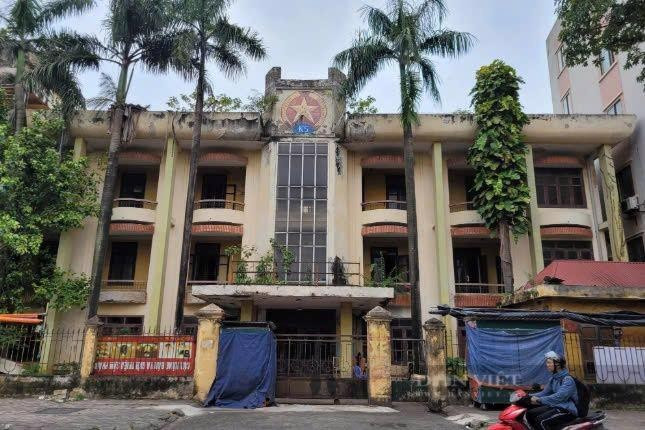
We are working with a "rush and queue" approach to streamline the administrative apparatus, as time is running out. The central government has basically agreed on a two-tiered local government structure, ending the operation of the district level from July 1st. The number of provincial-level administrative units after the merger is expected to be 34, including 28 provinces and 6 centrally-administered cities. Commune-level units nationwide will be merged to ensure a reduction of 60-70% of the current number.
It can be said that, compared to the past, the number of provincial and commune-level administrative units has decreased significantly after reorganization. This requires localities to proactively research and develop appropriate reorganization plans for their areas. More than ever, the role of local leaders must be promoted, and the interests of the people, the locality, and the country must be prioritized. To achieve this, the mentality of "my power, your power" must be eliminated. Because the highest goal of reorganizing the administrative apparatus is to streamline, improve efficiency, create space for expansion, maximize the potential and competitive advantages of each locality, and create more room for development. And most importantly, to better serve the people.
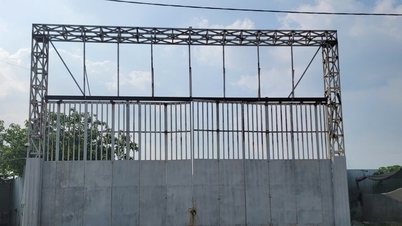
Thus, along with streamlining the administrative apparatus, there is still much work to be done, including the issue of redundant offices. This is one of the issues of particular concern to voters. Previously, the restructuring of administrative units and the resulting surplus of offices were a real problem with many difficulties and obstacles. This was also one of the challenges encountered during the restructuring of district and commune-level administrative units in the 2019-2021 period. This resulted in a significant waste of national resources.
One of the reasons for the difficulties and obstacles encountered in resolving this situation in the past was the difficulty in valuing assets; the auction process involved many steps, leading to prolonged delays. The procedure for changing land use purposes when putting land up for auction was also difficult because it required adjustments to the local land use plan; and there were inadequacies in determining the value of land use rights for auction according to legal regulations...
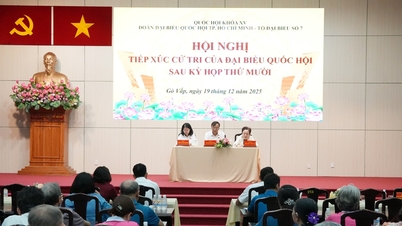
These are also issues of concern to voters during this organizational restructuring. During a meeting with voters in Hau Giang province before the recent Ninth Session, sharing voters' opinions on resolving the issue of office buildings after reorganization, National Assembly Chairman Tran Thanh Man suggested that the province proactively develop plans for managing, using, and disposing of assets, office buildings, and official residences, absolutely preventing loss, waste, and corruption. The National Assembly Chairman emphasized, “The top priority for surplus office buildings should be to convert them into schools for students, upgrading, repairing, and expanding them to care for education; next, priority should be given to healthcare to care for the health of the people; and to create community centers for the people.”
In reality, many localities, especially in large cities and urban areas, are facing difficulties in building schools, medical facilities, and public activity centers to serve the cultural and sports needs of the people due to limited land. This significantly affects the rights of the people. Therefore, in this streamlining of the administrative apparatus, voters and the people hope that surplus offices will be allocated and used rationally to serve the interests of the people and the community. Successfully implementing this will prevent the abandonment and waste of surplus offices after the restructuring.
Source: https://daibieunhandan.vn/khong-de-lang-phi-cac-tru-so-doi-du-post410841.html


![[Photo] Prime Minister Pham Minh Chinh attends the Conference on the Implementation of Tasks for 2026 of the Industry and Trade Sector](/_next/image?url=https%3A%2F%2Fvphoto.vietnam.vn%2Fthumb%2F1200x675%2Fvietnam%2Fresource%2FIMAGE%2F2025%2F12%2F19%2F1766159500458_ndo_br_shared31-jpg.webp&w=3840&q=75)














































































Comment (0)