Concluding the working session, General Secretary and President To Lam emphasized that, overall, Vietnam does not lack resources or demand; the biggest shortages are core technologies, deep processing capabilities, leading enterprises, a research-testing-testing-commercialization ecosystem, and a sufficiently strong integrated strategy to organize a national materials value chain.
General Secretary and President To Lam emphasized five major viewpoints, including identifying the materials industry as a foundational and strategic industry in the process of industrialization and modernization of the country; focusing on key areas of development, avoiding a scattered approach, and organizing it into three tiers (main materials need to be maintained and upgraded; strategic materials need focused breakthroughs; and future materials need early preparation). At the same time, he stressed the need for a strong shift from resource exploitation to deep processing, mastering technology, and increasing domestic added value…

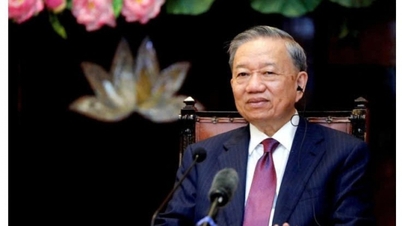
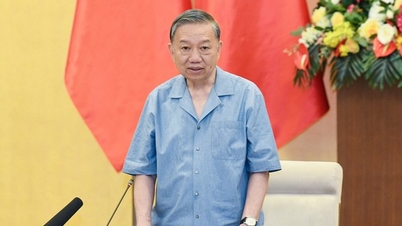
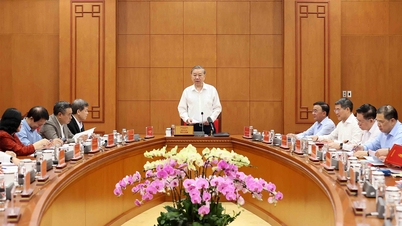
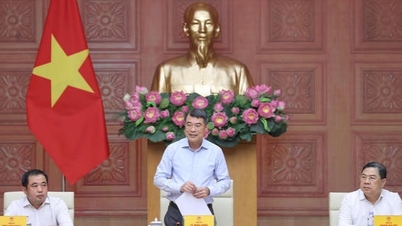
General Secretary and President To Lam speaks at the working session. (Photo: nhandan.vn)
The General Secretary and President of Vietnam have assigned the Party Committee of the Government to lead and direct the research and development of the Strategy for the Development of Vietnam's Materials Industry until 2030, with a vision to 2045, to be promulgated as soon as possible. The strategy must reflect long-term thinking, solid data, clear objectives, a feasible roadmap, and clear assignment of responsibilities. It should not be a general, abstract approach, but must answer the following questions: Which groups of materials should be developed, why? To what extent should they be mastered? In which stages? Which agencies should lead? Which enterprises should provide guidance? Where will the resources come from? What policies need to be issued? What criteria should be used to evaluate results? Based on this, a national strategic materials list, an import dependence map, a domestic capacity map, and a list of key tasks and projects should be developed.
In addition, the State needs a national strategic materials catalog; a mechanism for ordering specific products with the participation of businesses, technical standards, application areas, and a commercialization roadmap; a controlled testing mechanism; and a mechanism for intellectual property and fair benefit sharing between scientists, research institutes, universities, and businesses.

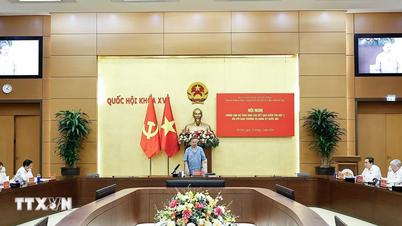
General Secretary and President To Lam delivers concluding remarks at the working session. (Photo: nhandan.vn)
The General Secretary and President requested a focused review to correctly identify priority material groups, avoiding a scattered approach. Initially, five priority groups could be selected: rare earth materials; semiconductor materials; materials for batteries and energy storage; new materials; and next-generation building materials. These are fundamental areas for industrialization, modernization, and economic self-reliance; they need to be carefully evaluated in the Strategy to select the right focus, the right roadmap, and the right support mechanisms.
Regarding the handling of the current pressing issues in the construction materials market, the General Secretary and President proposed that sustainable development, self-reliance, and international competitiveness are essential; increasing the use of green, clean, energy-saving, and resource-saving materials, alternative materials, recycled materials, and reducing emissions; ensuring the supply of sand, stone, leveling materials, cement, and steel for public investment, transportation, urban development, energy, and housing; timely and transparent price announcement; inter-regional coordination; and promoting the use of recycled materials, treated construction waste, and standardized alternative materials.
Party committees and organizations at all levels must lead the review of the potential, reserves, current exploitation status, processing technology, environmental risks, and the possibility of forming value chains for rare earth elements, bauxite, titanium, white sand, limestone, and other important minerals. The goal is to prevent resource loss, avoid exporting raw materials, prevent exploitation at all costs, and avoid sacrificing the environment; while also ensuring that resources do not remain idle due to a lack of policies, technology, or coordination.
The General Secretary and President instructed the Central Policy and Strategy Committee to receive and finalize the Report for submission to the Politburo for consideration and issuance of a Conclusion to lead and direct the development of Vietnam's materials industry; creating a basis for the Party Committee of the Government to lead and direct the research and development of a Strategy for the development of Vietnam's materials industry.
Source: https://baophapluat.vn/khong-de-nguon-luc-nam-im-vi-thieu-chinh-sach.html



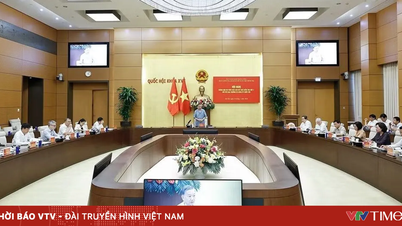
![[Photo] General Secretary and President To Lam presides over the meeting to approve the draft report on the results of the second inspection by the Politburo of the Standing Committee of the Hanoi City Party Committee.](https://vphoto.vietnam.vn/thumb/1200x675/vietnam/resource/IMAGE/2026/05/26/1779789811432_a2-bnd-4430-9620-jpg.webp)























































Comment (0)