

Yellow O is an industrial dye banned from use in food due to its high carcinogenic risk. However, it is still used in the processing stage to give durian an attractive color. Cadmium, on the other hand, is a toxic heavy metal.
Agricultural experts believe that the main reason for the cadmium residue in durian shipments stems from the long-term overuse of fertilizers with high cadmium content and pesticides, causing heavy metals to accumulate in the soil and remain in agricultural products. Once cadmium is present in the soil, it is very difficult to completely remove.
The consequences of this issue extend beyond economic losses or the risk of damage to the reputation of exporting businesses. More worryingly, substandard products could return to the domestic market, directly impacting consumer health. This is no longer a seasonal issue, but reflects the long-term effects of uncontrolled production methods.
For Dak Lak , a province with strengths in crops such as coffee, durian, and pepper, this reality highlights the urgent need to change agricultural practices. In recent years, the province has intensified the issuance of planting area codes to control production processes and trace the origin of agricultural products. However, the results have not kept pace with the rate of expansion of cultivated areas.
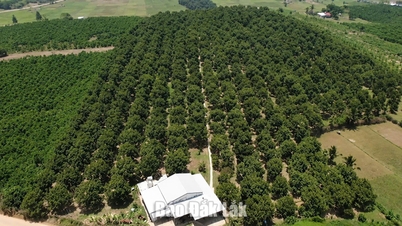
To date, Dak Lak has 328 approved planting areas with a total area of 9,698 hectares. However, durian cultivation currently only has 277 approved planting area codes covering approximately 7,500 hectares, while the total area of the province is 41,821 hectares.
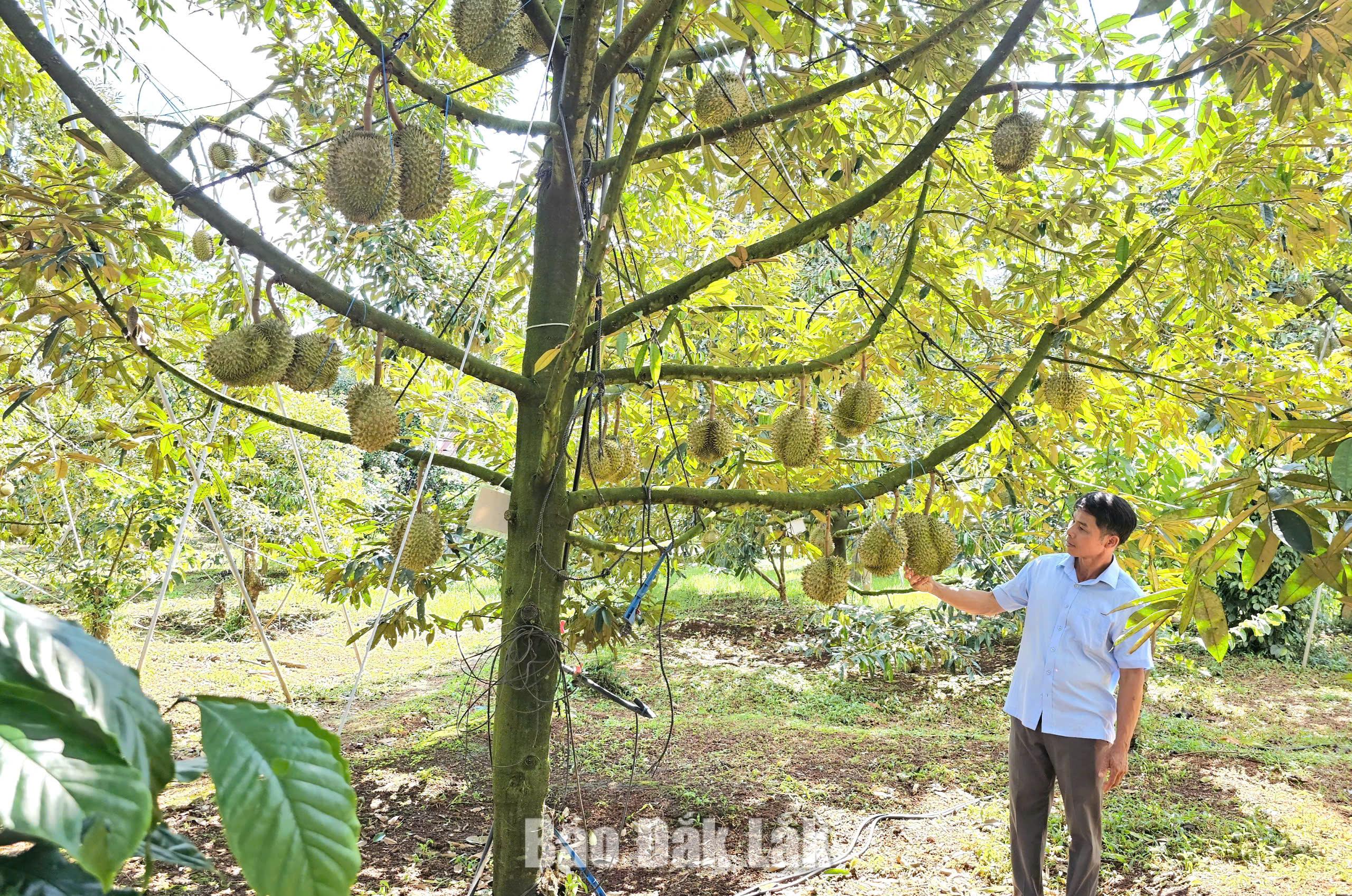 |
| A durian orchard in the former Krông Búk district produces durians according to a registered planting area code. |
The large gap between the rate of acreage expansion and the capacity for standardizing farming areas indicates that development remains largely spontaneous. In many places, people still do not pay enough attention to modern farming methods. Farming based on experience, lacking production logs, and using agricultural inputs out of habit are still prevalent.
However, the entire responsibility cannot be placed on the farmers. Producers can hardly produce clean products if the agricultural supply market still contains low-quality goods. Furthermore, without regular monitoring mechanisms and sufficiently strong penalties after licensing, the planting area registration number could easily be revoked.
For sustainable agricultural development, the establishment of planting area codes needs to be further promoted through fundamental solutions. First, relevant authorities should not only guide procedures but also work alongside farmers in applying safe production processes. Simultaneously, transparent linkages between farmers and export businesses need to be promoted to form stable raw material areas and develop production along sustainable value chains. Furthermore, regular monitoring after code issuance is necessary, along with the development of databases for management and traceability. In addition, regulations on penalties for violations in the field of planting area codes, especially for agricultural product purchasing establishments and businesses, need to be finalized soon.
More importantly, the change must come from the producers themselves. Farmers need to shift from "producing what they have" to "producing what the market needs"; from farming based on experience to production based on standards and responsibility. This will not only help increase the value of agricultural products and protect the production foundation, but also protect consumer health and enhance competitiveness in the international market.
In an increasingly competitive environment, the planting area code is not only a technical requirement but also a measure of the professionalism of the agricultural sector. The market may wait for a harvest season, but it will not wait for an agricultural sector that is slow to change.
Mr. Dung
Source: https://baodaklak.vn/kinh-te/202606/khong-the-lam-nong-nghiep-theo-cach-cu-de61b5c/
![[Photo] General Secretary and President To Lam presides over a meeting with the Central Organizing Committee.](https://vphoto.vietnam.vn/thumb/1200x675/vietnam/resource/IMAGE/2026/06/03/1780482764658_a1-bnd-4741-3342-jpg.webp)
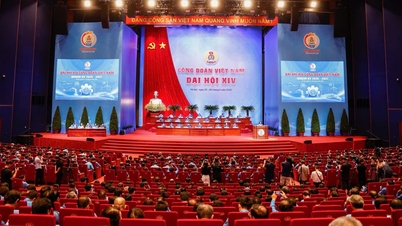
![[Photo] First session of the 14th Congress of the Vietnam Trade Union](https://vphoto.vietnam.vn/thumb/1200x675/vietnam/resource/IMAGE/2026/06/03/1780465947883_ndo_br_img-3852-jpg.webp)

![[Photo] Secretary of the National Assembly Party Committee, Chairman of the National Assembly presides over the meeting of the Standing Committee and Executive Committee of the National Assembly Party Committee.](https://vphoto.vietnam.vn/thumb/1200x675/vietnam/resource/IMAGE/2026/06/03/1780480353201_ndo_br_bnd-2585-jpg.webp)


























![[Video] Sunset at Lap An Lagoon – Where the sun sets over the fishing nets](https://vphoto.vietnam.vn/thumb/1200x675/vietnam/resource/IMAGE/2026/05/31/1780192137701_beach-landscape-sea-water-nature-grass-745871-pxhere-com.jpeg)





















Comment (0)