

In its tourism development plan for the coming period, Ho Chi Minh City has identified the night-time economy as one of the new growth "spearheads". Beyond just pedestrian streets or food streets, the city is aiming to build a more diverse night-time experience ecosystem, combining culture, entertainment, river tourism, shopping, and technology.
According to the tourism industry's guidelines, Ho Chi Minh City has many favorable conditions for developing its night-time economy thanks to its vibrant urban life, large number of international tourists, and strong consumer demand from over 14 million local residents. However, compared to major tourist cities in the region such as Bangkok (Thailand) or Singapore, Ho Chi Minh City's night-time economy is still considered to lack many products that can retain international tourists after 10 PM.
According to the Ho Chi Minh City Department of Tourism, a major gap currently is that the city has not yet developed specialized, large-scale nighttime entertainment complexes that integrate various types of experiences. Areas like Nguyen Hue pedestrian street or Bui Vien still mainly revolve around food and beverage services, bars, or music, which are fragmented and have not created a sufficiently deep service ecosystem to extend the length of stay of tourists.
Furthermore, Ho Chi Minh City lacks large-scale cultural and artistic shows, regularly organized at night to entertain tourists after dinner. While many destinations like Hoi An and Phu Quoc have developed iconic live shows, Ho Chi Minh City currently lacks many nighttime offerings that are competitive internationally and create a unique impression for tourists.
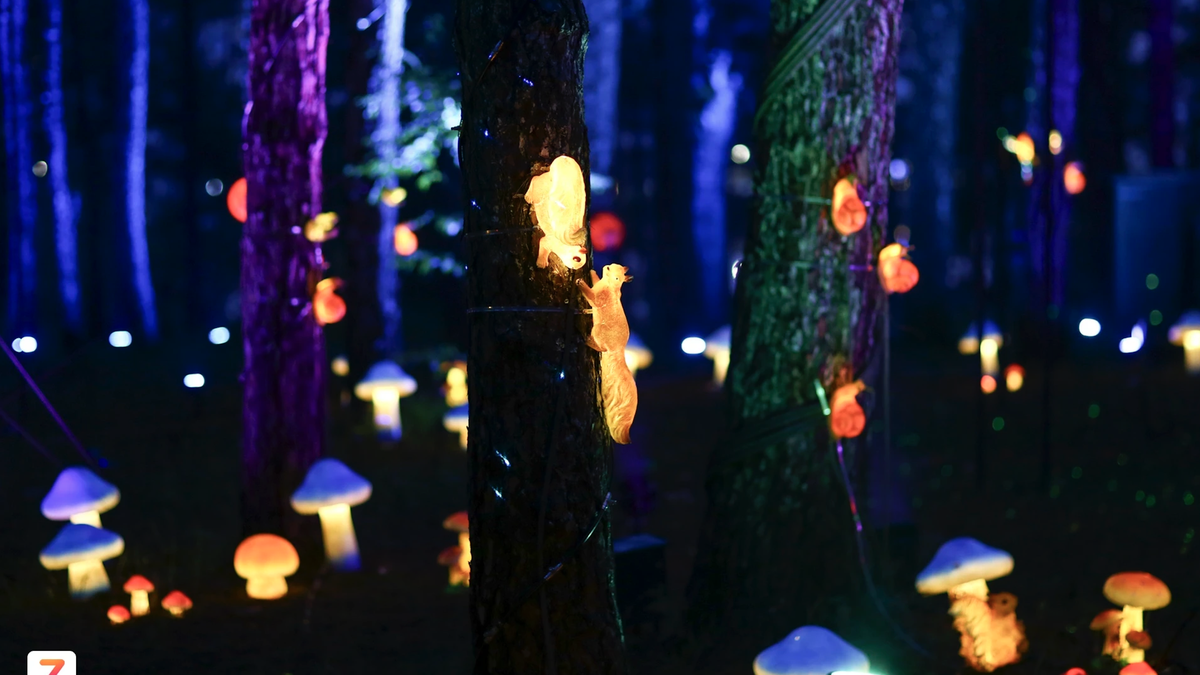
According to tourism industry assessments, current nighttime activities are still more about creating noise through sound than providing experiences through light, urban atmosphere, and cultural depth, as seen in many cities in Japan.
Despite its limited potential, Ho Chi Minh City is placing high hopes on the night-time economy as a new growth driver for the tourism industry. According to the Ho Chi Minh City Department of Tourism's plan, the city will develop night-time entertainment clusters linked to river tourism, culinary experiences , and large-scale event centers. The Saigon River is identified as the "backbone" for creating this unique range of night-time products.
The areas from Bach Dang Wharf to Ba Son Port Park are being developed as a "wharf on the water, boats on the water" model, combining multi-purpose wharves, event parks, restaurant yachts, and artistic light shows. Simultaneously, Ho Chi Minh City aims to develop a night-time culinary ecosystem focused on cultural experiences rather than just eating and drinking. Streets such as Ho Thi Ky, Phan Xich Long, Vinh Khanh, and the Cholon area are being upgraded to reflect local identity.
In addition, the city is aiming to develop "all-in-one" complexes in Thu Thiem and other new urban areas, combining convention centers, entertainment, shopping, performing arts, and healthcare.
According to its development plan until 2030, Ho Chi Minh City identifies the night-time economy not only as an entertainment activity but also as a "lever" to expand the consumption chain, enhance tourism competitiveness, and increase the city's attractiveness to international tourists.
Source: https://baophapluat.vn/kinh-te-dem-tp-hcm-can-lam-gi-de-giu-chan-khach-quoc-te.html

![[Image] Pleasant weather helps students enter the 10th grade entrance exam with confidence.](https://vphoto.vietnam.vn/thumb/1200x675/vietnam/resource/IMAGE/2026/05/29/1780034401612_ngay-1-thi-lop-10-minh-duy-8-5009-jpg.webp)
![[Photo] Ba Lang An Lighthouse - the "eye of the sea" amidst the "rock museum" of Quang Ngai province.](https://vphoto.vietnam.vn/thumb/1200x675/vietnam/resource/IMAGE/2026/05/29/1780038698840_anh-man-hinh-2026-05-29-luc-14-10-42.png)




























































Comment (0)