


The ripple effect of the US government shutdown.
The political gridlock in Washington, leading to a US government shutdown, has halted the release of key economic data. From inflation reports (CPI) and housing data to labor market statistics and retail spending – everything has been put on hold.
This situation not only creates difficulties for policymakers in Washington, but also spreads instability to every corner of the international financial market.
Investors, businesses, and central banks worldwide are operating in a state of “running in the fog,” as key indicators of the health of the world’s largest economy have suddenly disappeared. The lack of accurate data increases volatility, making investment, production, and monetary policy decisions extremely risky.
In Europe and Asia, economists are struggling to make predictions in the absence of key indicators like U.S. consumer and manufacturing data. An analyst at a major London bank commented: “When you don’t have fundamental indicators of retail activity or inflation, you can’t be certain about the Federal Reserve’s direction. And when the Fed is unclear, the whole world is forced to pause and wait.”
This data shortage is particularly stressful for the Fed. In a recent speech, Fed Chairman Jerome Powell emphasized that any interest rate decision must be based on "the actual evolution of the economic outlook and the balance of risks." The government shutdown has cut off the supply of data, forcing the Fed to rely on unofficial indicators or outdated data, increasing the likelihood of errors in monetary policy.
The lack of data is putting pressure on the Fed.
This data shortage is particularly putting pressure on the Federal Reserve (Fed). In a recent speech, Fed Chairman Jerome Powell emphasized that any interest rate decision must be based on "the actual developments in the economic outlook and the balance of risks." The US government shutdown has cut off the supply of data, forcing the Fed to rely on unofficial indicators or outdated data – increasing the likelihood of errors in monetary policy.
As Michael Feroli, Chief Economist for the US at JPMorgan Chase, noted: The Fed is leaning toward easing policy due to concerns about the risk of a weakening labor market. However, the lack of up-to-date inflation data prevents the Fed from accurately assessing the extent needed to curb price increases. This creates a vicious cycle: the market needs data to act, but political instability is preventing that data from flowing in.
Multinational corporations with complex supply chains are also having to postpone expansion or new investment plans, due to their inability to accurately predict American consumer spending in the next quarter. This domino effect is slowing the pace of economic recovery in many developing countries – economies heavily dependent on export demand from the US market.
Tariff restraint – an unexpected bright spot amidst a picture of instability.
In contrast to the gloomy picture caused by the US government shutdown, the International Monetary Fund (IMF) offered a glimmer of hope. In its recent World Economic Outlook report, the IMF slightly raised its global growth forecast, mainly due to a better-than-expected recovery in the US economy.
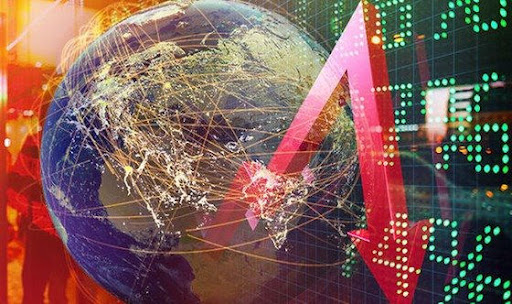
What is noteworthy is that this optimism stems from an unexpected factor: restraint in retaliating with tariffs.
International Monetary Fund (IMF) Managing Director Kristalina Georgieva has publicly praised the fact that major economies did not retaliate aggressively against the initial US tariffs. Georgieva stated: "The restraint in broad tariff retaliation from trading partners has played a positive role. It has allowed global trade to continue flowing, avoiding serious disruptions in supply chains and a crisis of confidence."
The global economy is currently walking a tightrope: on one side is the technical recovery and the restrained spirit of trading rivals, and on the other is the political risk that could trigger a full-blown trade war, wiping out all progress made.
According to the IMF, this "fairness in trade" has helped businesses and markets more easily absorb tariff shocks, maintaining relative stability and supporting global growth. Although geopolitical and trade tensions persist, the choice of major countries – particularly China – not to retaliate proportionally has contributed to minimizing economic damage.
US-China trade war
However, this hope is being overshadowed by the specter of a new trade war between the US and China. Amidst rising political tensions, the risk of the US imposing further tariffs – even up to 100% on Chinese goods – threatens to shatter the fragile balance that the IMF has just lauded.
If this new round of tariffs occurs, especially if China decides to retaliate with commensurate measures, the consequences could be far more serious than in previous instances.
First, supply chain disruptions: Global supply chains, already fragile after the pandemic, will be severely impacted. Businesses will face soaring production costs and unpredictable delays, forcing them to hastily decouple production.
Secondly, inflation will rise: New tariffs will push up the prices of consumer goods and raw materials, adding to the inflationary pressure the Fed is trying to control. This could force central banks to tighten monetary policy again, raising the risk of an economic recession.
Thirdly, trust is broken: Mutual retaliation will severely erode trust between the world's two largest economies, narrowing cross-border investment flows and making the investment environment riskier.
While raising its growth forecast, the IMF also issued a clear warning: "Uncertainty stemming from trade measures remains a significant risk." The global growth outlook, although revised more positively, remains low on historical averages and highly vulnerable to political shocks.
Source: https://vtv.vn/kinh-te-toan-cau-rui-ro-tu-nut-that-cang-thang-thuong-mai-100251015140605106.htm

































































































Comment (0)