

Major sporting events in the US have long operated on a model where sports are intertwined with the entertainment industry. A game isn't just about the technical aspects; it also includes music , lighting, advertising, celebrities, and the audience experience. The Super Bowl is a prime example, where the halftime show has become a popular culture event with appeal comparable to the game itself.
The International Football Federation (FIFA) wants to bring that spirit to the 2026 World Cup, turning the final at MetLife Stadium into a mega-event in the style of American entertainment. Chris Martin has been invited to help produce the halftime show. International media reports that FIFA also plans to organize music events and fan activities around Times Square during the week of the final.
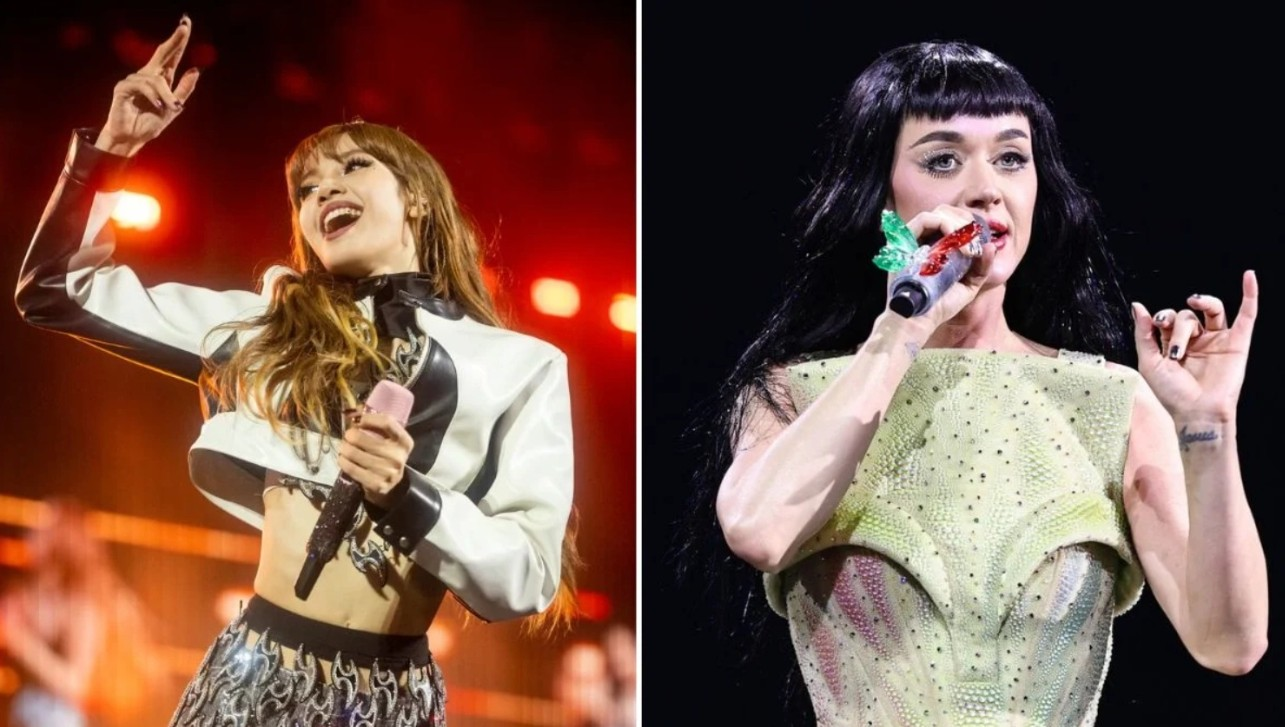 |
Katy Perry (right) and Lisa are two of the leading artists featured at the opening ceremony of the 2026 World Cup. Photo: Getty |
In North America this summer, fans will see massive fan zones, outdoor concerts, interactive experience zones, giant souvenir shops, and multi-day accompanying activities. Many sports media experts believe the 2026 World Cup will be the most entertaining World Cup in history.
Changes are also evident in how football is consumed. Cinematic cameras, short videos for social media, moments for digital platforms, and live audience experiences are increasingly prioritized. FIFA is investing heavily in social media content and media products aimed at younger audiences.
FIFA also applies a demand-based pricing model to World Cup tickets, a common sales method in sports and the performing arts industry in the US. Prices increase with the popularity of the match. Some ticket packages for the final match have been pushed up to tens of thousands of USD.
For many traditional football fans, the World Cup is becoming a luxury. The match itself is the focus, and the halftime break is typically around 15 minutes long. Spectators come to the stadiums solely to watch football. For decades, that has remained largely unchanged.
On European football forums, there has been considerable reaction following the news about the halftime show. Many argue that football doesn't need "pop stars during matches." Furthermore, the extended break raises concerns about its impact on players' performance and rhythm.
The controversies don't stop at the music stage. FIFA recently allowed television stations to insert advertisements during halftime breaks at some tournaments. This is a familiar practice in American sports, where matches are often broken up to optimize advertising revenue.
The World Cup has always been appealing because of its high-level matches and the genuine emotions in the stands. However, the 2026 World Cup is moving closer to a Hollywood-style entertainment sports model. International media suggest this is not surprising, given that the US is a large sports market, and this World Cup will also be the first time the tournament features 48 participating teams, with the largest commercial scale and projected audience in history.
Source: https://www.qdnd.vn/the-thao/worldcup-2026/ky-world-cup-giai-tri-1041876




![[Image] Nearly 125,000 Hanoi students completed the Literature exam for the 10th grade entrance exam.](https://vphoto.vietnam.vn/thumb/1200x675/vietnam/resource/IMAGE/2026/05/30/1780117233041_ndo_br_thiet-ke-chua-co-ten-2-png.webp)















![[Photo] Admire the coral "masterpiece" amidst the million-year-old heritage of Dak Lak province.](https://vphoto.vietnam.vn/thumb/1200x675/vietnam/resource/IMAGE/2026/05/30/1780107638639_y25-jpg.webp)

























































Comment (0)