


The front pages of sports newspapers during the 2006 World Cup featured images of Zinedine Zidane everywhere. The brilliant attacking midfielder, with his graceful and elegant playing style like a "swan," ultimately ended his final World Cup campaign, a tragically beautiful one, like a swan. He shone brightly throughout France's journey to the final, only to leave the field early in the final against Italy after headbutting Materazzi.
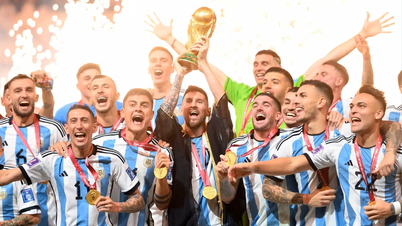
The 2006 World Cup was even more special because it not only witnessed Zizou's departure but also welcomed the debut of two players who would dominate world football for more than a decade: Messi and Ronaldo. Messi had already achieved fulfillment with his triumph in Qatar four years earlier. But for Ronaldo, the World Cup remained a career gap.
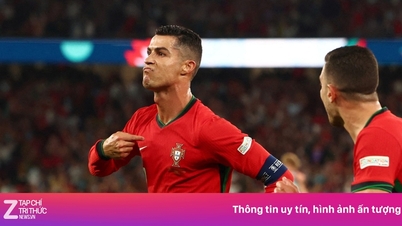
In injury time of a long season, at the Alawwal Stadium in Riyadh, Ronaldo adjusted his aim in front of the wall and shot. The ball went into the net. The 41-year-old veteran struggled to hold back tears as he ran towards his teammates. It was the most important goal he had scored since arriving in Saudi Arabia. But the question coach Roberto Martínez is asking isn't whether Ronaldo can still score important goals – but whether the Portuguese star is still a player who plays for the team.
On May 22, 2026, Al-Nassr won the Saudi Pro League championship for the first time in seven years. Ronaldo scored two decisive goals in the final match of the season to help the team overcome Damac. This was good news for him and for Portuguese football – a Ronaldo re-energized by the title, a Ronaldo who could go to the World Cup with fire, not with ashes.
But also in that May, five days before the Saudi joint final, there was an evening that fans in Riyadh wanted to forget as quickly as possible. Al-Nassr lost to Gamba Osaka of Japan in the AFC Champions League Two final. Not an ordinary defeat. It was a defeat accompanied by images that went viral on social media: Ronaldo moving lazily, not pressing, missing chances, and most importantly – he left the pitch as soon as the final whistle blew, skipping the entire awards ceremony and medal presentation for his teammates.
Hussein Abdulghani, a former player for Al-Nassr, couldn't contain his frustration: “The team's interests must come first, but the coach has been prioritizing Ronaldo since the beginning of the season. He's a burden to the team and only scores from set pieces. He plays because he's favored, not because he's making a real contribution. He controls the team too much and should be substituted when he's not at his best.” These were harsh words, but they came from within the team – not fabricated stories.
To understand why the match against Damac was so tense, we have to go back nine days earlier, the night Al-Nassr nearly won the championship only to lose it all in a matter of seconds. Their opponent was Al-Hilal, their arch-rival and the reigning runner-up with 19 titles in history. Al-Nassr led 1-0. Ronaldo had been substituted in the 82nd minute. He sat on the bench with a smile gradually spreading across his face, the smile of someone who felt the title was within reach. In the 90+8th minute, the stadium was ready to erupt.
Then goalkeeper Bento ran out to receive a long throw-in and collided with his own defender. The ball went into the net. Al-Hilal, who had gone undefeated all season, equalized in the 98th minute. The ghost of that night returned when Damac pulled one back to make it 2-1 in the season finale. Al-Nassr led by two points, but a loss could cost them the title. And that's when Ronaldo – who was being criticized, whose commitment was being questioned – stepped up.
In the 62nd minute, Al-Nassr were awarded a free kick from the left, just outside the penalty area. Not an ideal position. The wall was full. Ronaldo set up the ball. He didn't shoot like he did in his youth – no more of that high-pitched, whistling shot before the ball nestled into the top corner. This was a more mature shot, the ball curving over the wall, low enough to beat the goalkeeper, and accurate enough to find the net. Not flashy. But enough to send the entire stadium into a frenzy and make the score 3-1.
Ten minutes later, a rebound in the penalty area, Ronaldo reacted and lofted the ball into the net, making it 4-1. The title was secured. He ran towards the center of the pitch, trying to hold back the emotions welling up inside him. Too late. Or perhaps he didn't try anymore. Those were rare tears from CR7 – not tears of defeat, but of someone who had waited too long to celebrate in a place where people once said he came only for the money.
But the Saudi Pro League Player of the Season award didn't go to Ronaldo. It went to João Félix – his teammate, 18 years younger than Ronaldo, the former Chelsea star, who has gradually taken over both the free-kick role and the central midfield position in Al-Nassr's playing style. This is a detail that Roberto Martínez, the coach of the Portuguese national team, will have to think carefully about before the 2026 World Cup. It's not about whether Ronaldo is still fit enough to play – he just scored 28 goals in a season. The more subtle question is: Is Ronaldo old enough to make way for Félix in situations where Félix is the better option?
At Al-Nassr, he conceded – though perhaps not entirely voluntarily. If he can do the same in the Portuguese national team shirt, if CR7 can become "one for all" instead of "all for one" – then the Ronaldo-Félix partnership could be one of the most dangerous duos in the US, Canada, and Mexico this summer. Otherwise – if the 41-year-old's ego still outweighs Martínez's tactical plans – then even a season with 28 goals will only be a nice number that won't contribute to the World Cup.
Ronaldo has scored in five different World Cups, a World Cup record. Eight goals, none in the knockout rounds. That's the biggest gap in the record of a great player.
The 2026 World Cup is his last chance. Not to prove he's greater than Messi – that debate ended four years ago. But to prove something else, smaller but equally important: That at 41, when everyone is saying Ronaldo is past his prime, he can still score at the most crucial moment. As he did in Riyadh. With tears in his eyes. And a free-kick that wasn't flashy, but was enough to win.
Source: https://baovanhoa.vn/the-thao/truoc-them-world-cup-cua-ronaldo-232505.html
![[Photo] Ba Lang An Lighthouse - the "eye of the sea" amidst the "rock museum" of Quang Ngai province.](https://vphoto.vietnam.vn/thumb/1200x675/vietnam/resource/IMAGE/2026/05/29/1780038698840_anh-man-hinh-2026-05-29-luc-14-10-42.png)
![[Image] Pleasant weather helps students enter the 10th grade entrance exam with confidence.](https://vphoto.vietnam.vn/thumb/1200x675/vietnam/resource/IMAGE/2026/05/29/1780034401612_ngay-1-thi-lop-10-minh-duy-8-5009-jpg.webp)


































































Comment (0)