

With one in three internet users worldwide being a child, do we have enough safeguards to protect them from the invisible pitfalls of online abuse? Cyberbullying, scams, and harmful content are surrounding this new generation of citizens daily. The working session of the Committee on Culture and Society on May 28th frankly sought solutions to the question: How can we create a safe online environment that does not hinder children's development?
Countless pitfalls surround children online.
Never before has access to knowledge and connection with the world been so easy for a child. According to statistics from the United Nations Children's Fund (UNICEF), it is estimated that one in three internet users globally is a child. Even more remarkably, every day more than 175,000 children enter the online environment for the first time. These figures demonstrate the rapid pace of digitalization, but also sound an alarm about the scale of negative impacts surrounding the younger generation.
In Vietnam, this situation is not outside the general trend, and may even be more complex due to the rapid increase in smartphone and internet penetration in recent years. The online space now stores memories, shapes personalities, and profoundly influences the behavior of students and teenagers. However, its dark side presents a somber picture with numerous risks lurking every hour and minute, including account theft, personal data leaks, online fraud, defamation, and cyberbullying.
Unlike physical confrontations or traditional school violence, which are limited in space and time, cyberbullying is dangerous because it stalks children anytime, anywhere. With just a click of a share button, a malicious comment, or a baseless meme, psychological damage can be multiplied millions of times, transcending the boundaries of a classroom or a school. Many children fall into a state of severe panic when they realize that this virtual "stain" clings to their real lives and they cannot erase it.

A recent survey by the Central Youth Union Council has painted a shocking picture: Up to 85.6% of children surveyed affirmed that being abused online has seriously affected their mental health. The most common manifestations include prolonged anxiety, fear, heavy psychological pressure, and even depression and social isolation. Clearly, these invisible waves of online attacks are leaving deep, real wounds in the real world.
What are countries around the world doing to protect children?
With the explosion of algorithm-based business models for user retention and the powerful rise of Artificial Intelligence (AI), countries around the world have realized that conventional advisory solutions are no longer effective. A trend towards tough, direct, and comprehensive legislation is being vigorously implemented by major technology powers.
In the United States, the Children's Online Privacy Protection Act (COPPA) is constantly being updated to adapt to the changing landscape. For example, California has pioneered the adoption of an "Age-Appropriate Design Code." This law requires technology companies to enable the highest level of privacy and security by default for users under 18, prohibiting features that track location or use design tricks to entice children to stay on apps for too long.
Meanwhile, Australia is proving to be a leader in testing robust technological solutions for age verification. The government is pushing a strict legislative roadmap to completely prevent children from accessing major social media platforms before they reach the legal age, aiming for a proposal to completely ban social media use for children under 16 if platforms cannot demonstrate safe filtering mechanisms.
In China, authorities have implemented an extremely strict regulation called the "Teenage Mode" across all short- video sharing apps like Douyin and online gaming platforms. This mode automatically limits access time to no more than 40 minutes per day for children and activates a "martial law" feature, completely locking access from 10 PM to 6 AM to ensure rest and protect children's mental health.

The world has chosen a no-compromise path; the legal framework must be the strongest barrier against the profit-seeking power of algorithms.
On a regional scale, the European Union (EU) has put into practice the Digital Services Act (DSA), imposing extremely heavy fines of up to 6% of global revenue on Big Tech companies if they fail to proactively scan, detect, and remove harmful, abusive, or exploitative content about children online. It can be said that the world has chosen an uncompromising path; the legal framework must be the strongest barrier against the profit-driven greed of algorithms.
Vietnam seeks solutions to protect children online.
Returning to the domestic situation, Vietnam has consistently demonstrated the Party and State's special attention to the care and protection of children. We have built a relatively comprehensive legal framework, from the 2016 Children's Law to recent laws such as the 2025 Law on Personal Data Protection, the 2025 Law on Cybersecurity, and the "Program for Protecting and Supporting Children's Development in the Online Environment 2026-2030". Vietnam's active participation in signing the Hanoi Convention on Cybercrime in 2025 further strongly affirms the nation's international commitment in this fight.
However, the rapid development of technology, the cross-border nature of social media platforms, and especially the deep anonymity mechanisms are creating significant gaps in enforcement. This was also the core issue discussed at the working session on the morning of May 28, 2026, between the National Assembly's Committee on Culture and Society and representatives from several ministries and agencies regarding the implementation of policies and laws protecting children in the online environment.

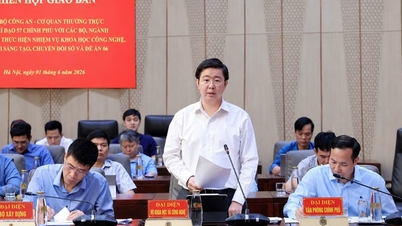
Deputy Chairman of the Committee on Culture and Social Affairs Ta Van Ha chaired the meeting. Photo: People's Daily Newspaper.
Under the chairmanship of Vice Chairman Ta Van Ha, the working session frankly dissected the current technical and practical management barriers. Speaking at the session, Standing Vice Chairman of the Central Youth Union Council Le Hai Long raised the issue from a strategic perspective: "Today's cyberspace is the environment in which a new generation of Vietnamese citizens grows up. Therefore, protecting children in the online environment is not only a task to protect children, but also to protect the sustainable development future of the country in the digital age. To effectively protect children in the online environment, it is necessary to clearly define the responsibilities of each entity, from state management agencies, families, schools, digital platform providers, and organizations such as the Central Committee of the Ho Chi Minh Communist Youth Union and the Central Youth Union Council."

According to Le Hai Long, Permanent Vice Chairman of the Central Youth Union Council, protecting children in the online environment is not only a task to protect children, but also to protect the sustainable development future of the country in the digital age.
One of the biggest bottlenecks pointed out by delegates is the tendency of the very people being protected to "bypass" the barriers. Currently, although authorities and schools have erected numerous technical "barriers" to prevent students from accessing harmful websites and forums, in reality, many students themselves actively seek ways to access and bypass the filters using emulators or fake accounts.
Sharing his perspective on this issue from a security standpoint, Lieutenant Colonel Vu Trong Nghia, Deputy Head of the Cyber Security Department, Cyber Security and High-Tech Crime Prevention and Control Bureau (Ministry of Public Security), emphasized the dual nature of technological solutions: "It is necessary to strengthen educational solutions and raise awareness among families and children. At the same time, it is required that online content platforms have methods for classifying, reviewing, and applying technology to monitor and prevent harmful content for children."

According to Lieutenant Colonel Vu Trong Nghia, Deputy Head of the Cyber Security Department, Cyber Security and High-Tech Crime Prevention and Control Bureau, Ministry of Public Security, many "barriers" are currently in place to prevent children from accessing harmful content online, but in reality, many limitations remain. (Photo: People's Daily Newspaper)
In addition, delegates also discussed in depth the research of more groundbreaking and practical solutions. National Assembly delegate Nguyen Thi Mai Thoa, a full-time member of the Committee on Culture and Social Affairs, suggested that in the context of rapidly changing technology, it is difficult for laws to keep pace and anticipate all emerging situations. Therefore, specific proposals such as applying strict age-based management, or even moving towards building alternative domestic social networks to create healthy spaces and safe forums for children to share and interact, are directions that deserve serious consideration.
Balancing technological barriers and launchpads.
Protecting children in cyberspace is a complex problem due to inherent contradictions. How can we shut out harmful content without inadvertently closing the door to knowledge and human progress for them? If we only manage with a "if we can't control it, ban it" mindset, we will inadvertently deprive a generation growing up in the era of the Fourth Industrial Revolution of the opportunity to learn and develop essential digital skills.
In his concluding remarks and outlining the vision for the next legislative phase, Deputy Chairman of the Committee on Culture and Society Ta Van Ha emphasized a core principle: preventive and deterrent solutions must go hand in hand with scientifically identifying the impacts of virtual spaces on children's mental health, and researching and establishing digital safety standards specifically for Vietnamese children.
"It's crucial to limit negative impacts while simultaneously not hindering students' access to the scientific and technological achievements of the new era. The legal framework must be strong and humane, based on serious, objective, and scientific assessment, drawing on the experiences of other countries and reflecting on Vietnam's specific circumstances," Mr. Ta Van Ha shared.

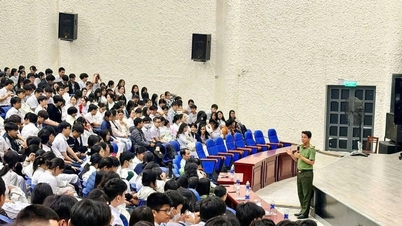
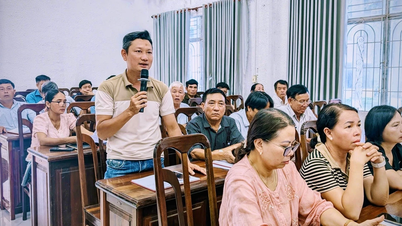
Scene from the working session. Photo: People's Daily Newspaper
Ultimately, the strongest shield for children in the online environment is not built solely on dry legal provisions or mindless computer algorithms. It must be constructed from understanding and close cooperation between family, school, and society, so that the online space truly becomes a launching pad for future citizens to soar, rather than a trap that drowns innocent souls.
Source: https://phunuvietnam.vn/la-chan-nao-bao-ve-tre-em-tren-khong-gian-ao-238260528183249401.htm


































































































Comment (0)