

On June 2nd, the Department of Internal Affairs of Lam Dong province announced that it had submitted a comprehensive plan for the reorganization of villages and residential areas in the province in 2026. According to the plan, after the reorganization, the entire province will reduce the number of villages and residential areas by 1,117, equivalent to more than 40% of the current number of units.
Currently, Lam Dong province has 2,773 villages and residential areas, including 2,118 villages and 655 residential areas. A review revealed that 1,703 units do not meet the standards for household size; of which 1,255 villages have fewer than 300 households and 448 residential areas have fewer than 450 households and are subject to restructuring.
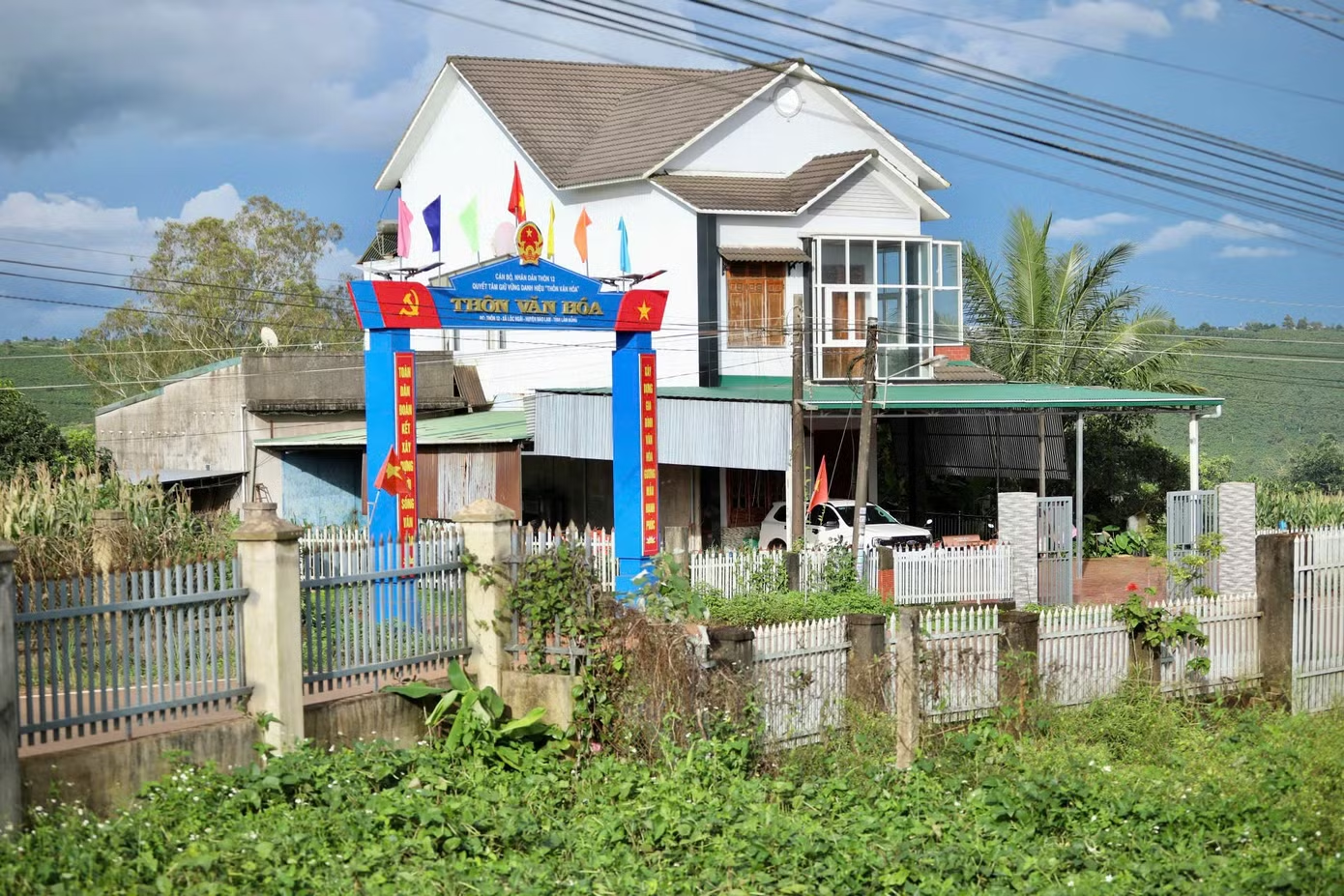
In addition to the units that did not meet the standards, the province also reviewed 1,070 villages and residential areas that had already met the standards to make adjustments to suit the actual management, geographical conditions, historical formation, infrastructure, and demographic characteristics of each locality.
Based on proposals from communes, wards, and special zones, the province plans to reorganize 2,071 villages and residential areas to form 954 new units.
After completion, the entire province will have 1,656 villages and residential areas, including 1,303 villages and 353 residential areas.
According to the Department of Interior Affairs, out of the total number of units included in the plan, 1,633 villages and residential areas that do not meet the standards will be reorganized; 438 units that meet the standards will still be adjusted to suit practical circumstances; and 632 units that meet the requirements will remain unchanged.
The number of residential areas in urban areas is expected to decrease sharply.
In Da Lat city, Xuan Huong ward has reduced its number of residential groups from 77 to 37; Cam Ly ward from 35 to 16; Lam Vien ward from 49 to 17; and Xuan Truong ward from 29 to 12.
In Bao Loc city, Ward 1 is expected to reduce from 42 to 26 residential groups, while Ward 2 will reduce from 44 to 23 residential groups.
In addition, the province proposed retaining 70 villages and residential areas that do not yet meet the population size standards due to their unique historical, cultural, ethnic, and geographical characteristics.
Among these is Ha Ma Sing village (D'Ran commune) with 287 households, over 1,200 inhabitants, more than 93% of whom are ethnic minorities. This residential area is considered to have its own unique cultural identity and relatively isolated geographical conditions.
The Da Nghich residential area (Ward 3, Bao Loc), with 301 households, was also proposed to remain unchanged due to the unique characteristics of the community, which consists of ethnic minorities from the Central Highlands living in concentrated settlements.
According to the plan, after the proposal is approved by the competent authority, localities will develop detailed plans, organize public consultations, and submit them to the commune-level People's Council for consideration and decision in accordance with regulations.
Source: https://tienphong.vn/lam-dong-giam-hon-1100-thon-to-dan-pho-sau-sap-xep-post1848374.tpo
![[Photo] First session of the 14th Congress of the Vietnam Trade Union](https://vphoto.vietnam.vn/thumb/1200x675/vietnam/resource/IMAGE/2026/06/03/1780465947883_ndo_br_img-3852-jpg.webp)
![[Photo] General Secretary and President To Lam presides over a meeting with the Central Organizing Committee.](https://vphoto.vietnam.vn/thumb/1200x675/vietnam/resource/IMAGE/2026/06/03/1780482764658_a1-bnd-4741-3342-jpg.webp)
![[Photo] Secretary of the National Assembly Party Committee, Chairman of the National Assembly presides over the meeting of the Standing Committee and Executive Committee of the National Assembly Party Committee.](https://vphoto.vietnam.vn/thumb/1200x675/vietnam/resource/IMAGE/2026/06/03/1780480353201_ndo_br_bnd-2585-jpg.webp)














































![[Video] Sunset at Lap An Lagoon – Where the sun sets over the fishing nets](https://vphoto.vietnam.vn/thumb/1200x675/vietnam/resource/IMAGE/2026/05/31/1780192137701_beach-landscape-sea-water-nature-grass-745871-pxhere-com.jpeg)































Comment (0)