

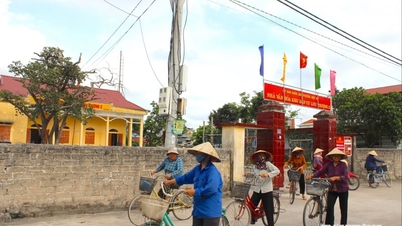
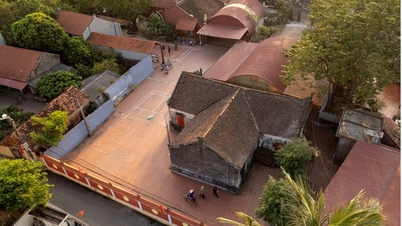
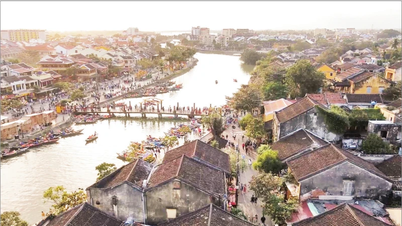
A village is not just a place of residence. It is memory, customs, communal houses, temples, wells, banyan trees, riverbanks, rice fields, village regulations, family traditions, and community spirit; it is the carrier of the nation's 'cultural DNA' through countless historical changes. Therefore, reorganizing hamlets may be necessary, but absolutely no village should be destroyed.
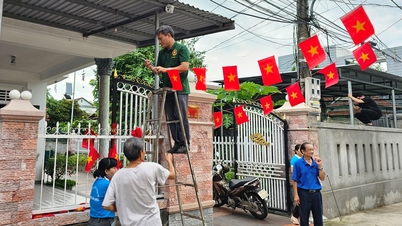
In recent days, the issue of reorganizing and consolidating villages and residential areas has been strongly discussed in many localities. Some localities are developing plans for reorganizing and consolidating villages and residential areas, linked with the reorganization of Party branches and Fatherland Front committees, to be completed before June 30, 2026; the general orientation is to streamline organizational structures and improve the efficiency of management at the grassroots level.
This is necessary in the context of local government reform towards greater effectiveness and efficiency. But it is precisely at this time that we must remain calm and clearly distinguish between reorganizing administrative units and erasing cultural entities. A hamlet may be a self-governing organization within the grassroots administrative system, but a village is a cultural and historical entity. Merging administrative units does not mean that we are allowed to erase the village name, the village memory, the village space, the village customs, or the layers of cultural heritage that have shaped the very foundation of Vietnam.
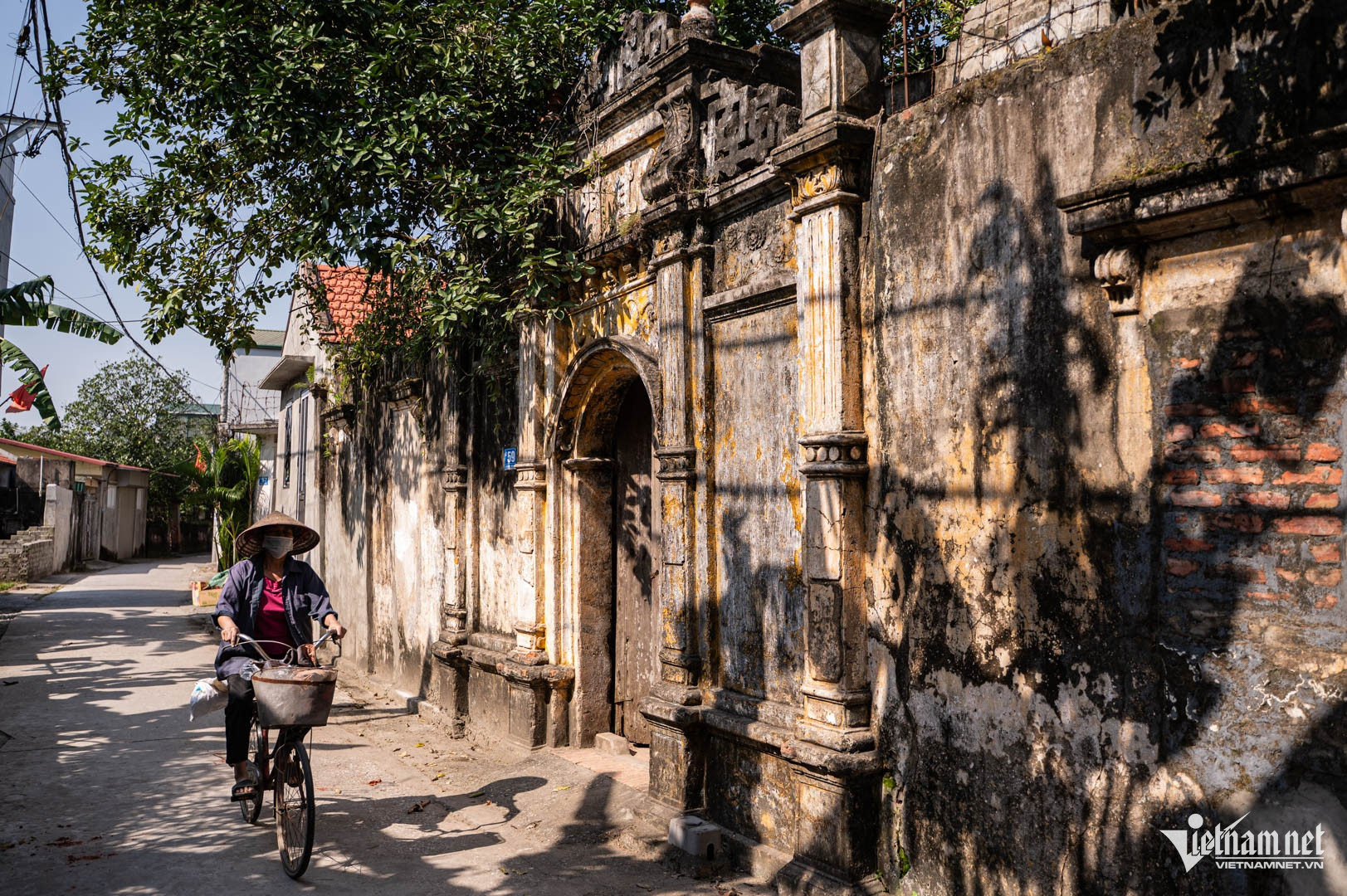
Throughout the nation's history, the Vietnamese village has been one of the most enduring institutions. There have been dynasties that flourished and then declined, prolonged wars, periods of foreign domination, division, and destruction, yet the village has remained.
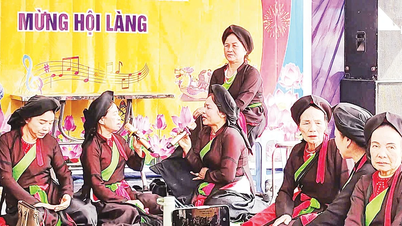
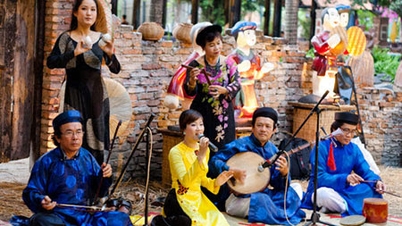
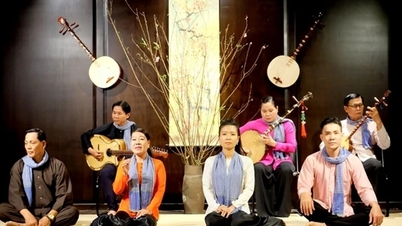
It is in the village that the Vietnamese language is preserved in mothers' lullabies, in folk songs and proverbs, in forms of address, in festivals, and in customs and traditions. It is in the village that the belief in ancestor worship, the worship of the village guardian deity, and the worship of those who have contributed to the nation and the village is maintained as a form of historical education through emotion. It is in the village that the norms of "respecting elders and yielding to juniors," "helping each other in times of need," "caring for one another," and "helping those in need" are passed down from generation to generation, not through dry lectures, but through daily life.
To say that the village is the cultural cell of a nation is not a figurative expression. It is an assertion with a very deep historical, social, and cultural basis. If the family is the cell of society, then the village is the cell of national culture. The family nurtures individual character; the village nurtures community character. The family transmits bloodlines; the village transmits community memories. The family teaches people to love their relatives; the village teaches people to live with the community, with their homeland, with their country.
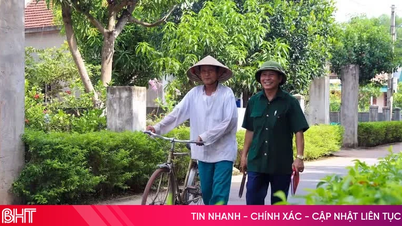
From the village, the Vietnamese people venture out into the nation. From the village communal house, the bamboo groves, the dirt roads, the pond banks, the banyan trees, the riverbanks, people learn their first lessons about identity: Where they belong, to whom they are responsible, and how they must live so as not to bring shame to their ancestors, their neighbors, and their homeland.
We have experienced periods of national subjugation, but not of cultural loss. One of the fundamental reasons is that Vietnamese culture is not confined to the royal court, not only to books, not only to state institutions, but is deeply rooted in the villages.
When national institutions are challenged, the village becomes the repository of identity. When war devastates cities, the village still preserves its language, customs, and morals. When society is in turmoil, the village still maintains the connection between people and their roots. Therefore, after each war, after each period of loss, Vietnamese culture is revived from the wellsprings of the village community: from village festivals, village communal houses, village crafts, clans, village regulations, customs, from mothers, fathers, elders, artisans, clan leaders, village elders, and respected community members.
President Ho Chi Minh deeply understood this power. When he said, "Culture must illuminate the path for the nation," he did not view culture as merely an external decoration, but as the foundation guiding the development and progress of society. In his "New Life" ideology, he also placed the building of a cultured way of life starting from the family, village, and grassroots community. He emphasized the spirit of making one's village a village with "pure customs and traditions," meaning that building culture does not begin with grand slogans detached from life, but begins with the way of living, behaving, working, solidarity, hygiene, frugality, and mutual respect within each specific community.
That idea remains valid today: To build a civilized nation, one must build civilized communities; to have a strong nation, one must maintain a healthy cultural vitality in every village, hamlet, and residential area.
From that perspective, merging villages, if understood only as reducing the number of administrative units and non-professional personnel, and facilitating management, is only partially correct. However, if the goal of management leads to a breakdown of community memory, the disappearance of ancient village names, the blurring of cultural spaces, disruption of festivals, village regulations, temples, cemeteries, religious institutions, and kinship ties, then the price to pay will be significant.
There are losses that don't immediately show up in reports. The deletion of a village name might not reduce economic indicators, but it diminishes a part of the memory. A festival mechanically incorporated might not immediately cause a complaint, but it weakens the connection to ancestors. A community reassembled without thorough dialogue might not cause major administrative disruption, but it leaves a feeling of being deprived of a familiar place.
General Secretary and President To Lam recently emphasized that each locality needs to clearly understand that "preserving culture is preserving the roots of development"; sustainable development must begin from within the local community, and more attention should be paid to village elders, community leaders, artisans, and influential people – those who are dedicated to preserving national culture. This is a very thought-provoking guideline for the current process of reorganizing villages and hamlets.
If preserving culture means preserving the roots of development, then we cannot sacrifice those long-term roots for the sake of immediate streamlining. If sustainable development must begin at the community level, then all policies related to villages must be implemented by listening to, respecting, and relying on the community, not by imposing them through mechanical calculations.
In the same spirit, General Secretary and President To Lam affirmed that the culture of Vietnam's ethnic communities is not only the unique identity of each ethnic group, but also a connecting thread that creates unity in diversity; preserving culture is not only about preserving heritage but also about maintaining the spiritual foundation of society, strengthening national unity, and creating intrinsic strength for sustainable development. The village is where this spirit of 'unity in diversity' is concretized. Each village has its own dialect, festival, craft, story, tutelary deity, sacred space, and unique memories. But all these unique elements combine to form Vietnamese identity. Simply erasing these unique elements does not make the nation more unified; sometimes it makes the culture impoverished, flattened, and anonymous.
Therefore, the warning today is not to oppose all restructuring. No one denies the need to streamline the apparatus, improve governance efficiency, reduce overlap, and ensure resources for the grassroots. But restructuring must be culturally sound. Streamlining must be based on memory. Modernization must have identity. A single criterion of population or number of households cannot be used to decide the fate of communities that have existed for hundreds of years. New villages cannot be named with soulless numbers or with mechanical combinations that erase historical traces. Village temples, shrines, ancient wells, banyan trees, water sources, cemeteries, ancestral halls, festivals, and traditional crafts cannot be considered merely 'secondary elements' after the organizational plan has been completed.
What needs to be done is to establish a very clear principle: Merge administrative units but do not erase the cultural identity of the village. A new administrative village can include several old cultural villages. The administrative name can be adjusted, but the traditional village name must be preserved in records, signposts, place name maps, festivals, cultural institutions, community media, and local education.
Each village merger plan needs a cultural 'appendix': the history of the names, relics, festivals, religious spaces, traditional crafts, representative clans, historical figures, community memories, and elements that need protection. Without this cultural 'appendix,' the merger plan will lack the most important dimension: the human dimension.
Furthermore, genuine public consultation is essential. According to guidelines, the merger of villages and residential areas must be approved by over 50% of the voters or voter representatives of the households in each relevant village or residential area; the implementation process should also consider the specific geographical location, topography, and customs of the community. However, democracy here should not be limited to a percentage of agreement on paper. People need to be informed of the plan, discuss the names, contribute ideas on cultural institutions, and decide how to preserve festivals, village regulations, and shared living spaces. Elderly people, clan leaders, artisans, and those knowledgeable about local history should be invited to participate from the outset. If this is achieved, the merger will no longer be a cold administrative order, but a culturally conscious process of social consensus.
In many places, the most worrying issue is not whether a village is larger or smaller, but the simplistic understanding that a village is merely a residential address. Once a village is viewed as just an address, it's easy to rename, number, group, and erase landmarks. But a village is not just an address. A village is a 'living archive' of national culture. Within a village lies tangible and intangible heritage; place names and memories; a community of residents and social relationships; production and spiritual spaces; a way of life, language, customs, and rituals; and even lessons in self-governance, solidarity, and mutual assistance that modern society desperately needs to revive.
The further we enter the digital age, the more important it is to preserve the villages. This isn't about closing ourselves off from modernity, but about ensuring that modernization has its roots. A country that wants rapid but sustainable development cannot rely solely on highways, industrial zones, smart cities, and data centers. That country also needs villages with memories, communities with moral values, and people who know where they come from. Losing a village is not just losing a living space; it's losing a way of nurturing Vietnamese character. When villages weaken, people become more isolated, communities become weaker, memories are impoverished, and culture is more easily consumed.
From today's village merger story, we need a clear message: Reforming grassroots governance is necessary, but it must not destroy the village; streamlining the administrative apparatus is right, but it must not impoverish the cultural identity; arranging boundaries is an administrative matter, while preserving the village is a responsibility to history, to our ancestors, and to the future of the nation.
Perhaps one day, the name of a village will be changed on the administrative map. But in the hearts of the people, the village name must not disappear. Because that place holds the graves of ancestors, the village communal house, the sound of temple bells, the childhood paths, the banyan tree at the entrance to the hamlet, the village festivals, the lullabies sung by mothers, and those who fell to protect the land, the village, and the country. Preserving the village means preserving the roots. And as long as the roots remain strong, this nation, no matter how many storms it weathers, can still revive, develop, and rise up using its own cultural strength.

Source: https://vietnamnet.vn/lang-la-te-bao-van-hoa-cua-dan-toc-2514775.html
































































Comment (0)