

 |
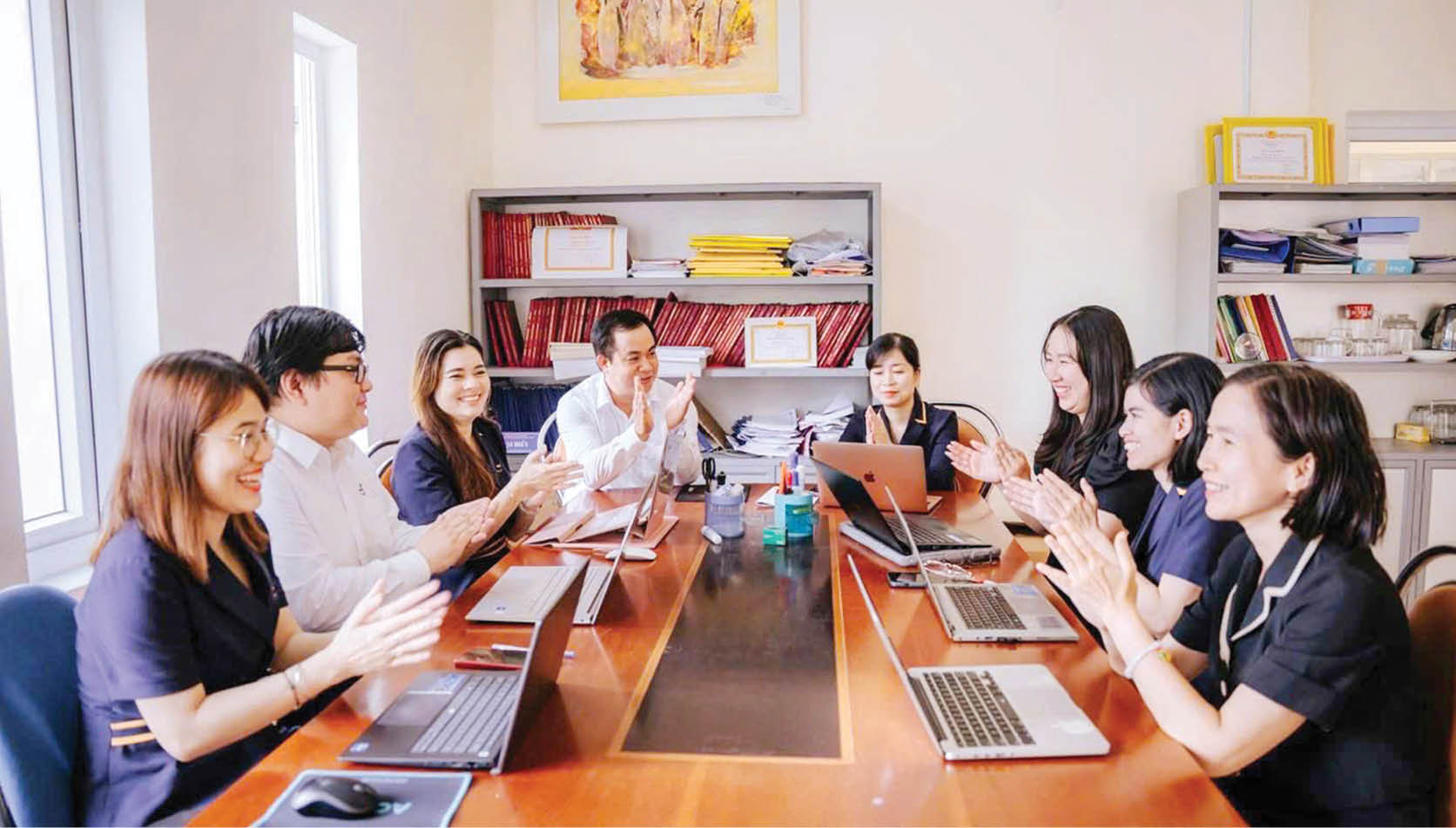
| An activity for exchanging experiences between lecturers and students. |
Connecting training with practice.
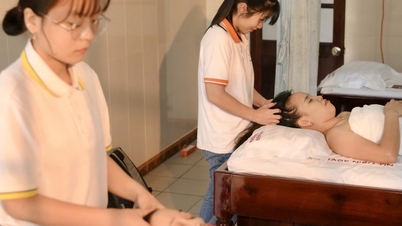
A lively class session at the School of Tourism - Hue University took place at the hotel operations practice area, where students were exposed to a simulated learning environment closely resembling real-world business practices. Playing the role of restaurant staff, students practiced everything from greeting guests and arranging tables to handling unforeseen situations during service. No longer confined to textbooks or classroom theory, the atmosphere became vibrant, professional, and engaging for students as they learned through experience right within the school.
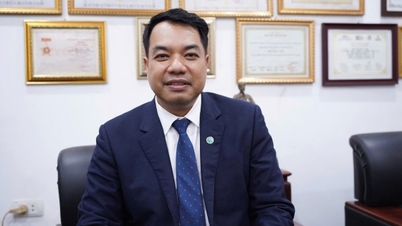
Associate Professor Tran Huu Tuan, Rector of the School of Tourism - Hue University, said that in recent years, the school has identified training linked to business practice as a consistent orientation throughout the training process. The training program is continuously adjusted towards practical training and professional internships for students to closely match the needs of the labor market.
Currently, the School of Tourism - Hue University has built a network of cooperation with many large tourism businesses and corporations nationwide, such as Ba Na Hills, Vinpearl in Phu Quoc, Ha Long, Nha Trang, Laguna, New World, and Marriott International. Nearly 1,500 students participate in internships at these companies each year.
For many students, long-term internships are the most important "vocational training." At resorts, hotels, or major tourist destinations, they directly participate in customer service processes, tour operations, event organization support, or handling real-world situations.
Many students are offered jobs by companies immediately after graduation following their internships. This is also why many businesses proactively approach universities to "order" high-quality human resources.
International cooperation
The School of Tourism - Hue University has implemented many international cooperation programs, opening up opportunities for students to access professional working environments abroad. Each year, the school has more than 150 students participating in international internship programs in Japan and Singapore.
Here, students not only learn how to operate hotels and restaurants according to international standards but also cultivate discipline, professionalism, and foreign language skills in a real-world environment. For many students, this is their first time working in a multicultural environment and interacting with tourists from many different countries.
Alongside international internships, the school also regularly organizes academic and cultural exchange programs with foreign partners. Many international experts and scholars from the United States, Japan, Thailand, Ireland, New Zealand, and Portugal have participated in teaching and exchanging experiences with faculty and students. As a result, students have more opportunities to access new development trends in the global tourism industry, from green tourism and sustainable tourism to digital transformation in tourism management and communication.
Former student Nguyen Thien Chau, currently the Director of Chiic World Vietnam, believes that the practical learning environment at the university helped him confidently start his own business after graduation. According to Chau, combining theoretical knowledge with real-world professional experience helps students understand how businesses operate, while also fostering creative thinking and the ability to adapt to the market.
In the field of hotel and restaurant management, the school participates in the "Tourism for Sustainable Development" (ST4SD) project funded by the Swiss Government, in collaboration with European-standard training partners such as the EHL Hotel Business School. Through this project, the training program is updated to be more modern, enhancing practical skills and management according to international standards.
In tourism training, the 6-month "business semester" model at Ba Na Hills is considered a notable highlight. Instead of studying entirely in school, students directly participate in tour operations, serving guests, and working as real employees at a business. In addition, new fields such as event management, tourism communication, and digital tourism are also included in the training program to meet the industry's development trends in the technological age.
A notable point is that the school not only trains vocational skills but also focuses on applied research linked to local tourism development. Many research projects related to community tourism, agricultural tourism, or tourism product development in Central Vietnam have been implemented, contributing to supporting the locality in exploiting its tourism potential in a sustainable manner.
Source: https://huengaynay.vn/giao-duc/lien-ket-dao-tao-du-lich-truoc-yeu-cau-moi-165924.html



























































Comment (0)