

Vehicle inspection capacity is only half of the demand.
In its comments on the draft Decision of the Prime Minister stipulating the roadmap for applying the Vietnamese Technical Standard (QCVN) on exhaust emissions from motorcycles and mopeds circulating in Vietnam, which the Ministry of Construction recently sent to the Ministry of Agriculture and Environment, there is a noteworthy proposal to extend the schedule for exhaust emission testing of motorcycles.

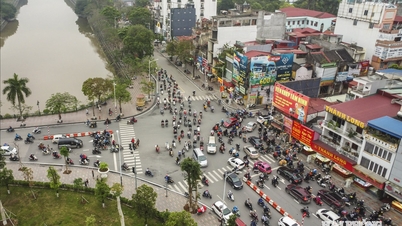
The proposed roadmap for controlling emissions from motorcycles and scooters is being postponed to July 1, 2027, instead of January 1, 2027.
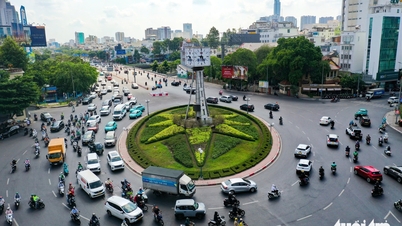
PHOTO: Ngoc Thang
According to the draft, the Ministry of Agriculture and Environment plans to begin vehicle inspection for motorcycles in Hanoi and Ho Chi Minh City on January 1, 2027. From January 1, 2028, inspection will be implemented for motorcycles in four centrally-governed cities: Hai Phong, Da Nang, Can Tho, and Hue. From January 1, 2030, inspection will be applied to motorcycles already in circulation in the remaining provinces and cities. Depending on the actual situation, these provinces and cities may implement the regulations earlier.
Considering this roadmap difficult to implement, the Ministry of Construction proposed postponing the official application of vehicle emission standards for motorcycles in Ho Chi Minh City and Hanoi by six months, to July 1, 2027. Simultaneously, instead of applying the standards to all vehicles immediately, the implementation would begin with motorcycles manufactured before 2008 (emission standard level 1). Two years later (July 1, 2029), the standards would be applied to motorcycles manufactured before 2016 (level 2), and from January 1, 2032, to those manufactured before 2026 (level 3). The remaining centrally-governed cities (Hai Phong, Da Nang, Hue, Can Tho ) would apply similar standards to Hanoi and Ho Chi Minh City, but with a one-year delay. Other localities will implement motorcycle inspection at level 1 from January 1, 2029, for vehicles manufactured in 2008 or earlier, and level 2 from January 1, 2031, for vehicles manufactured from 2009 onwards.
Explaining in detail the impracticality of the roadmap in the draft, the leader of the Vietnam Register Department analyzed: To meet the demand for motorcycle and motorbike inspection, according to calculations, in addition to the existing motor vehicle inspection centers, by January 1, 2027, Hanoi needs to establish 340 new inspection facilities, corresponding to 340 inspectors of grade 3 or higher and 340 exhaust gas analyzers (gasoline). Similarly, Ho Chi Minh City also needs to open 400 new inspection facilities with 400 inspectors of grade 3 or higher and 400 exhaust gas analyzers (gasoline). By January 1, 2028, the whole country needs a total of 1,005 (1,345) inspection facilities, corresponding to 1,005 (1,345) inspectors of grade 3 or higher and 1,005 (1,345) exhaust gas analyzers (gasoline). By January 1, 2030, the number of inspection and testing facilities nationwide, as well as the number of inspectors and equipment, must reach 4,332.
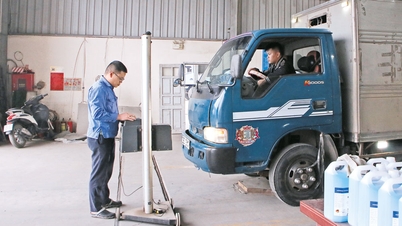
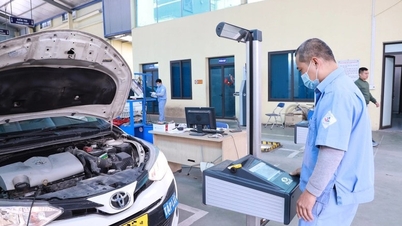
Currently, besides the existing vehicle inspection centers, there are no other entities qualified to participate in the technical inspection service for motorcycles and scooters. According to statistics from the Department of Vehicle Registration, there are currently 2,768 warranty and maintenance facilities of motorcycle and scooter manufacturers and importers that are capable of participating in the technical inspection service, provided that the manufacturers and importers agree to encourage and require these facilities to participate. However, these facilities do not yet have exhaust gas (gasoline) analysis equipment and do not have inspectors to perform the inspections.
Meanwhile, for a vehicle inspection facility to be eligible to operate, in addition to technical infrastructure and personnel, it must be granted a certificate of eligibility by the Department of Construction. Annually, exhaust gas (gasoline) analysis equipment must also undergo calibration according to the law on measurement. Given the enormous number of vehicle inspection facilities needed, it is projected that issuing certificates to all motorcycle and scooter maintenance and repair facilities in Hanoi and Ho Chi Minh City cannot be completed before July 1, 2027. Furthermore, deploying the software for managing motorcycle and scooter inspections to these facilities will require 12-18 months.
Therefore, the head of the Vehicle Registration Department is concerned that simultaneously inspecting all motorcycles and scooters according to the draft plan could lead to chaos and congestion, making implementation impossible. Furthermore, according to the draft, the regulation of gradually increasing emission levels based on the year of manufacture could result in vehicles manufactured in recent years being subject to higher emission standards and potentially failing to meet requirements and being scrapped, while vehicles manufactured decades ago, subject to lower emission standards, could still exist and emit many times more than those with higher standards.
Local authorities are still "running and groping in the dark."
The Ministry of Construction's proposal to extend the timeframe for motorcycle inspection is quite surprising, because since 2024 the Ministry has issued documents on the procedures for inspection and certification of eligibility for motorcycle and moped inspection activities, aiming to prepare thoroughly and ensure the most convenient implementation for the public when officially applied according to the roadmap from the Environmental Protection Law.

Graphics: Tuan Anh
Simultaneously, the Ministry coordinated with the Vietnam Association of Motorcycle Manufacturers and Importers (VAMM) to calculate and propose the use of motorcycle and scooter warranty and maintenance facilities of VAMM-affiliated dealerships and socialized facilities participating in the inspection of motorcycles and scooters. At that time, the Vehicle Registration Department also reassured the public that there would be no congestion thanks to the availability of approximately 3,000 qualified facilities. In addition, Circular 47 stipulated that for motorcycles and scooters up to 5 years old, the Vehicle Registration Department would issue inspection certificates through the inspection management software; vehicle owners did not have to submit inspection documents or bring their vehicles to inspection facilities for inspection. This contributed to reducing the number and congestion at inspection facilities in the initial implementation phase.
In fact, controlling motorcycle emissions has been discussed for many years and has been piloted in Hanoi, Ho Chi Minh City, and Da Nang. This is also considered a stepping stone for localities to gather data, prepare facilities and equipment, develop plans, and determine costs…
Not only the Ministry of Construction but also representatives from the Ho Chi Minh City Department of Construction shared with Thanh Nien newspaper that Ho Chi Minh City is still unable to assess the feasibility of the proposed roadmap because the standards for emission limits, vehicle inspection facilities, and the technical requirements of inspectors are still lacking. Following a pilot program for small-scale motorcycle emission testing in the city in 2020, the Department of Construction noted that each motorcycle repair and maintenance shop could only inspect 200 vehicles per day at full capacity, with an investment cost of approximately 500 million VND per facility. With a total of approximately 12 million motorcycles and scooters in the city after the merger, the situation could become very tense. Furthermore, while the government is considering a plan to encourage private sector participation, the method and percentage of revenue for businesses remain unclear.
"The Ho Chi Minh City People's Committee is requesting the Department of Construction to study the plan to implement low-emission zones in some areas with favorable conditions such as Can Gio and Con Dao, requiring the conversion of all vehicles to electric vehicles. At the same time, they are studying a roadmap to ban private cars from the city center, similar to Hanoi. These will be stepping stones to begin implementing the emission control roadmap after the Government issues its regulations," a representative from the Ho Chi Minh City Department of Construction added.
Besides extending the implementation timeline, the latest draft from the Ministry of Agriculture and Environment adds a regulation stating that after 18 months, authorities will conduct inspections, monitoring, and handle violations according to regulations. The Ministry proposes not imposing penalties for 18 months because this is a new regulation, and the number of motorcycles and scooters nationwide is very large (over 75 million), making it impossible to inspect them all overnight; a grace period is needed to allow people to become familiar with the new regulations.
Source: https://thanhnien.vn/lo-vo-tran-dang-kiem-xe-may-185250613193809509.htm




























































































Comment (0)