


More than a decade ago, the sloping land of Son La was still dominated by corn and cassava – crops that yielded low income, depleted soil, and lacked a clear value chain. But in just 10 years, Son La has truly transformed. Fruit trees and hawthorn have covered over 85,000 hectares of sloping land, much of which has been planned as high-quality, traceable, export-oriented specialized farming areas.
According to the Department of Industry and Trade of Son La province, as of the end of July 2025, the total volume of various fruits consumed in Son La province was estimated at nearly 300,000 tons, reaching over 50% of the annual plan, with a total value of nearly 3,000 billion VND. Fruits with high consumption volumes include plums (approximately 100,000 tons, total value over 990 billion VND); mangoes (over 107,500 tons, value 650 billion VND); and longan (over 9,300 tons, value nearly 375 billion VND)...

Names like plum, round mango, Son La longan, Mai Son avocado, Yen Chau banana, Bac Yen hawthorn… are no longer just highland specialties sold only in provincial markets, but have made their way onto supermarket shelves, appeared at international fairs, and are even associated with national OCOP brands. Other crops such as passion fruit, pineapple, and dragon fruit… are also being consumed in the domestic market. Some varieties are entering their peak season, contributing to the diversification of products supplied to the market and increasing the value of agricultural production throughout the province.
The production value per hectare of fruit tree cultivation currently ranges from 150 to 300 million VND per year, with some models exceeding 500 million VND. This is not just a change in crop structure, but a breakthrough in the strategy for developing high-value agriculture, green agriculture, and market-oriented agriculture.

Behind that picture lies a comprehensive vision, institutionalized into specific policies. In 2015, the Son La Provincial Party Committee issued Conclusion 121 on fruit tree cultivation on sloping land. This decision opened up a series of mechanisms to support farmers in transitioning to high-quality varieties, accessing advanced farming techniques, applying VietGAP and GlobalGAP standards, and especially improving their market access capabilities.

To date, Son La province has established more than 200 safe fruit production chains, with a linked production area of 4,500 hectares. More than 335 cooperatives and businesses are directly involved in linked consumption, ensuring that output products have guaranteed purchase contracts, stable prices, and minimizing the need for "rescue" efforts.
With nearly 4,750 hectares meeting VietGAP standards, over 2,200 hectares invested in water-saving irrigation systems, and nearly 10,000 hectares planted with high-quality crop varieties, Son La is approaching a high-tech agricultural model oriented towards large-scale, transparent production that meets the stringent requirements of the market.

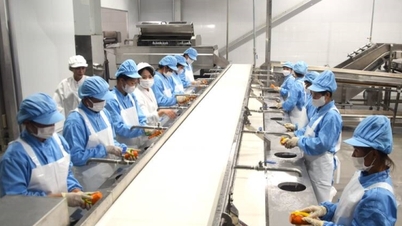
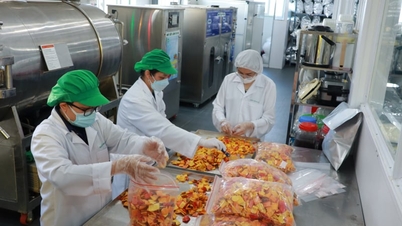
The province has also issued 218 codes for growing areas and 8 codes for packaging facilities that meet export requirements. In addition, nearly 3,000 drying and processing facilities, more than 500 small-scale processing facilities, and 40 cold storage warehouses have come into operation, facilitating extended shelf life and increasing added value.
No longer just raw agricultural products, Son La's fruits are gradually entering the stage of deep processing, standardized packaging, brand building, traceability, and modern distribution systems.
Simultaneously, since the beginning of 2025, the People's Committee of Son La province has established an inter-sectoral steering committee (according to Decision 598) to coordinate the plan for production, processing, consumption, and export of agricultural products. This committee serves as a central point for solving the supply-demand problem, while also adjusting crop structure and production volume to avoid the situation of "bumper harvest, low prices".
Since the beginning of the year, the Steering Committee on the production, processing, consumption, and export of agricultural products in Son La province (Steering Committee 598) has proactively coordinated to overcome difficulties and promote the production, processing, and consumption of agricultural products for farmers, especially during the peak harvest season.
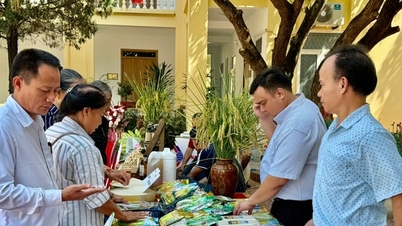
In addition, the organization conducted numerous on-site meetings and implemented trade promotion programs, such as the Mega Live OCOP market fair for selling Phiêng Khoài plums; promoting agricultural products through cultural events; and bringing strawberries and plums onto Vietnam Airlines flights and into Saigon Co.op, BigC, and WinCommerce supermarket chains. They actively participated in the Sơn La Plum and Agricultural Products Week in Hanoi and Ho Chi Minh City; and attended 14 domestic and international trade fairs and exhibitions, expanding their consumer market. Simultaneously, they applied technology, guided businesses in bringing their products to e-commerce platforms, and organized training in livestreaming skills.
On the other hand, the Steering Committee continued to direct localities and cooperatives to coordinate with businesses to maintain production, ensuring the supply of raw materials for vegetables and fruits to large processing plants such as Doveco, Nafoods, and ICFood; and to support legal procedures related to growing areas, packaging facilities, and international cooperation activities.

Thanks to the consensus on solutions, Son La aims to export over 35,000 tons of agricultural products to key markets such as China, Japan, the EU, UAE, and Russia in 2025 alone. Meanwhile, the domestic market will receive over 50,000 tons of safe fruit through modern distribution systems such as WinMart, Saigon Co.op, AEON, and Bach Hoa Xanh…
Son La also organizes Fruit Weeks in Hanoi, Ho Chi Minh City, and several northern provinces. Notably, many specialty products, such as late-season plums, are transported by air, directly from Noi Bai Airport to sales points on the same day, helping to maintain freshness and enhance value.
In addition, the province is stepping up cooperation agreements with domestic and international business associations, participating in OCOP fairs and multilateral trade conferences – steps that demonstrate maturity in market thinking and a systematic promotional strategy.

Beyond just production figures or cultivated area, what makes Son La a "model of the Northwest" is its sustainable development mindset. The province has determined that agricultural development cannot rely solely on increasing acreage; it must enhance the value of each unit of cultivated land through technology, supply chains, and branding.

That is why Son La is stepping up investment promotion efforts in the agricultural sector. To date, Son La has become a destination for many large businesses such as Phuc Sinh Group, Nafoods, Dong Giao Export Food Joint Stock Company (Doveco)... In the 2025 crop season, large processing enterprises such as Doveco, Nafoods, IC Food, Quyet Thanh Moc Chau Cooperative... continued to maintain stable operations, purchasing raw materials from linked production areas and households. Specifically, Doveco Son La alone has purchased over 25,000 tons cumulatively by the end of July, including mangoes, pineapples, passion fruit, sweet corn, soybeans, and other vegetables; IC Food processed over 1,440 tons of various vegetables, such as cabbage, sweet cabbage, mustard greens, carrots...
Recently, Doveco inaugurated and put into operation the first paper canning line for fruits and vegetables in Vietnam using Swedish technology (Tetra Recart), located at the Doveco Son La Fruit and Vegetable Processing Center.
According to Mr. Nguyen Thanh Cong, Vice Chairman of the Son La Provincial People's Committee, in the coming time, the province will continue to consider and provide support mechanisms to attract large projects to invest in processing plants and carry out deep processing of fruit products.
Policy mechanisms supporting deep processing are absolutely essential. Processing plants, such as Doveco Son La, have now inaugurated a production line that packages all products in paper cartons for domestic and export markets. This technology meets the current requirements of international organizations, namely deep processing. Therefore, the province will consider implementing policy mechanisms to support the development of growing areas and processing plants, especially supporting the production chain so that processing plants can operate at full capacity throughout the year. This will prevent situations where processing plants cannot secure growing areas and operate at a reduced capacity, which would be very dangerous for the organization of agricultural production.

In parallel, in the near future, Son La will focus on three breakthroughs: digitizing the management of agricultural growing areas, upgrading logistics infrastructure associated with processing and preservation, and increasing the proportion of deeply processed agricultural products in total export turnover. At the same time, the province also clearly defines the central role of new-style cooperatives – those that "lead" the agricultural value chain, connecting farmers with factories and markets.
By the end of the second quarter of 2025, Son La's total fruit exports reached over 158,000 tons, to 15 countries and territories. This is the result of a strategic investment process and close cooperation between the people, businesses, government, and the scientific community.
Today, Son La is not just the fruit capital of Northwest Vietnam. It is a prime example of a successful transformation from subsistence agriculture to market-oriented agriculture. From the small plums on the mountain slopes to the mango orchards in the highlands of Muong La, Son La has built a map of agricultural products with stature, value, and a promising future.
When agricultural products are not only "edible" but also "sellable," "maintain their value," and "reach the world market," that is a complete victory. This is also what Son La is gradually achieving through the strength of its people, the vision of its leadership, and a strong belief in its indigenous agriculture.
Source: https://congthuong.vn/longform-son-la-hieu-qua-vuot-troi-tu-chuoi-gia-tri-trai-cay-414888.html

![[Photo] First session of the 14th Congress of the Vietnam Trade Union](https://vphoto.vietnam.vn/thumb/1200x675/vietnam/resource/IMAGE/2026/06/03/1780465947883_ndo_br_img-3852-jpg.webp)
![[Photo] General Secretary and President To Lam presides over a meeting with the Central Organizing Committee.](https://vphoto.vietnam.vn/thumb/1200x675/vietnam/resource/IMAGE/2026/06/03/1780482764658_a1-bnd-4741-3342-jpg.webp)
![[Photo] Secretary of the National Assembly Party Committee, Chairman of the National Assembly presides over the meeting of the Standing Committee and Executive Committee of the National Assembly Party Committee.](https://vphoto.vietnam.vn/thumb/1200x675/vietnam/resource/IMAGE/2026/06/03/1780480353201_ndo_br_bnd-2585-jpg.webp)



























![[Video] Sunset at Lap An Lagoon – Where the sun sets over the fishing nets](https://vphoto.vietnam.vn/thumb/1200x675/vietnam/resource/IMAGE/2026/05/31/1780192137701_beach-landscape-sea-water-nature-grass-745871-pxhere-com.jpeg)






















Comment (0)