

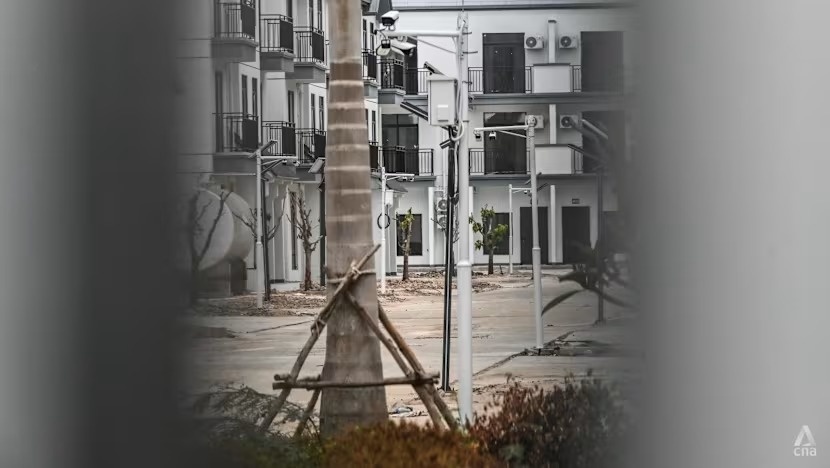
When Abdul left Uganda with the dream of becoming an English teacher in Bangkok, he could never have imagined that his journey to a better life would lead him into a transnational fraud ring in Cambodia.
His family sold their meager land holdings to pursue opportunities in Southeast Asia. However, after his teaching job fell through, Abdul accepted a data entry job advertised online. From there, he was transported through various locations in Thailand, secretly smuggled into Laos overnight, and then crossed the border into Cambodia before being held captive in a fraudulent compound near the Gulf of Thailand.
"They told me straight up that this was a scam company and my job was to scam other people," Abdul recounted.
Abdul's story reflects the reality behind the online fraud industry that is rocking Southeast Asia. Despite Cambodia's largest-ever crackdown, experts believe the criminal networks behind this industry remain deeply entrenched and are rapidly adapting to survive.
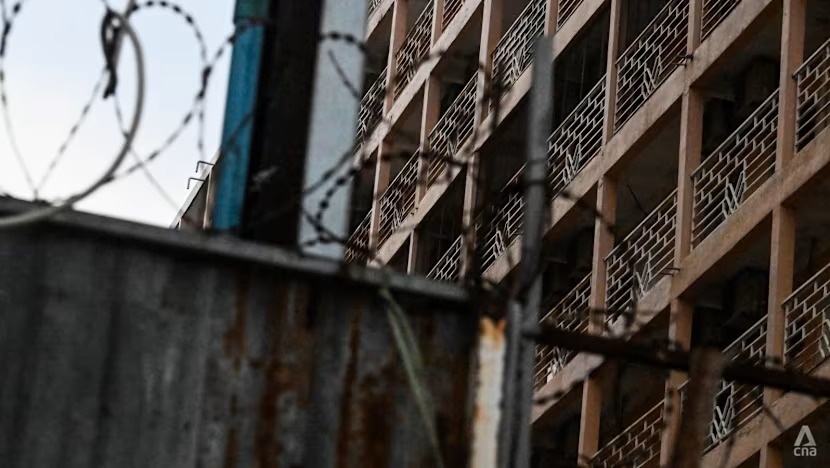 |
Barbed wire fences surrounding an apartment building were removed following a Cambodian crackdown on fraud in Bavet in May. |
The victim was trapped.
After a month working in the complex, Abdul was freed when police raided the facility. However, freedom did not mean safety.
With no money, no valid documents, and no ability to buy a plane ticket home, he became one of thousands of foreigners stranded in Cambodia.
"From that day on, life was like a nightmare. I slept on the streets, had no food, didn't know where to go, and lived in constant fear," Abdul said.
Cases like Abdul's are becoming increasingly common in Phnom Penh. On the streets near the diplomatic district, it's not uncommon to see groups of foreigners waiting for repatriation assistance after leaving fraudulent establishments or online gambling rings.
In early May, dozens of Indonesian citizens pitched tents outside their embassy while waiting for the procedures to be completed so they could return home. Many said they had been lured with promises of attractive jobs but were then forced to participate in fraudulent activities.
According to Cambodian government estimates, around 300,000 foreigners have left the country in recent months as crackdowns have intensified. However, many lack the financial means or the necessary documentation to leave, leaving them stranded.
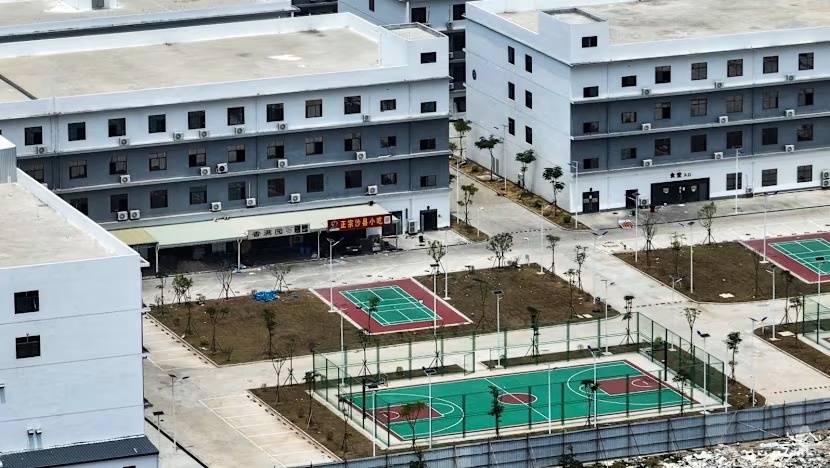 |
Inside a large building complex that was evacuated following a Cambodian crackdown on fraud in Chrey Thum, including a basketball court, restaurants, and surveillance cameras. |
Erin West, executive director of the global anti-fraud organization Operation Shamrock, believes Phnom Penh is facing a silent humanitarian crisis.
"When these workers are rescued, they have no possessions, no identification papers, and no way to return home," she said.
According to numerous international studies, the online fraud industry in Cambodia could generate between $12.5 billion and $19 billion annually. While it is difficult to verify precisely, as much of the money flows through cryptocurrencies, shadow banking systems, and offshore financial structures, the scale of this industry is considered enormous.
Common forms of fraud include romance scams, financial investment scams, cryptocurrency scams, online gambling scams, and impersonation schemes on social media.
Those recruited will receive thorough training on victim outreach scenarios, aliases, and specific target lists. After days or weeks of building trust, they will entice victims to transfer money to fraudulent investment or gambling platforms.
Jason Tower, a senior expert at the Global Initiative to Combat Transnational Organized Crime (GI-TOC), argues that over the past five years, transnational criminal organizations have transformed Southeast Asia into the world's largest hub for online fraud.
"This region is currently the only place in the world where fraud cities exist, some with tens of thousands of people, and industrial complexes dedicated to carrying out online fraud," he stated.
According to the Global Anti-Fraud Alliance (GASA) Global Fraud Report 2025, consumers in 42 countries lost approximately $442 billion due to fraud in the past year.
Criminals are changing tactics.
Faced with increasing pressure from the international community, particularly China, South Korea, and the United States, Cambodia has changed its approach.
Last April, the country passed its first anti-fraud law, criminalizing high-tech fraud as well as the recruitment and support of fraud centers. In the most serious cases, the penalty can be life imprisonment.
Mr. Chhay Sinarith, Senior Minister and Chairman of Cambodia's Committee Against Online Fraud, affirmed that the country will not allow its territory to become a haven for fraudulent organizations.
According to him, since last July, approximately 300 locations have been targeted for raids, including dozens of casinos. Around 1,500 people, including ringleaders and accomplices, are currently being detained.
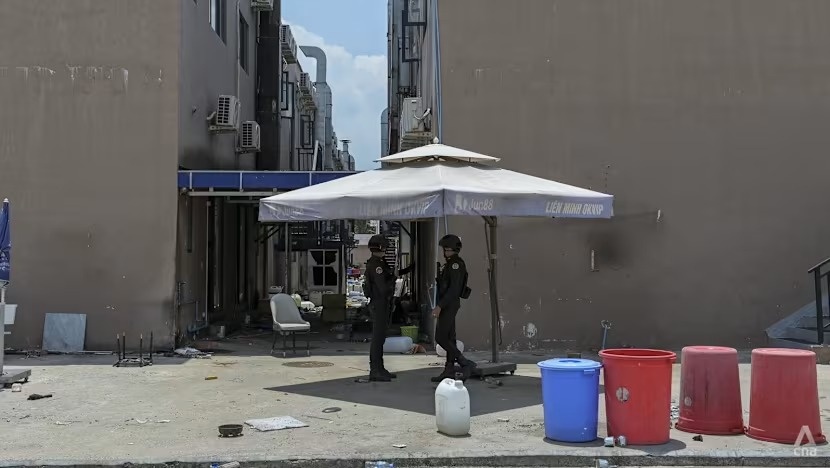 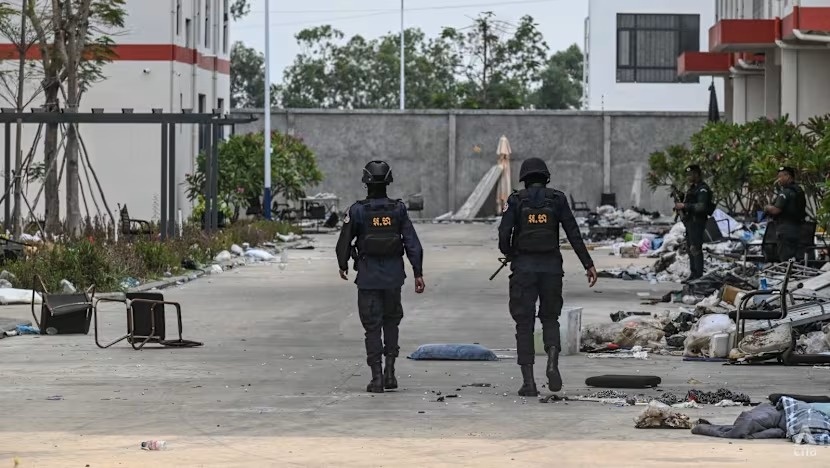 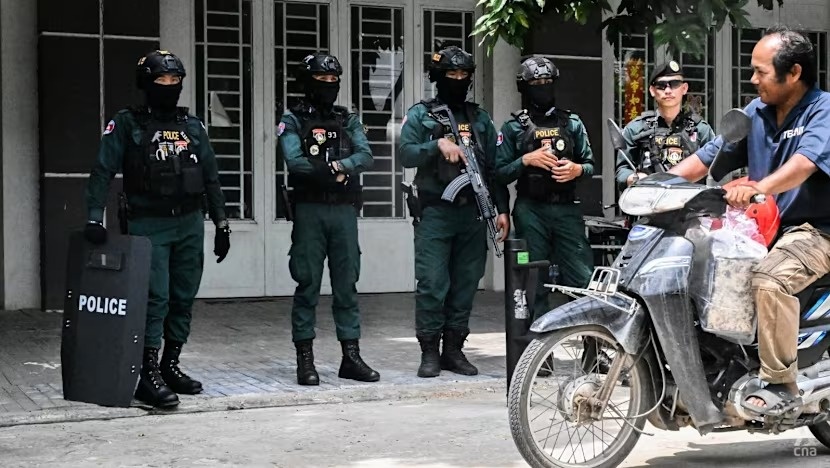 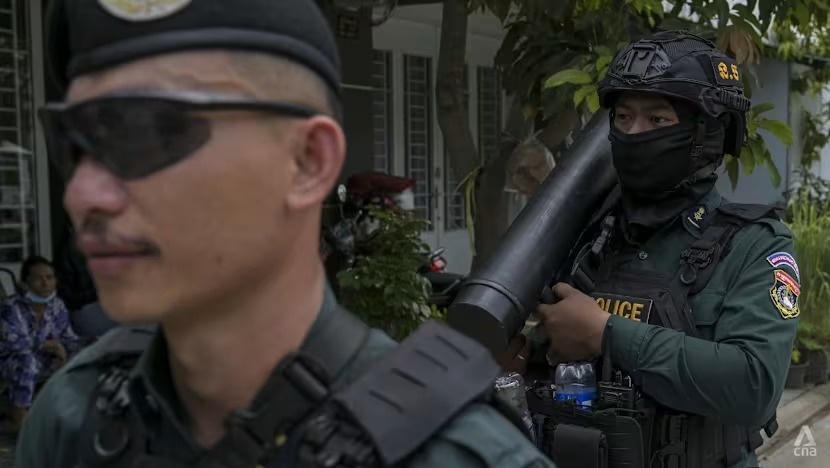 |
Officers conducted anti-fraud operations in several Cambodian cities in May. |
To demonstrate its resolve, the Cambodian authorities allowed CNA to follow cyber police units during a raid on a residential area on the outskirts of Phnom Penh.
Armed forces conducted house-to-house searches, questioning foreigners and looking for signs of illegal activity. Although the raid did not uncover any fraud rings, experts believe that ordinary residential areas like these are becoming new havens for criminal gangs.
While fraud activities were previously concentrated in large, heavily guarded complexes, criminal organizations are now dispersing into smaller groups.
Apartments, townhouses, shops, and offices for rent in Phnom Penh are increasingly being used as business premises.
Along the Tonle Bassac River, groups of South Asian youths from India, Pakistan, and Bangladesh still congregate in areas believed to be linked to the fraud industry.
The signs of banks, 24-hour restaurants, and ordinary grocery stores conceal a thriving underworld.
Ou Virak, chairman of the independent research organization Future Forum, believes that crackdowns in the coming period will be much more difficult.
"They can be more dispersed, operate more discreetly, on a smaller scale, and be more decentralized. Eliminating a large part of the network is one thing, but completely erasing the rest would be much more difficult," he said.
Nathan Southern, CEO of the Eyewitness Project, an investigative organization, believes the biggest challenge now is that no one knows exactly where these activities are taking place.
"If every apartment building, every restaurant, or every shop had several apartments being used as centers for fraud, it would be very difficult to determine the true scale of the problem," he stated.
|
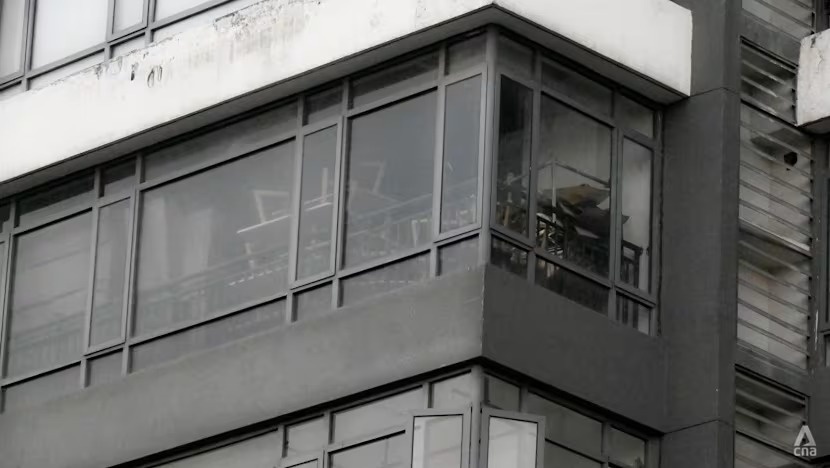
The image shows office furniture stacked on top of each other in an apartment building owned by Huione Group in Phnom Penh, May. |
In recent years, the U.S. has imposed sanctions on a number of Cambodian businessmen and politicians allegedly involved in fraudulent schemes.
One notable case is the Prince Group. In mid-May, Cambodian authorities arrested more than 100 people in a Phnom Penh building linked to the group, accused of participating in online investment scams.
Another company, Huione Group, is also accused by the US of acting as a central hub for money laundering by transnational criminal organizations through payment services and cryptocurrencies.
Source: https://znews.vn/lua-dao-truc-tuyen-o-dong-nam-a-bien-tuong-tinh-vi-post1655949.html

![[Photo] Delegation attending the 14th Congress of the Vietnam Trade Union visits the Mausoleum of President Ho Chi Minh.](https://vphoto.vietnam.vn/thumb/1200x675/vietnam/resource/IMAGE/2026/06/03/1780451842301_ndo_br_img-3824-jpg.webp)





























































































Comment (0)