

DNVN - The 2024 Land Law contains many groundbreaking and important new provisions, with many prominent issues closely related to businesses. These include issues related to land use planning and plans; land acquisition, compensation, support, and resettlement; land allocation, land leasing, and permission for land use conversion…
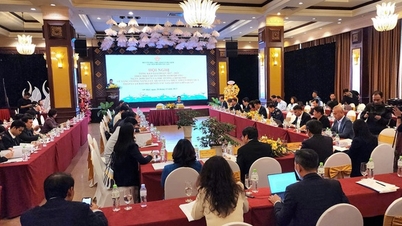
Speaking at the seminar "Land Law 2024: Important Contents Businesses Need to Know" on March 21st, Vice President of the Vietnam Chamber of Commerce and Industry (VCCI) Hoang Quang Phong emphasized that the Land Law is one of the major and important laws with profound impacts on socio -economic life. The law particularly affects the investment and business environment of our country.
The 2024 Land Law contains many groundbreaking and important new provisions, with numerous prominent sections closely related to businesses. These include land use planning and plans; land acquisition, compensation, support, and resettlement; land allocation, land leasing, and permission for land use conversion; land finance and land prices; land registration; and administrative procedure reform in the land sector…
Regarding the 2024 Land Law, at the previous session, the National Assembly passed amendments and supplements to laws on real estate business and housing. These laws also have a significant impact on businesses, as the real estate market is particularly important in every economy.
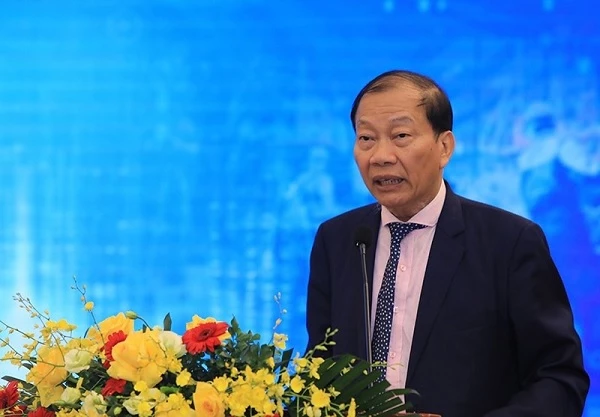
Mr. Hoang Quang Phong emphasized that the 2024 Land Law has a significant impact on businesses.
"Along with the 2024 Land Law, the National Assembly has passed amendments and supplements to laws on real estate and housing business. These are also laws that have a significant impact on businesses, as the real estate market is particularly important in every economy."
"These laws were enacted to resolve the inconsistencies between these two laws and investment law, helping to unlock investment resources and facilitate the implementation of investment projects," Mr. Phong said.
At the conference, Mr. Phan Duc Hieu - Standing Member of the National Assembly's Economic Committee - and policymakers exchanged views and answered questions on important issues regarding major amendments to the 2024 Land Law. Many pressing issues affecting businesses, such as land finance, land clearance, and closely related laws like the Real Estate Business Law, the Housing Law, and the Construction Law, were also discussed at the conference.
Accordingly, experts emphasized issues related to land regulation and valuation based on market principles, as well as their impact on businesses. Specifically, the 2024 Land Law abolished the regulation on the Government 's land price framework issued every five years.
Instead, the Provincial People's Committee will develop and submit to the Provincial People's Council for approval the initial land price list, to be published and applied from January 1, 2026. Annually, the Provincial People's Committee is responsible for submitting to the Provincial People's Council for approval adjustments, amendments, and additions to the land price list, to be published and applied from January 1 of the following year.

A new feature of the 2024 Land Law is that for land acquisition, investors must proactively negotiate with the people.
In cases where land price tables need adjustment during the year, the Provincial People's Committee is responsible for submitting the matter to the Provincial People's Council for decision. The annual land price table will be used to calculate land use fees when the State recognizes land use rights or leases land with annual payments; to calculate land use tax; and to calculate income tax when transferring land use rights…
The specific land price will be applied to calculate compensation when the State reclaims land, or to calculate land rent when the State leases land and collects rent in a lump sum for the entire lease period.
The 2024 Land Law specifically stipulates four methods for land valuation and their applicable cases and conditions, including: the comparative method, the income method, the surplus method, and the adjustment coefficient method. All four methods are used to determine specific land prices and to construct the annual land price table published by the Provincial People's Council (Article 158 of the 2024 Land Law).
Notably, a new feature of the 2024 Land Law is that for land acquisition, investors must proactively negotiate with the people to determine a reasonable compensation amount. Article 79 of the 2024 Land Law clearly stipulates 32 cases where it is absolutely necessary for the State to acquire land to implement socio-economic development projects for national and public benefit, aiming to maximize land resources, improve land use efficiency, and develop socio-economic infrastructure in a modern direction…
The land acquisition regulations are structured into 32 clauses, specifying projects in each sector that are prioritized and encouraged for development, in accordance with relevant specialized laws. This includes land acquisition for the construction of transportation infrastructure, irrigation, water supply, drainage, solid waste treatment, energy, public lighting, and duty-free zones within economic zones.
Land acquisition has become more specific than before, with the State only acquiring land for commercial housing projects and mixed-use residential and commercial projects when investing in urban development. For other projects, the investor must proactively negotiate with the people to determine a reasonable compensation amount.
This also contributes to reducing disputes and lawsuits. In the past, some regulations on land acquisition were not realistic, which also contributed to the stagnation of businesses' projects.
Regarding land acquisition for commercial housing projects, the 2024 Land Law stipulates that it only applies to large-scale projects with integrated infrastructure (including electricity, roads, schools, and medical facilities). This indicates that land acquisition is only considered when absolutely necessary for key projects. Small-scale, localized projects will not be subject to this land acquisition mechanism.
Ha Anh
Source
![[Photo] Prime Minister Pham Minh Chinh presides over a meeting on private sector economic development.](/_next/image?url=https%3A%2F%2Fvphoto.vietnam.vn%2Fthumb%2F1200x675%2Fvietnam%2Fresource%2FIMAGE%2F2025%2F12%2F20%2F1766237501876_thiet-ke-chua-co-ten-40-png.webp&w=3840&q=75)

























































































Comment (0)