

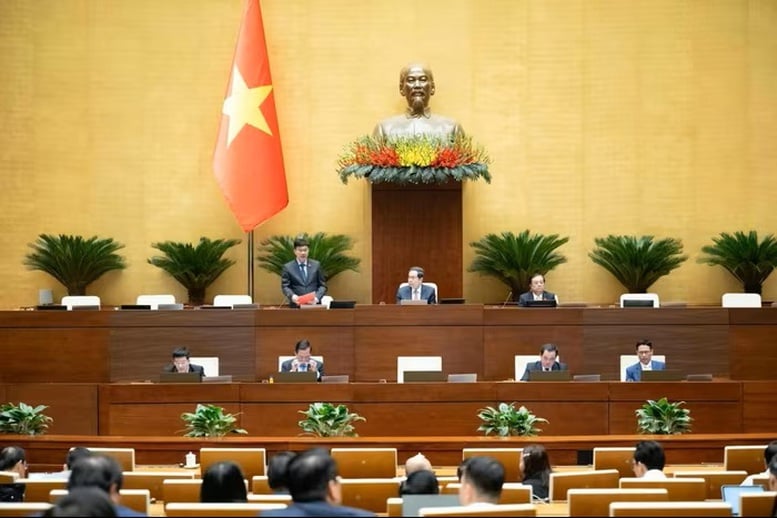
The National Assembly discussed in the hall the draft Resolution of the National Assembly stipulating a number of mechanisms and policies to remove difficulties and obstacles in organizing the implementation of the Land Law.
On the afternoon of December 1, the National Assembly discussed in the hall the Draft Resolution stipulating a number of policy mechanisms to remove difficulties and obstacles in organizing the implementation of the Land Law.
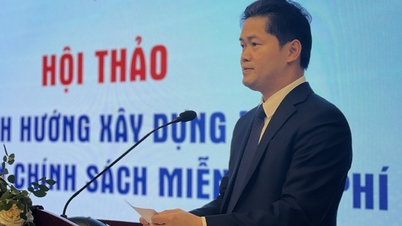
Participating in explaining and clarifying delegates' opinions, Minister of Agriculture and Environment Tran Duc Thang, representing the drafting agency, received and analyzed many major issues of interest to delegates.
Clarifying the need to issue a Resolution
According to Minister Tran Duc Thang, the majority of National Assembly deputies agreed with the necessity of issuing a Resolution to remove institutional and mechanism bottlenecks in the implementation of the 2024 Land Law. Many opinions suggested continuing a comprehensive review to unlock all resources and improve the investment and business environment.
The drafting agency said that in order to prepare for the proposal to amend and supplement the contents of the 2024 Land Law, the Government Party Committee has organized an assessment of 3 years of implementing Resolution 18 of the Central Executive Committee and 1 year of implementing the Land Law. On that basis, many new issues from practice have been synthesized and proposed for adjustment in Resolution 69 of the 13th Central Executive Committee, creating a foundation for the Government to submit to the National Assembly this draft Resolution with 3 major groups of contents.
The content groups include: Institutionalizing Resolution 69 of the Central Committee; handling bottlenecks pointed out in Notice No. 08 of the Central Steering Committee on perfecting institutions and removing difficulties and obstacles arising in the implementation of the 2024 Land Law. Other contents mentioned by delegates but not yet included in this Resolution will continue to be comprehensively studied to be expected to submit to the National Assembly to amend the Land Law in 2027.
Land acquisition, compensation, resettlement: Many conflicting opinions
One of the groups of issues that many delegates focused on discussing was land acquisition, compensation, and resettlement support. Delegates requested clarification on the necessity of adding cases of land acquisition by the State in the draft Resolution.
Minister Tran Duc Thang said that the 2024 Land Law specifically stipulates 31 cases in which the State will reclaim land for national and public interests. However, in the context of the country's goal of socio-economic development at a double-digit rate, it is necessary to add some more cases. The proposed additional cases include: Projects in free trade zones and international financial centers; reclaiming land to create a land fund for BT contract payments and creating a land fund for lease to organizations that are using the land but have been reclaimed; reclaiming the remaining area of the project when the investor has reached an agreement on over 75% of the area and received the consensus of over 75% of the land users.
Regarding the controversial 75% rate, the Minister said that the drafting agency considered this a special case, requiring careful assessment of the economic, social, security, order and people's rights impacts. The draft assigned the Provincial People's Council - the authority representing the local people - to decide whether or not to apply the mechanism to reclaim the remaining area.
The draft also presents two compensation options for the National Assembly to consider. Option 1 applies the compensation mechanism as in the case of land acquisition by the State. Option 2 stipulates that if the average compensation level is lower than the price agreed by the investor, the people will receive compensation for the difference paid by the investor.
Some delegates expressed concerns that allowing land acquisition before approving compensation plans could disrupt people's lives and increase complaints. Explaining this issue, the Minister emphasized that this mechanism only applies to important national projects, urgent public investment projects, or projects that receive the consensus of the majority of people. The Government will strictly regulate the order and procedures to ensure objectivity, fairness and the legitimate rights of the people.
Regarding the content of land allocation and land lease, some opinions suggested clarifying the conditions for land allocation without auction to avoid loss of State assets. The Minister said that the draft has added three cases to apply this mechanism, including: land area for BT contract payment; projects in cases where the State reclaims land to serve national and public interests; and energy and tourism projects associated with trade and services in particularly difficult socio-economic areas. These cases demonstrate the State's responsibility in supporting investment in difficult areas, not to favor investors.
Land prices continued to be the most discussed topic. Delegates were particularly concerned about the accuracy of the land price list and land price adjustment coefficient - an important basis for ensuring people's rights and minimizing complaints.
The Minister said that the mechanism of combining price lists and adjustment coefficients will help to increase transparency, speed up the valuation process, and overcome the current stagnation. The Government will detail the process of developing price lists, adjustment coefficients, as well as the method of calculating deductible infrastructure costs to ensure fairness and practicality. The draft also addresses cases where land valuation is still in progress at the time the Resolution takes effect.
Regarding land registration, certification, plot separation and consolidation, many delegates reflected that the actual separation of agricultural land plots is facing difficulties due to access requirements, causing problems in inheritance and donation division. The Government has accepted and revised in a more flexible direction: allowing the change of purpose of a part of the land plot without having to separate the plot; plot consolidation does not require the same purpose of use. At the same time, it still strictly controls the handling of land originating from violations, absolutely does not legalize encroachment.
At the end of the presentation, Minister Tran Duc Thang affirmed that the Government respectfully accepted the responsible and dedicated opinions of National Assembly deputies, and will coordinate with the reviewing agency to fully absorb and perfect the draft Resolution and documents guiding its implementation after being approved by the National Assembly.
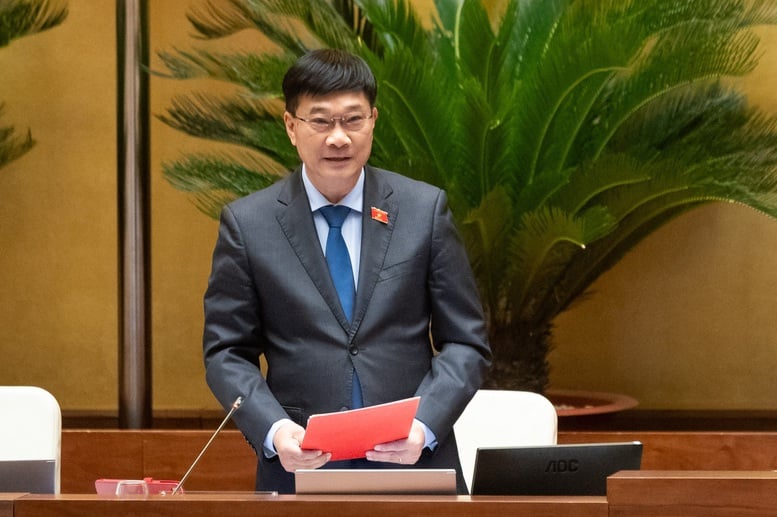
Vice Chairman of the National Assembly Vu Hong Thanh concluded the discussion session.
Fully absorb and complete the draft Resolution before submitting it to the National Assembly.
Concluding the discussion session, Vice Chairman of the National Assembly Vu Hong Thanh said that 16 delegates spoke during the session, and no delegates debated. Four delegates had registered but were not able to speak due to limited time; he requested that delegates send their comments in writing to the Secretary General of the National Assembly for synthesis, serving the work of receiving and completing the draft Resolution.
The Vice Chairman of the National Assembly highly appreciated the frankness and responsibility of the delegates. Most opinions agreed on the necessity of issuing a Resolution to improve the effectiveness and efficiency of land management and use, remove obstacles, and create a driving force for national development in accordance with new management requirements. However, Mr. Vu Hong Thanh also emphasized that in addition to the agreement, there were still many opinions suggesting continued careful review to ensure that the Resolution does not overlap or contradict the current legal system. A number of related laws and resolutions are also being submitted to the National Assembly at the 10th session, so it is necessary to ensure consistency when completing the draft.
In the group of contents on land recovery, compensation, support, and resettlement, delegates proposed to clarify the requirements to ensure compliance with the provisions of the Constitution on civil rights and property rights; to study policies to adequately support people whose land is recovered to limit complaints and avoid the emergence of new mechanisms lacking legal basis. Some opinions suggested having a specific mechanism to handle the remaining area when an agreement has been reached on over 75% of the area and 75% of the number of land users; many delegates expressed support for option 2 but suggested clarifying the basis for determining the 75% rate, even considering raising the rate or only applying it to important national projects.
The Vice Chairman of the National Assembly said that the delegates also paid great attention to the order and procedures for compensation and land recovery; the time for posting and publicizing the plan; organizing dialogues; as well as regulations related to land allocation, land lease, land use purpose conversion and land allocation progress. The content of land prices, valuation, price lists and land price adjustment coefficients continued to be hot spots, requiring transparency, consistency and avoiding loopholes in application. Some delegates proposed to supplement the principles and time for determining land prices for BT projects to avoid disputes arising due to changes in legal regulations.
Regarding land use regimes, land registration, land division and land consolidation, many opinions suggested a comprehensive review because these are complex issues with wide impacts on society, especially on agricultural land. In addition, support policies for vulnerable groups, poor households, ethnic minorities and meritorious people also need to be further improved.
"The National Assembly Standing Committee will fully synthesize the opinions of delegates in groups and in the hall. Delegates who have not yet spoken will also send documents to the Government for study. The Government is requested to direct the drafting agency to closely coordinate with the reviewing agency, fully absorb and thoroughly explain to complete the draft Resolution before submitting it to the National Assembly, ensuring quality and compliance with regulations," Vice Chairman of the National Assembly Vu Hong Thanh emphasized.
Hai Lien
Source: https://baochinhphu.vn/nhieu-de-xuat-thao-go-diem-nghen-trong-to-chuc-thi-hanh-luat-dat-dai-102251201193418478.htm
![[Photo] Prime Minister Pham Minh Chinh receives President of Cuba's Latin American News Agency](/_next/image?url=https%3A%2F%2Fvphoto.vietnam.vn%2Fthumb%2F1200x675%2Fvietnam%2Fresource%2FIMAGE%2F2025%2F12%2F01%2F1764569497815_dsc-2890-jpg.webp&w=3840&q=75)










































































Comment (0)