

Climbing mountains, chiseling rocks, and... eating dust.
In the middle of June in Ha Tan commune, Ha Trung district ( Thanh Hoa province), the scorching sun blankets this land, which boasts the highest quality and largest reserves of stone in Thanh Hoa. At the stone quarries, the heat seems even more intense and harsh. The stifling heat, approaching 40 degrees Celsius, combined with the characteristic harsh sounds of drilling into the mountainside, rock crushing, and the rumbling of excavators and grinding machines, left us all feeling weary and grimacing.
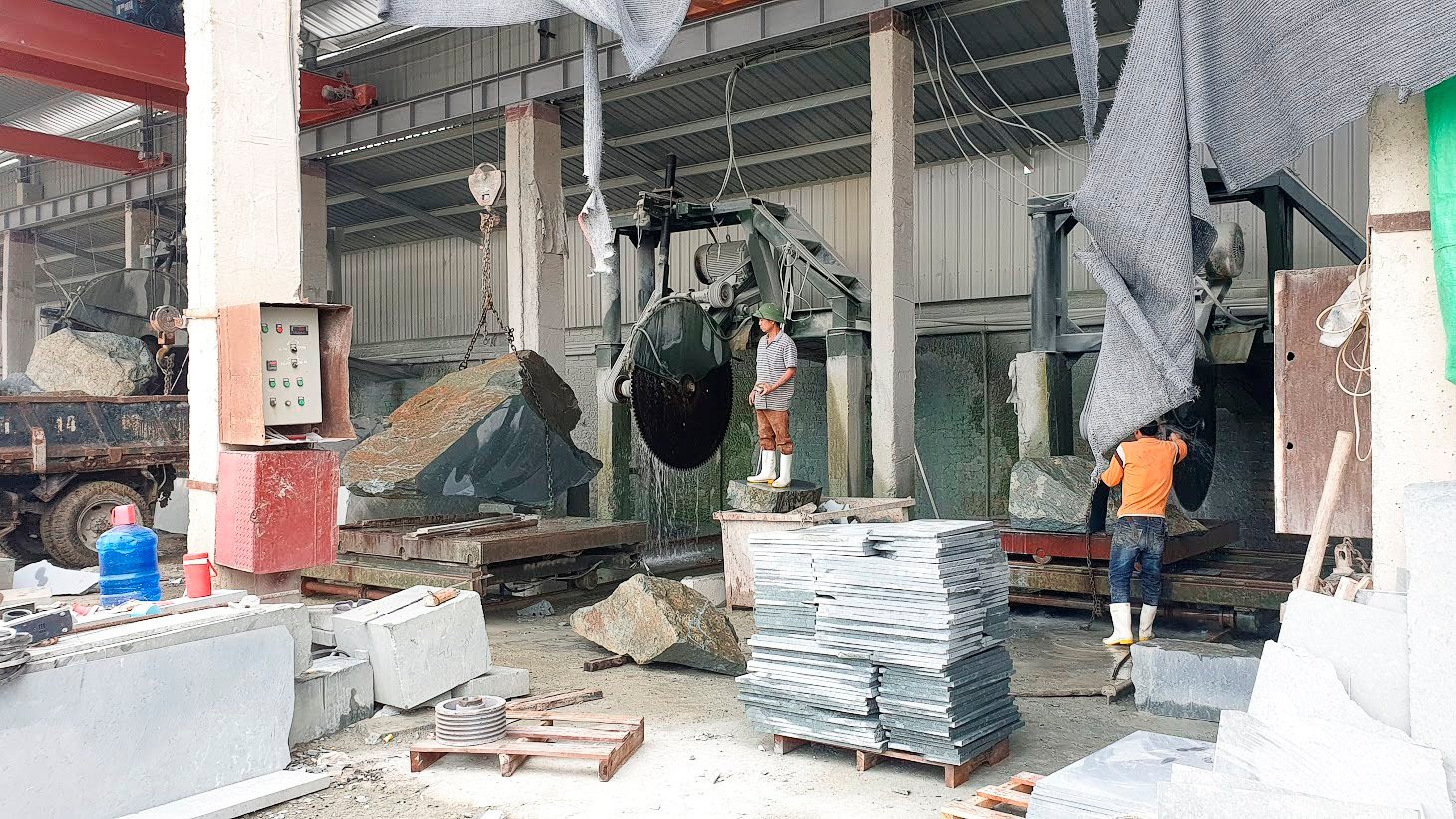
Yet, behind the heat and noise, groups of workers quietly go about their work. Mr. Pham Van Duong, an experienced mine manager, led us on a field trip to witness the difficulties faced by the workers at the stone quarry in Ha Tan commune.
Mr. Pham Van Duong was born and raised in Ha Tan. Originally a blasting worker, he transitioned into the "stone quarrying" profession in his twenties, sacrificing his youth to work on the mountains, sweating over every cubic meter of rock. Over 20 years in the profession, he understands the hardships of the workers, witnessing numerous accidents and risks, including fatalities, life-threatening situations, and permanent disabilities. However, he has also seen others who have achieved financial stability and escaped poverty and uncertainty thanks to this work.
“Among the various groups of workers, including transporters, excavators, and crushers, rock drillers face the most hardship and danger. That's why rock drilling is often highly paid to attract workers, but not everyone can stick with this profession because of its harshness and extreme danger. Depending on the company, the average daily wage for a rock driller is around 600,000-1,000,000 VND, while other workers only earn 300,000-400,000 VND,” Mr. Duong said.
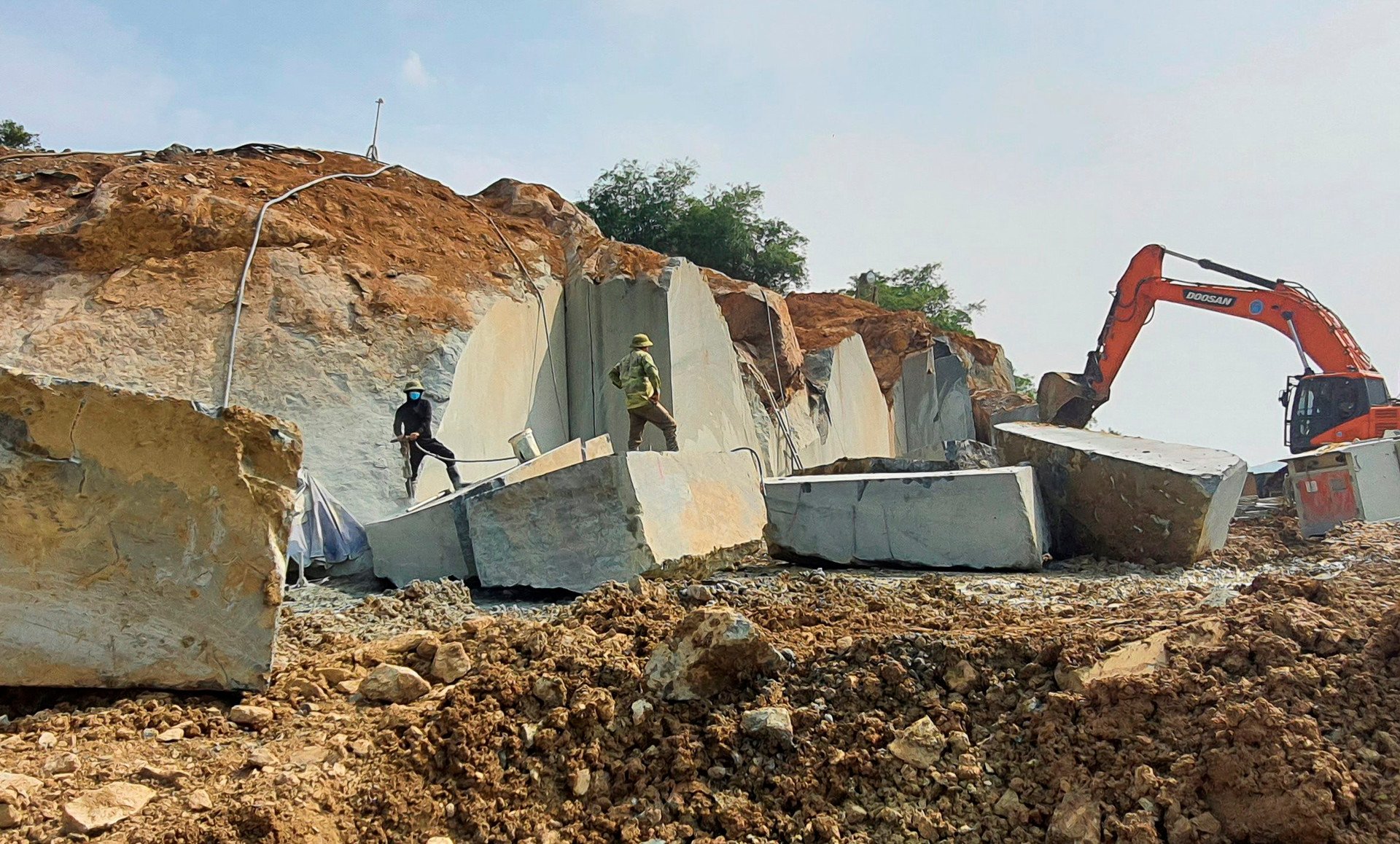
As he spoke, he showed us his dark, sunburnt arms, his rough hands covered with old scars, a testament to the hardships and harshness of the job of climbing cliffs, chiseling rocks, and enduring the dust. Mr. Duong recounted: "In the early 2000s, the government didn't have strict regulations on mineral resources, and stone quarrying in Ha Tan was generally spontaneous, with everyone doing as they pleased. Whoever had machinery, tools, and workers would go to the mountains, climb cliffs, and chisel, transporting whatever blocks of stone they obtained back for processing. The machinery was small, so profits were minimal. The workers were mostly unskilled, their only protective gear being a simple helmet; they were shirtless and barefoot, making the situation extremely dangerous. Therefore, workplace accidents were frequent at that time, and many who were the main breadwinners of their families suffered permanent disabilities and lost their ability to work, making their already impoverished lives even more difficult."
Mineral Resources Law – the key to escaping poverty for workers.
Ha Tan commune has limestone resources, concentrated in the Quan Tuong mountain and Da Chan hill areas within the Quan Tuong and Nam Thon villages, covering an area of 79.5 hectares. Currently, there are 15 mines in this area, including 9 mines extracting limestone for common construction materials and 6 mines extracting spilit (basalt) blocks for producing paving stones, with 13 licensed enterprises.
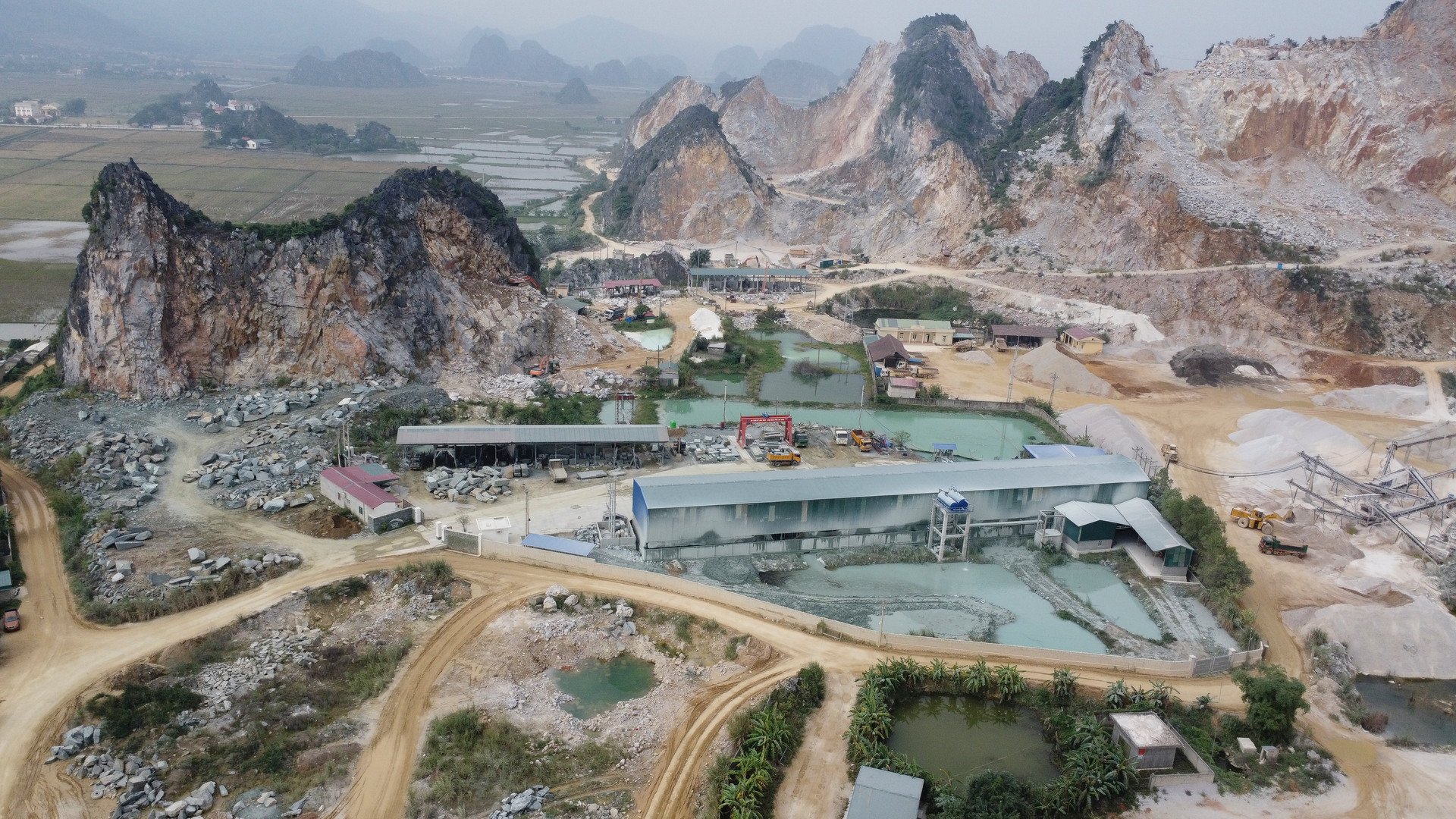
Mr. Truong Van Huan, Chairman of the People's Committee of Ha Tan commune, said: "Since the Mineral Law was applied and put into practice, the situation of spontaneous stone mining in Ha Tan commune has ceased. Before being licensed by the Thanh Hoa Provincial People's Committee, stone mining enterprises have been assessed by the relevant departments and local authorities and strictly comply with the regulations of the Mineral Law. Adhering closely to the Mineral Law helps businesses achieve high efficiency in production and processing, protect the environment, develop a sustainable economy, avoid security and order issues, and at the same time provide workers with more stable incomes, reduce the poverty rate, and improve social welfare in the locality."
In fact, the 2010 Mineral Resources Law, which came into effect in July 2011, clearly demonstrates groundbreaking new perspectives that fundamentally change the protection, management, exploitation, and use of national mineral resources in Ha Tan commune in particular. The management of mineral activities in the locality has achieved significant results, overcoming the situation of fragmented and widespread licensing; limiting environmental pollution from mineral activities; and increasing contributions to the state budget through the calculation of mineral exploitation rights fees, auctioning of mineral exploitation rights, and the use of geological and mineral data and information.
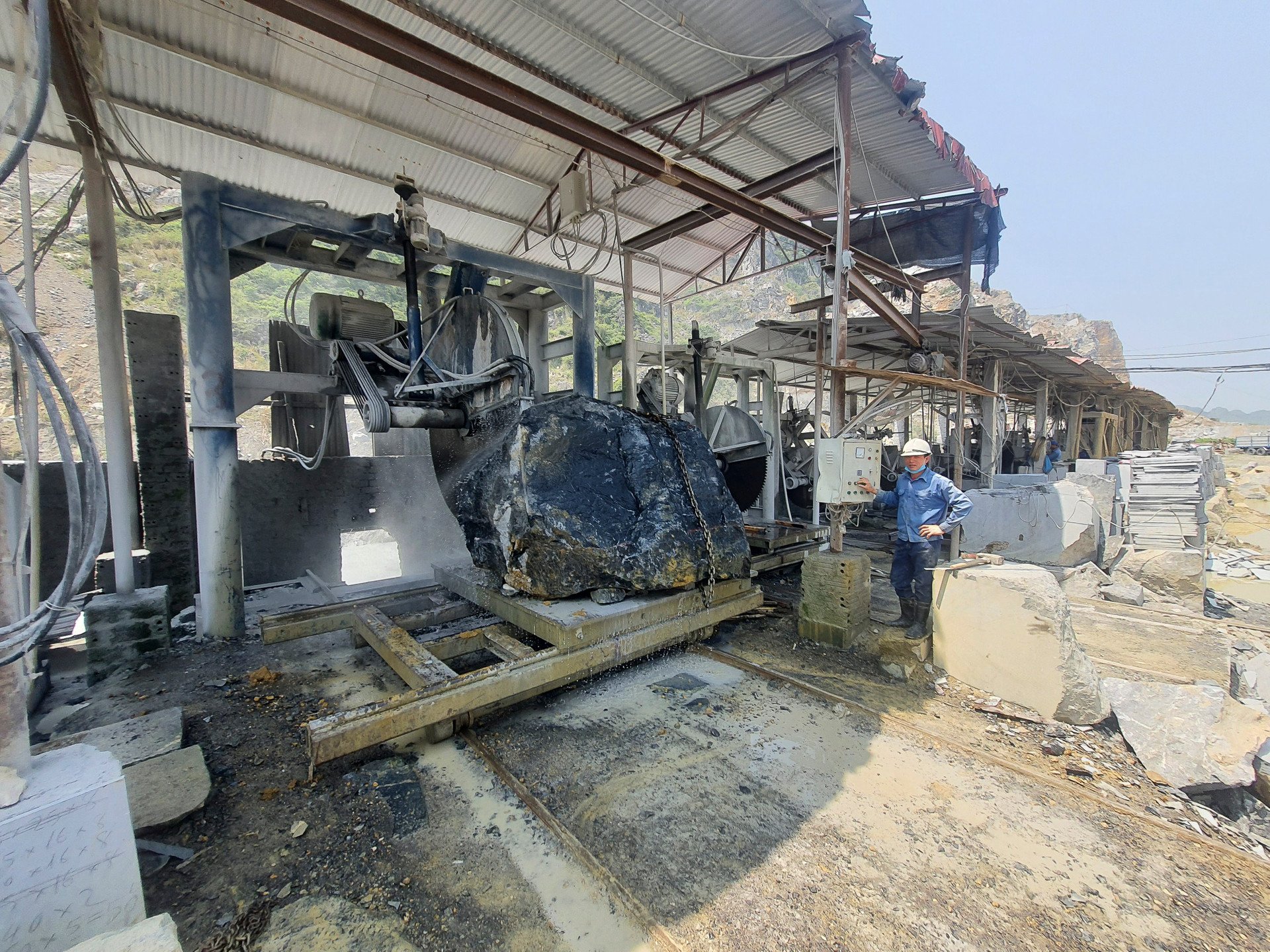
Since then, many businesses with strong financial capacity, technology, and dedication, and with well-planned investments, have been licensed by the Thanh Hoa Provincial People's Committee to exploit mineral resources in Ha Tan commune, bringing many positive results, especially contributing to improving the economic quality of life for the local people.
Mr. Pham Van Duong, the manager of a stone quarry, said: "Since the Mineral Resources Law was implemented by the state, workers at the quarries have been able to work with peace of mind. Blasting operations are strictly managed by the state, and most quarries have replaced blasting with modern wire-cutting technology, operating according to design and regulations, building roads up the mountain, significantly reducing the likelihood of workplace accidents. In addition, workers receive training on occupational safety regulations, are provided with standard personal protective equipment, and enjoy benefits such as bonuses, overtime pay, days off, sick leave, compensation, social insurance, and health insurance. All workers are local laborers, guaranteed a fixed salary averaging 7-8 million VND per month."
It can be seen that the application of the Mineral Resources Law in practice not only helps the state management of mineral resources achieve clear results, overcoming the situation of fragmented and widespread licensing at the local level, limiting environmental pollution, but also helps increase state budget revenue, increase income, significantly reduce labor accidents due to stone mining, and ensure economic stability for thousands of local workers.
Source

![[Image] "Journey of Hope" promotes the organ and tissue donation movement in Vietnam.](https://vphoto.vietnam.vn/thumb/1200x675/vietnam/resource/IMAGE/2026/05/20/1779294400833_1-8910-jpg.webp)

![[Photo] General Secretary and President To Lam works with the Party Committee of the Ministry of Health on the work of Vietnamese traditional medicine.](https://vphoto.vietnam.vn/thumb/1200x675/vietnam/resource/IMAGE/2026/05/20/1779294323718_a1-bnd-2978-3319-jpg.webp)













































































Comment (0)