

 |
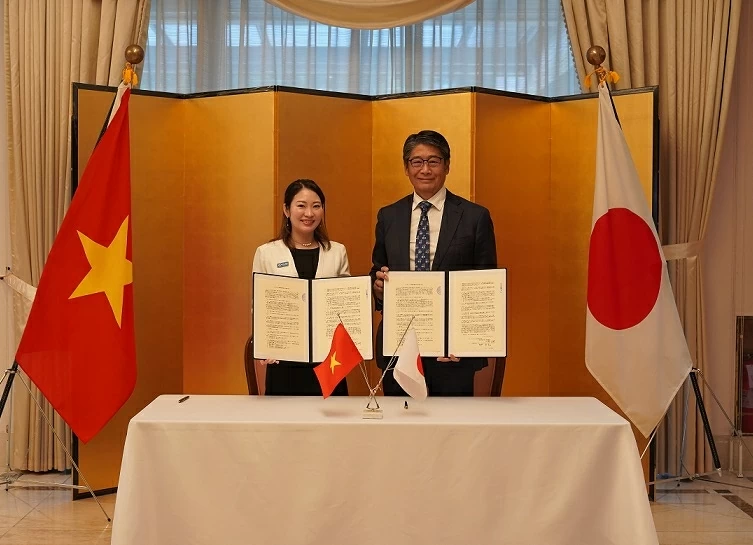
| Japanese Ambassador to Vietnam Ito Naoki and Ms. Le Quynh Lan, Country Director of Plan International Vietnam, at the signing ceremony. (Source: Organizing Committee) |
Spanning three years (2025–2028), the project will be implemented in six communes of Tuyen Quang province and three communes of Lai Chau province – mountainous areas where many ethnic minority children still face familiar obstacles on their way to school: long distances, limited living conditions, and a lack of safe spaces for learning and development.
In its first year of implementation, the project supported 13 primary schools and 13 secondary schools with a total budget of approximately 15.7 billion VND.
Thanks to this support, many changes have gradually taken place in schools: new boarding facilities have been built, many sanitation facilities have been improved, and school counseling rooms and health corners have begun to be established and improved – seemingly small factors but which directly affect whether students can feel safe and secure coming to school every day.
Speaking at the ceremony, Japanese Ambassador to Vietnam Ito Naoki expressed his hope that the achievements of the first year would continue to be built upon in the second year, so that the project's activities could make a more practical contribution to the socio -economic development of the localities participating in the program.
Speaking at the event, Ms. Le Quynh Lan, Country Director of Plan International Vietnam, said that even small changes in schools can make a big difference for children in mountainous areas.
"When children have a suitable learning environment and feel heard, they will gain more confidence to continue their education and pursue their chosen path," she emphasized, adding that promoting gender equality needs to go hand in hand with improving the quality of education and community participation.
An aid package worth approximately 15 billion VND was signed for the second year within the framework of the Japanese Government's grant program.
This funding will continue to be used to improve learning conditions for students through the construction and upgrading of boarding facilities, school counseling rooms, school health corners, and to create a safer and more suitable learning environment for both male and female students.
Beyond just improving facilities, the project also focuses on changing how children learn and are heard in schools.
Through capacity-building activities for teachers, school health staff, and administrators, the project contributes to making content on gender equality, sex education, and reproductive health more accessible and relevant to students.
At the same time, parents and the community are also involved in communication activities to jointly create a safe and supportive environment for children.
With this approach, changes in schools extend beyond physical infrastructure to encompass how children learn, are protected, and are empowered.
Particularly for ethnic minority girls, having access to knowledge, self-confidence, and a safe learning environment is crucial for them to continue their education and make choices for their future.
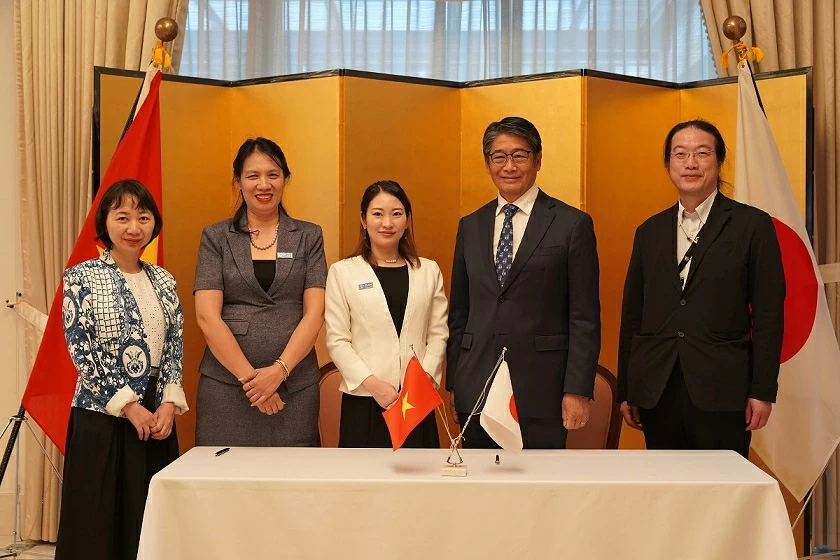 |
| Through collaboration between all parties, the project is expected to continue to bring about sustainable changes, helping children learn in a safe and respectful environment. (Source: Organizing Committee) |
Continuing the project into its second year demonstrates the long-term commitment of the Japanese Government, along with Plan International and its partners in Vietnam, to helping bridge the educational gap between regions, especially in mountainous and remote areas – where children, particularly ethnic minority children, still face many barriers to accessing education.
Through collaboration among all parties, the project is expected to continue to bring about sustainable changes, helping children learn in a safe and respectful environment, while also giving them more confidence and opportunities to pursue their own paths.
Source: https://baoquocte.vn/mo-rong-co-hoi-hoc-tap-cho-tre-em-vung-cao-385569.html

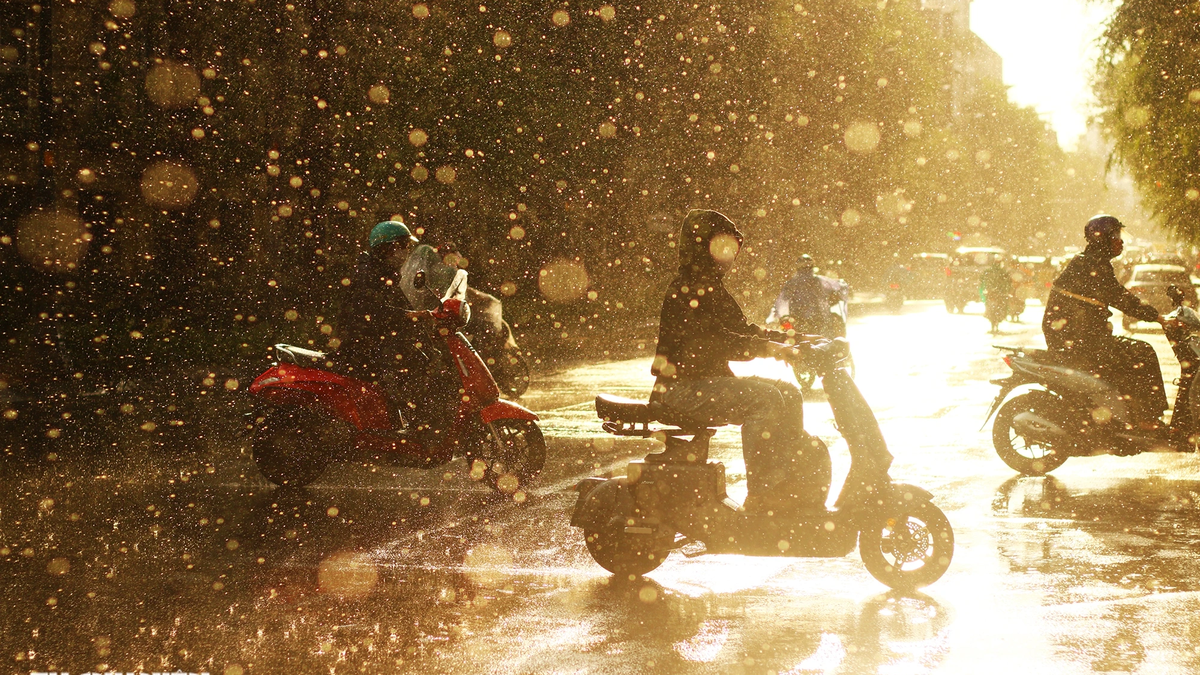
![[Image] Hanoi's urban life under the challenge of a "scorching hot" environment](https://vphoto.vietnam.vn/thumb/1200x675/vietnam/resource/IMAGE/2026/05/25/1779706979265_nang-nong-t5-2026-minh-duy-7-4636-jpg.webp)


![[Image] Close-up view of the interchange connecting the two expressways and Long Thanh Airport.](https://vphoto.vietnam.vn/thumb/1200x675/vietnam/resource/IMAGE/2026/05/25/1779703378210_ndo_br_z7863716673926-224453a31600126cce10622af6290afd-4549-jpg.webp)









































































Comment (0)