

 |
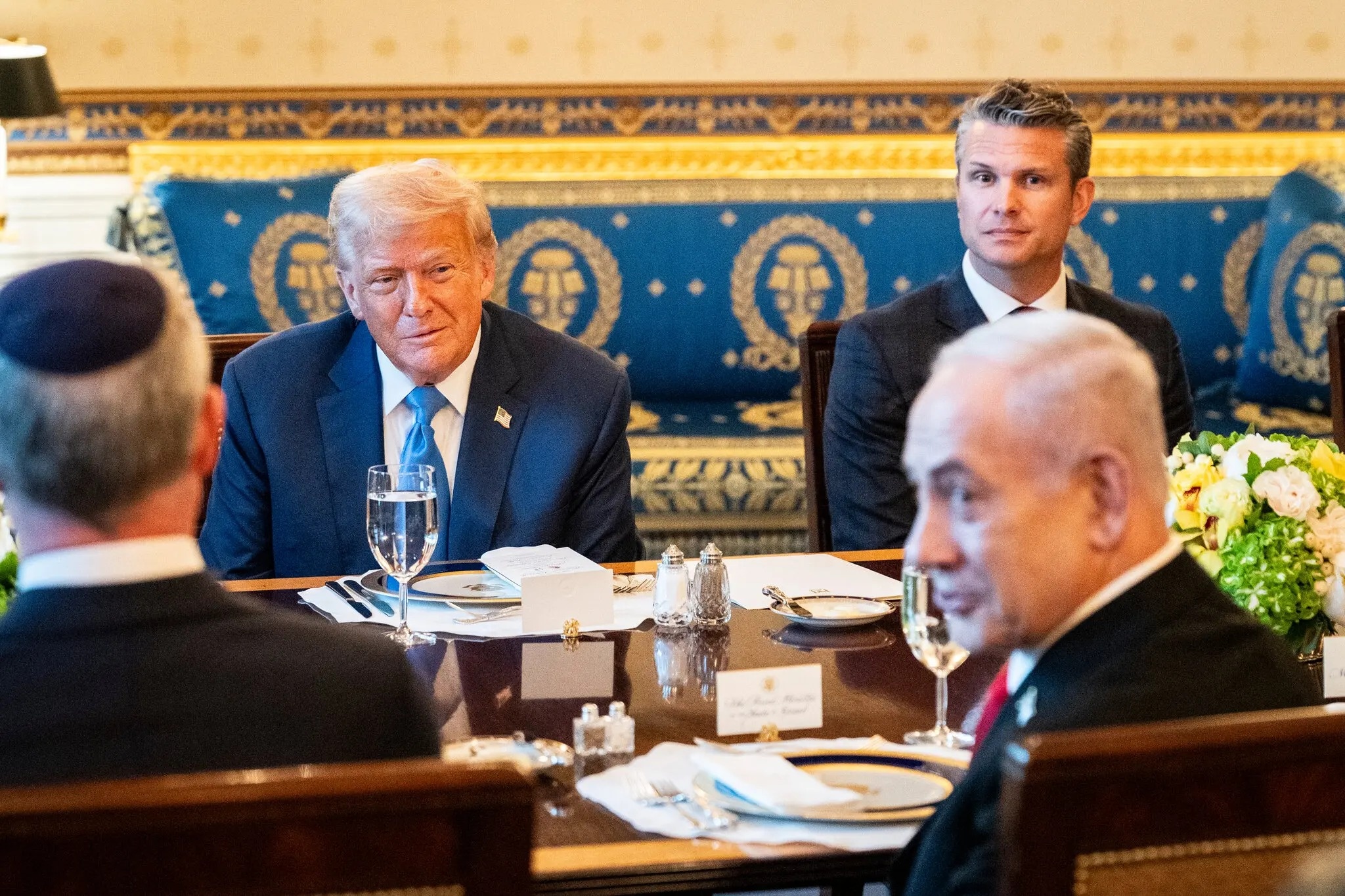
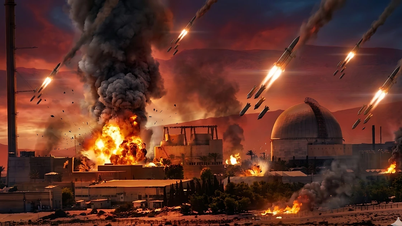
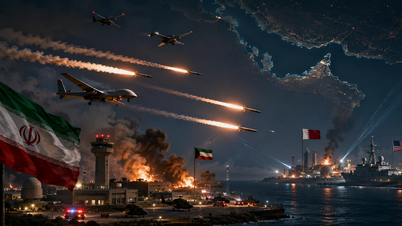
Having fought side-by-side in the war against Iran, the relationship between US President Donald Trump and Israeli Prime Minister Benjamin Netanyahu is showing increasingly clear cracks, after Trump reportedly called the Israeli leader "crazy."
According to Axios and ABC News , Trump had an angry phone call with Netanyahu, even using harsh language to protest plans to threaten an attack on the Israeli capital, Beirut. The White House occupant feared this move could derail negotiation efforts with Tehran.
These developments show that the relationship between the two right-wing allies is more fragile than ever. Both face significant political risks from the Middle East conflict, while also under domestic pressure for allegedly being too dependent on each other.
However, according to experts, despite leaked information about verbal clashes or personal tensions between the US leader and Netanyahu, the most important thing remains practical policy, and in this respect, there has been little change.
Ryan Costello, policy director at the National Iranian American Action Council (NIAC Action), said that observers have begun to “mock” stories of U.S. presidents expressing anger at Netanyahu behind closed doors.
"What really matters is what actually happens," Costello told Al Jazeera.
All presidents, the same script.
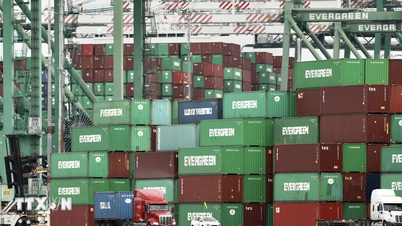
For Trump, the current priority is finding a way out of the trade war that is negatively impacting the American economy , with the midterm elections less than six months away. The outcome of these elections will determine whether the Republican Party retains control of Congress.
Meanwhile, the US president is currently facing a growing wave of criticism from a segment of the MAGA movement, who argue that he is acting in Israel's interests in the conflict with Iran.
On the Israeli side, Prime Minister Netanyahu is also facing difficulties. The veteran leader is facing the risk of his ruling right-wing coalition collapsing and is being criticized for yielding to pressure from Washington on security issues, especially after canceling plans to attack Beirut.
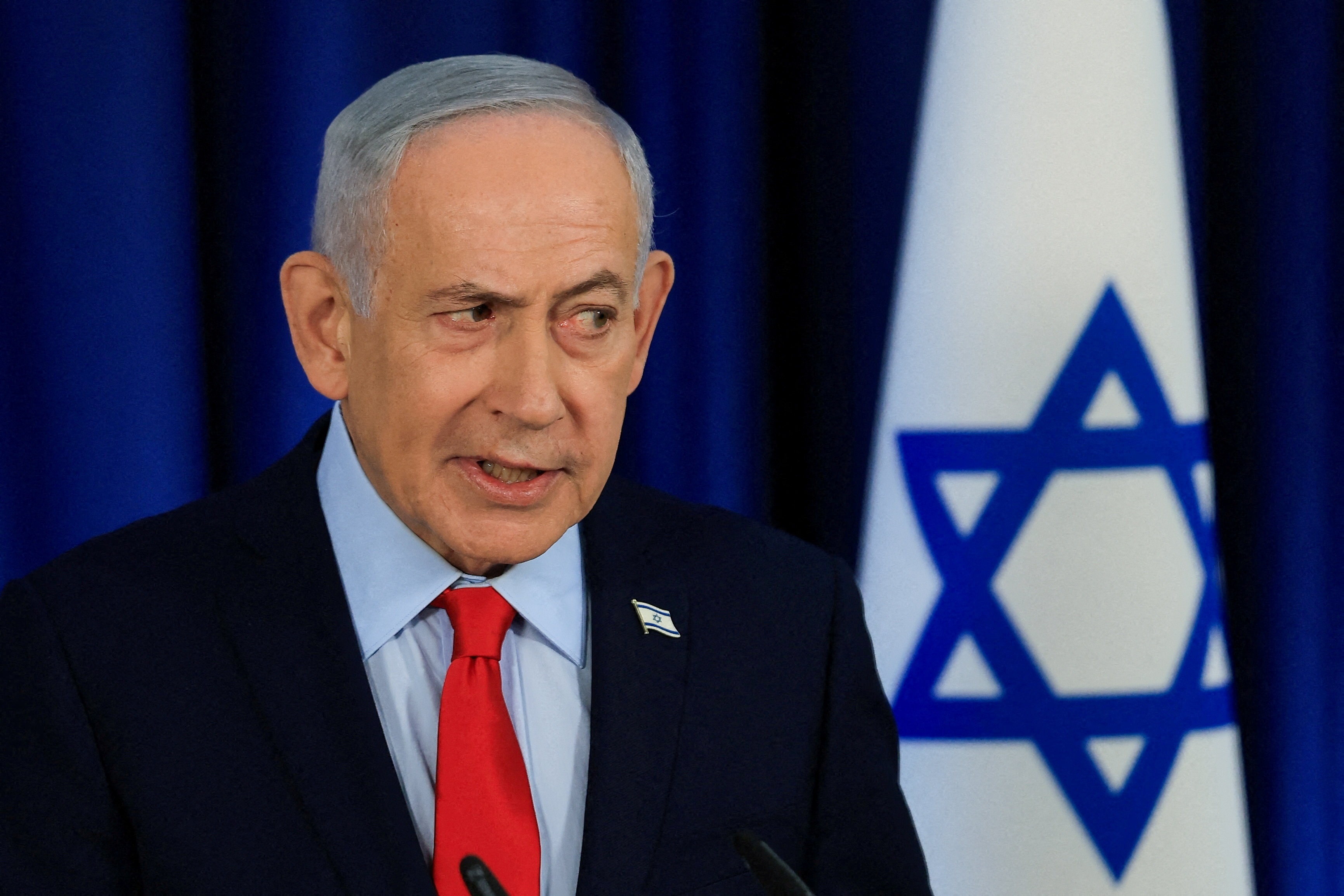 |
Netanyahu is facing numerous challenges, both in his domestic political standing and in his alliance with Trump. Photo: Reuters. |
According to Axios , during a phone call on June 1st, Trump became enraged and yelled at Netanyahu: “You’re crazy. If it weren’t for me, you’d be in jail right now. I’m saving you. Everyone hates you right now. Everyone hates Israel because of this.”
However, Israeli media outlets have refuted reports of the aforementioned exchange.
When asked by AFP to confirm the information from Axios and comment on the state of relations with Netanyahu, a White House official cited Trump's social media posts from June 1st.
In those posts, Trump thanked Prime Minister Netanyahu for agreeing to withdraw troops from the Beirut area and “stop firing” at Hezbollah forces.
According to some sources, peace talks with Iran have stalled due to Israeli attacks on Lebanon.
However, many experts believe this is not the first time relations between Trump and Netanyahu have been strained, and probably not the last.
Dan Shapiro, former US ambassador to Israel and now a senior fellow at the Atlantic Council, commented: "Personal tensions between Netanyahu and US presidents are nothing new."
"In fact, he almost always reached a dead end and became frustrated with every American president he worked with," Shapiro added.
For the past three decades, Netanyahu has consistently sought to persuade successive U.S. presidents to take a tough stance against Iran over its nuclear program. And in Trump, the Israeli leader finally found a partner with a shared strategic vision.
Since Trump's return to the White House, the two leaders have met numerous times. According to the New York Times , Netanyahu played a crucial role in persuading Trump to make the decision to join the military campaign in February, at a time when the US president was still considering the option of war.
Political burden
However, as the conflict dragged on, both the war and the alliance with Israel became a major political burden for Trump.
Many former allies of the US president, such as talk show host Tucker Carlson and former congresswoman Marjorie Taylor Greene, have publicly criticized him, arguing that Israel is dragging the US into another war in the Middle East.
According to them, this goes against the spirit of "America First," which is the foundation of the MAGA movement.
"Supporting Israel seems to mean Americans will have to shed blood," former Fox News host Megyn Kelly observed.
The Republican Party has long been seen as the strongest supporter of Israel in the United States. However, internal rifts on this issue are becoming increasingly apparent. A Pew Research poll released in April showed that 57% of Republicans aged 18 to 49 have an unfavorable view of Israel, up from 50% the previous year.
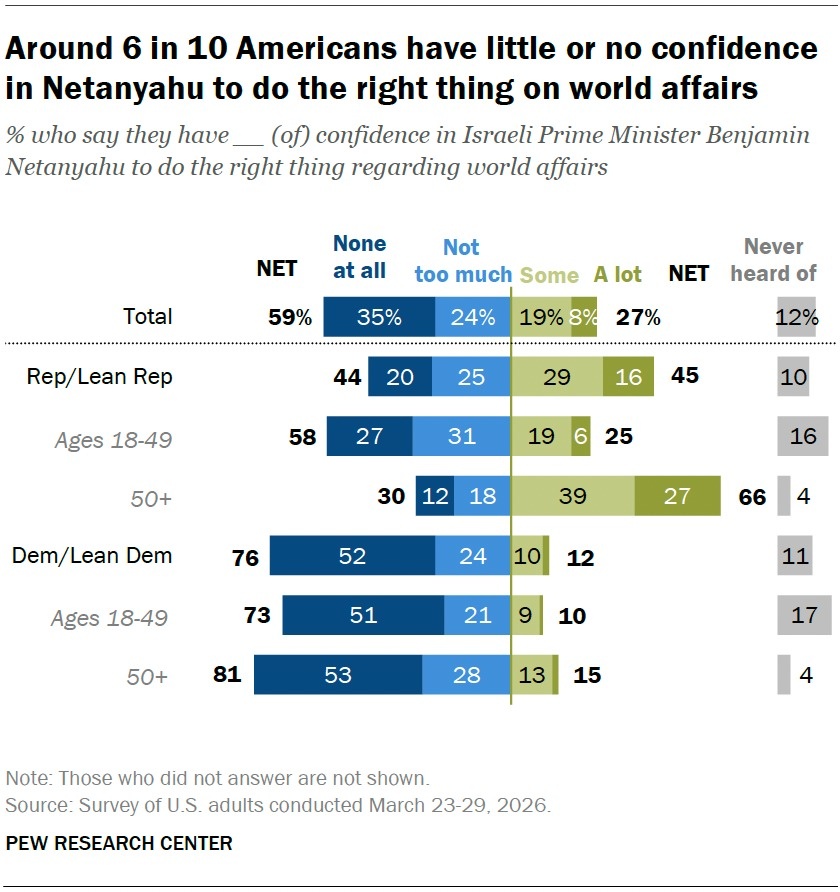 |
Republican members have mixed opinions about Netanyahu. Photo: Pew Research. |
The impact of the war with Iran on prices and the cost of living is also seen as one of the factors that could affect the Republican Party's chances in the midterm elections in November. If the Democrats regain control of Congress, Trump could face the risk of impeachment for a third time.
Meanwhile, with conflict fronts open in Lebanon, Iran, and Gaza, and a host of domestic corruption allegations, Netanyahu's potential price to pay could be even greater.
"Nemanthief is doing everything he can to stay in power," said Mairav Zonszein of the International Crisis Group (ICG).
"Trump is looking for a way out, and he clearly has a lot of leverage over Netanyahu. The Israeli prime minister cannot simply ignore Trump's wishes," she said.
According to Zonszein, the core difference between the two leaders is that Trump wants to move forward to end the conflict, while Netanyahu is still inclined toward continuing the war.
"To quell anger"?
In fact, Trump had previously frequently praised Prime Minister Netanyahu, repeatedly asserting that Israel could hardly survive without his leadership. During their meeting in Florida in December, the US President even called the Israeli leader a "hero."
"We have always stood by you and will continue to do so," Trump told Netanyahu.
It is noteworthy that just two weeks earlier, Axios had reported that the White House had "reprimanded" Netanyahu in connection with violations of the ceasefire agreement in Gaza.
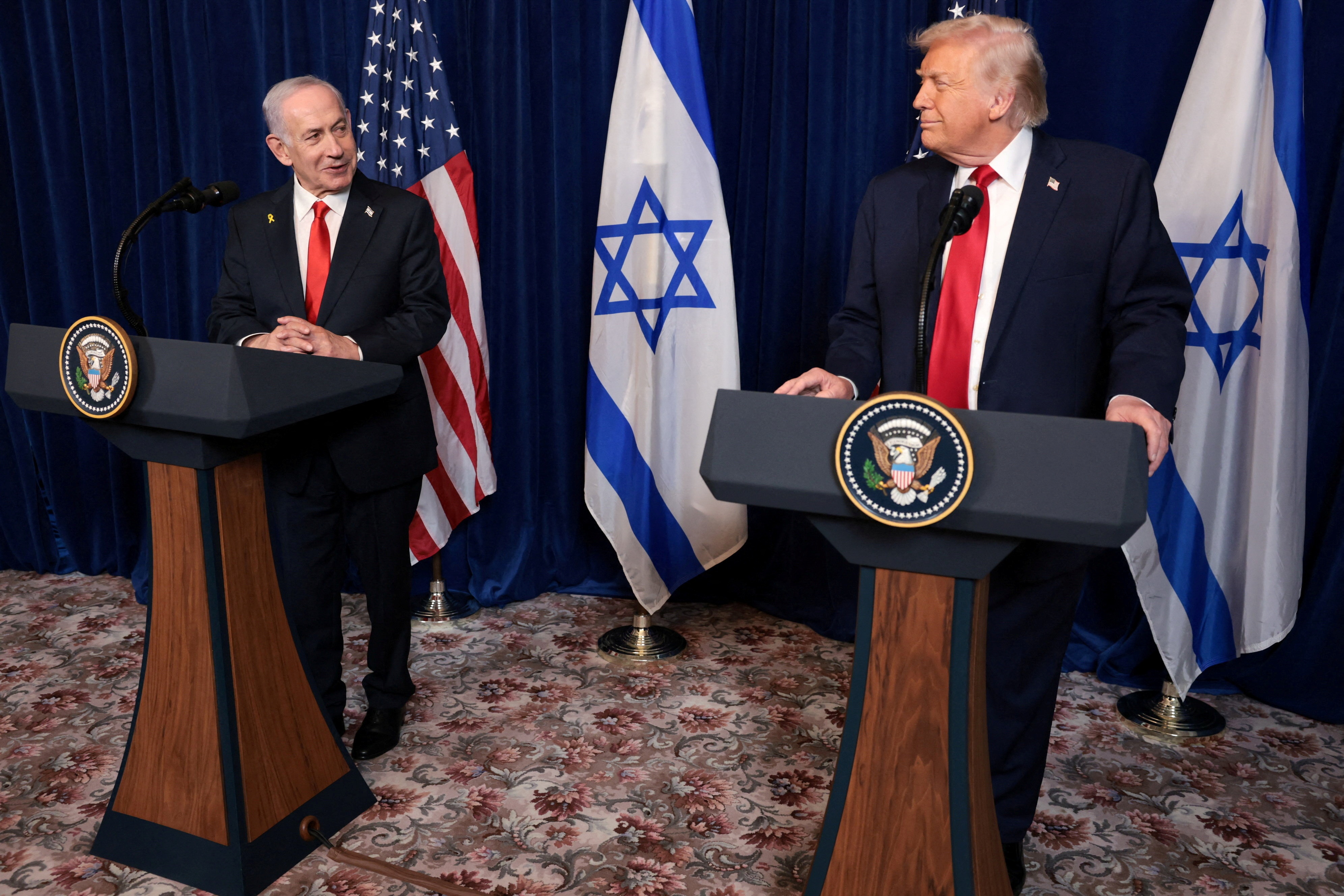 |
US President Donald Trump and Israeli Prime Minister Benjamin Netanyahu hold a press conference after their meeting at Trump's Mar-a-Lago club in Palm Beach, Florida (USA) in December 2025. Photo: Reuters. |
According to Axios , a US official said at the time that the message to the Israeli leader was: if Israel wanted to damage its reputation by not respecting the agreements, that was its choice, but Washington would not let that affect the credibility of President Trump, who had brokered the Gaza deal.
Very few people know the exact content of high-level phone calls at the White House. In some cases, U.S. national security officials may attend or be briefed on the conversations between the president and foreign leaders.
However, Negar Mortazavi, a senior research fellow at the Center for International Policy (CIP), suggests that the leak of information about the tense phone call between Trump and Netanyahu may also have been aimed at building an image of a tough president toward Israel, thereby calming the wave of criticism about the war.
"This could be a way to lessen the anger or blame that public opinion is placing on the U.S. for continuing to pursue a war that is unsupported, unnecessary, and considered illegal," Mortazavi stated.
According to her, the message being sent was: "Look, we are very angry with Israel. We yelled at them. We called them by harsh words."
However, she stressed that the new policy was the deciding factor. “Will those words change the reality on the ground?” she questioned.
For his part, Costello suggested that this leak was more likely intended for Iran than for the American public.
"I think this is primarily a signal to Tehran, to show that Trump is serious about the negotiation process and wants to separate the events in Lebanon and the Israeli attacks from the negotiating agenda with Iran," he said.
Source: https://znews.vn/moi-quan-he-giua-ong-trump-netanyahu-ngay-cang-cang-thang-post1656481.html
![[Photo] General Secretary and President To Lam presides over a meeting with the Central Organizing Committee.](https://vphoto.vietnam.vn/thumb/1200x675/vietnam/resource/IMAGE/2026/06/03/1780482764658_a1-bnd-4741-3342-jpg.webp)
![[Photo] Secretary of the National Assembly Party Committee, Chairman of the National Assembly presides over the meeting of the Standing Committee and Executive Committee of the National Assembly Party Committee.](https://vphoto.vietnam.vn/thumb/1200x675/vietnam/resource/IMAGE/2026/06/03/1780480353201_ndo_br_bnd-2585-jpg.webp)


![[Photo] First session of the 14th Congress of the Vietnam Trade Union](https://vphoto.vietnam.vn/thumb/1200x675/vietnam/resource/IMAGE/2026/06/03/1780465947883_ndo_br_img-3852-jpg.webp)










































![[Video] Sunset at Lap An Lagoon – Where the sun sets over the fishing nets](https://vphoto.vietnam.vn/thumb/1200x675/vietnam/resource/IMAGE/2026/05/31/1780192137701_beach-landscape-sea-water-nature-grass-745871-pxhere-com.jpeg)










































Comment (0)