

 |
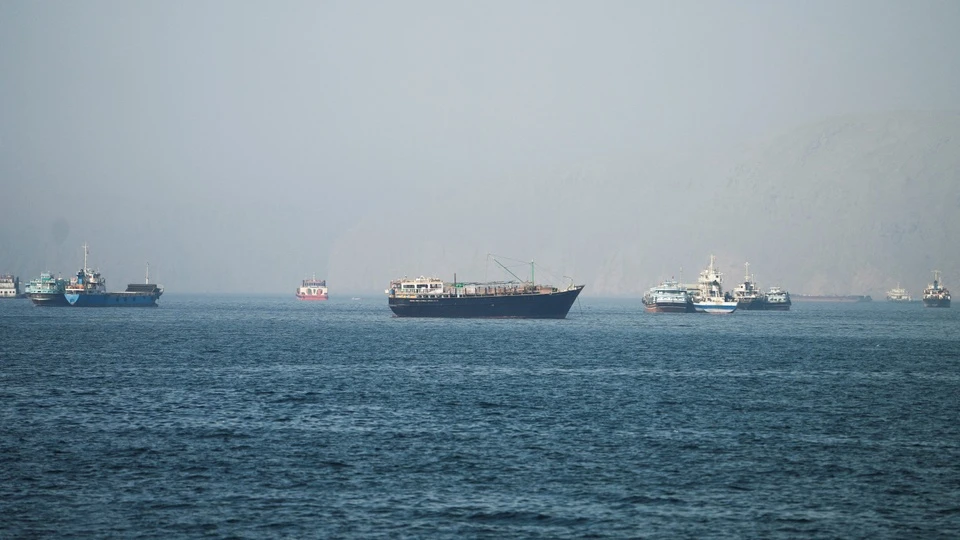
Ships in the Strait of Hormuz, as seen from Musandam (Oman) on June 1. Photo: Reuters . |
A month after U.S. President Donald Trump announced, then quickly abandoned, a plan to escort commercial ships through the Strait of Hormuz, the U.S. military is deploying a more discreet approach to protecting maritime activity on this vital waterway.
Instead of openly confronting Iran, Washington is quietly coordinating with carriers willing to adopt alternative modes of transport to minimize risk, according to Bloomberg.
The unnamed campaign
Data from the U.S. Central Command (CENTCOM), maritime tracking information, and informed sources indicate that many ships are switching off their Automatic Identification System (AIS) transmitters, staying close to the Omani coast south of the Strait of Hormuz to avoid Iranian mines, while the U.S. military is ready to provide support if needed.
The latest signs emerged on the night of June 2nd, amid escalating tensions between the US and Iran.
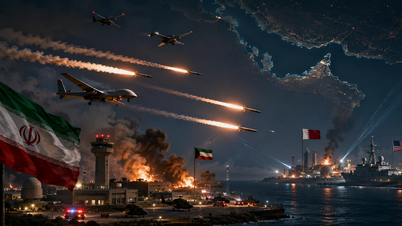
CENTCOM said U.S. forces shot down Iranian attack drones targeting “civilian sailors exercising their lawful right of transit in regional waters.”
The US military also conducted "self-defense" airstrikes targeting an Iranian military ground control station.
This move indicates that Washington has changed tactics compared to its previous plan, "Project Freedom," which Trump announced in early May.
This initiative was initially promoted extensively on social media and in official White House press briefings. However, it quickly met with fierce opposition from Iran and was deemed to risk jeopardizing the fragile ceasefire between the two adversaries.
Later, Trump announced the cancellation of the plan at the request of regional allies.
Unlike "Project Freedom," the new US campaign has no official name, and the Washington administration has offered little public explanation of its ongoing activities.
However, a series of recent signals suggest that the U.S. is coordinating with carriers in ways that officials have declined to disclose details of.
CENTCOM, the agency responsible for U.S. military forces in and around the Persian Gulf, has also significantly changed its tone in public statements.
In late May, this command dismissed as "false" reports that the U.S. Navy had resumed escorting or assisting commercial ships through the Strait of Hormuz.
However, after further evidence emerged showing that some ships had passed through the safe zone in recent days, the message from CENTCOM became more flexible.
“Although U.S. forces are not directly escorting ships, we maintain contact and coordinate with commercial vessels seeking to transit the Strait of Hormuz freely and safely. This is a vital international shipping lane for the regional and global economy ,” said CENTCOM’s Director of Communications, Navy Captain Tim Hawkins, in a statement on June 1.
Change tactics
US Secretary of War Pete Hegseth also hinted at this effort last weekend when he said that maritime traffic would soon be restored thanks to "what we can do and are doing, whether known or not, in the strait."
Earlier, Bloomberg quoted two shipping companies as saying they had contacted the US military and received guidance on the safest way to navigate through the area.
According to a source familiar with the matter, during a recent voyage, when a commercial vessel was approached by high-speed attack boats suspected to be Iranian, US helicopters appeared and forced the vessels to retreat.
Bryan Clark, a senior expert at the Hudson Institute, noted that if commercial vessels sail close to the coast opposite Iran and turn off their AIS systems, Iranian forces would have to use radar or observation points to detect targets before deploying drones or missiles to attack.
"In that case, the U.S. Navy could detect these activities and launch a counterattack against Iranian units," he said.
Although some shipping companies are increasingly optimistic about the possibility of improved maritime traffic, ship tracking data compiled by Bloomberg shows that activity through the Strait of Hormuz remains very limited.
On the morning of June 2nd, only two commercial vessels were recorded entering the area, following the departure of two ships from the strait on June 1st.
Steve Wills, a naval expert at the Navy League's Center for Maritime Strategy, believes the U.S. military is fully capable of coordinating ship protection operations through warships equipped with the advanced AEGIS command and control system.
This system integrates missile defense, air defense, and E-2D early warning aircraft capabilities, allowing the U.S. military to build a comprehensive operational picture of the region.
According to Wills, this creates the capability for "remote yet direct monitoring and protection" of the entire Strait of Hormuz.
Source: https://znews.vn/my-am-tham-mo-duong-qua-eo-bien-hormuz-post1656501.html

![[Photo] First session of the 14th Congress of the Vietnam Trade Union](https://vphoto.vietnam.vn/thumb/1200x675/vietnam/resource/IMAGE/2026/06/03/1780465947883_ndo_br_img-3852-jpg.webp)
![[Photo] Secretary of the National Assembly Party Committee, Chairman of the National Assembly presides over the meeting of the Standing Committee and Executive Committee of the National Assembly Party Committee.](https://vphoto.vietnam.vn/thumb/1200x675/vietnam/resource/IMAGE/2026/06/03/1780480353201_ndo_br_bnd-2585-jpg.webp)

![[Photo] General Secretary and President To Lam presides over a meeting with the Central Organizing Committee.](https://vphoto.vietnam.vn/thumb/1200x675/vietnam/resource/IMAGE/2026/06/03/1780482764658_a1-bnd-4741-3342-jpg.webp)











































![[Video] Sunset at Lap An Lagoon – Where the sun sets over the fishing nets](https://vphoto.vietnam.vn/thumb/1200x675/vietnam/resource/IMAGE/2026/05/31/1780192137701_beach-landscape-sea-water-nature-grass-745871-pxhere-com.jpeg)








































Comment (0)