

The U.S. asserts that the deployment of additional missile defense systems and troops to the Middle East is aimed at countering new attacks in the region.
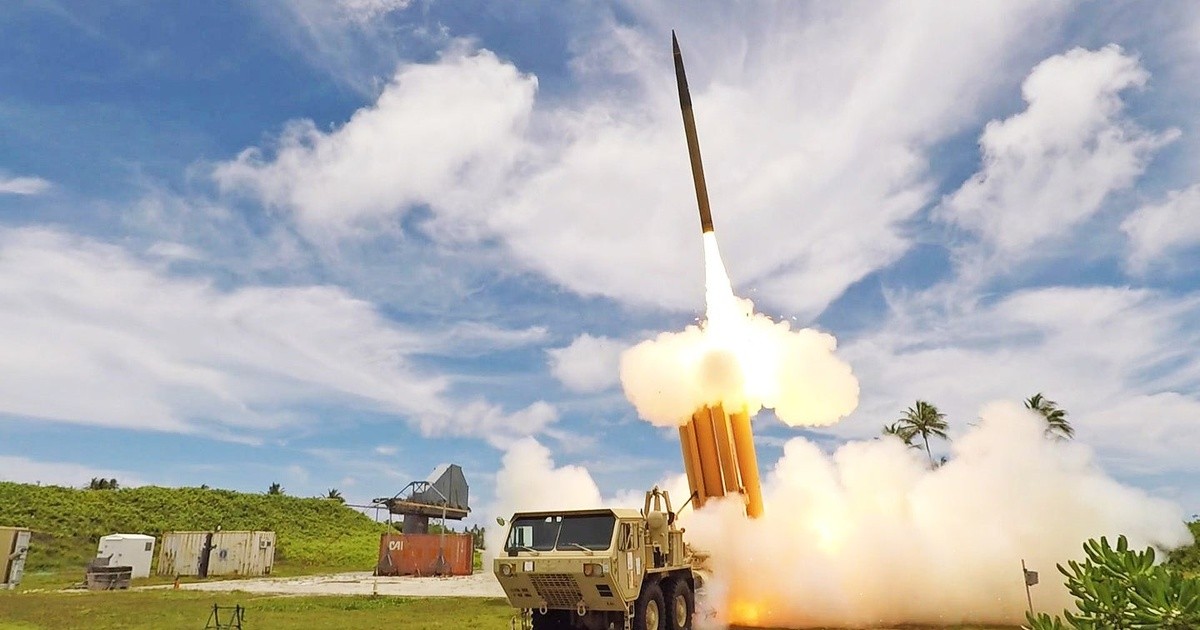 |
| The THAAD (Terminal High Altitude Area Defense) missile defense system. (Source: Lockhead Martin) |
On October 21, the US Department of Defense announced that it would deploy a Terminal High Altitude Area Defense (THAAD) missile defense system and add Patriot air defense missile battalions to the Middle East. Pentagon chief Lloyd Austin confirmed that this move followed discussions with US President Joe Biden.
In addition, Austin said the Department of Defense is deploying more troops ready for deployment to the region, but did not specify the exact number.
THAAD is a ballistic missile defense system manufactured by Lockheed Martin, designed to intercept short- and medium-range ballistic missiles in the final phase of their flight.
The first THAAD battery was deployed in the US military in 2008. These systems are now present in the United Arab Emirates (UAE), Israel, Romania, and South Korea.
The presence of THAAD in South Korea has been sharply criticized by China. In 2016, Beijing restricted trade and banned imports of cultural products and services from Seoul in protest against THAAD.
In 2022, Chinese officials asserted that these systems “undermine the country’s strategic interests.” Shortly afterward, Foreign Minister Wang Yi and his South Korean counterpart Park Jin agreed to “respect each other’s legitimate concerns.” Despite this, South Korean Defense Minister Lee Jong-un affirmed that policy regarding THAAD would not change due to Chinese opposition. He also stated that the system’s wide-range radar would not be used to counter Beijing.
In other news, Iraqi security sources said a drone attacked the Ain al-Assad air base in Anbar province, western Iraq, on October 21. This base houses US-led coalition forces. However, the US Department of Defense has not yet confirmed this information.
Another source indicated that the attack involved two UAVs, one of which was intercepted and the other crashed due to a technical malfunction. Immediately after the incident, the Islamic Resistance in Iraq posted a statement on its Telegram channel, claiming responsibility for the attack.
Recently, many armed groups have increased their threats to attack US interests in Iraq due to Washington's supportive stance toward Israel following the outbreak of the Israel-Hamas conflict.
Since October 18th, three Iraqi military bases used by the US-led coalition have been targeted in five separate attacks. The US currently has 2,500 troops stationed at these three bases, along with 1,000 soldiers from other countries in the coalition formed to fight the self-proclaimed Islamic State (IS) jihadist group.
Source

![[Photo] General Secretary To Lam visits the exhibition space showcasing books, photo exhibitions, and achievements of digital transformation in journalism.](/_next/image?url=https%3A%2F%2Fvphoto.vietnam.vn%2Fthumb%2F1200x675%2Fvietnam%2Fresource%2FIMAGE%2F2025%2F12%2F19%2F1766110879215_1766110240024-jpg.webp&w=3840&q=75)

![[Photo] Enchanting ancient rose garden on the mountainside in Nghe An](/_next/image?url=https%3A%2F%2Fvphoto.vietnam.vn%2Fthumb%2F1200x675%2Fvietnam%2Fresource%2FIMAGE%2F2025%2F12%2F19%2F1766109900916_vuon-hong-chin-do-thu-hut-du-khach-toi-check-in-o-ha-noi-3-20162778-1671624890024-1671624890104198100259.jpeg&w=3840&q=75)



























































































Comment (0)